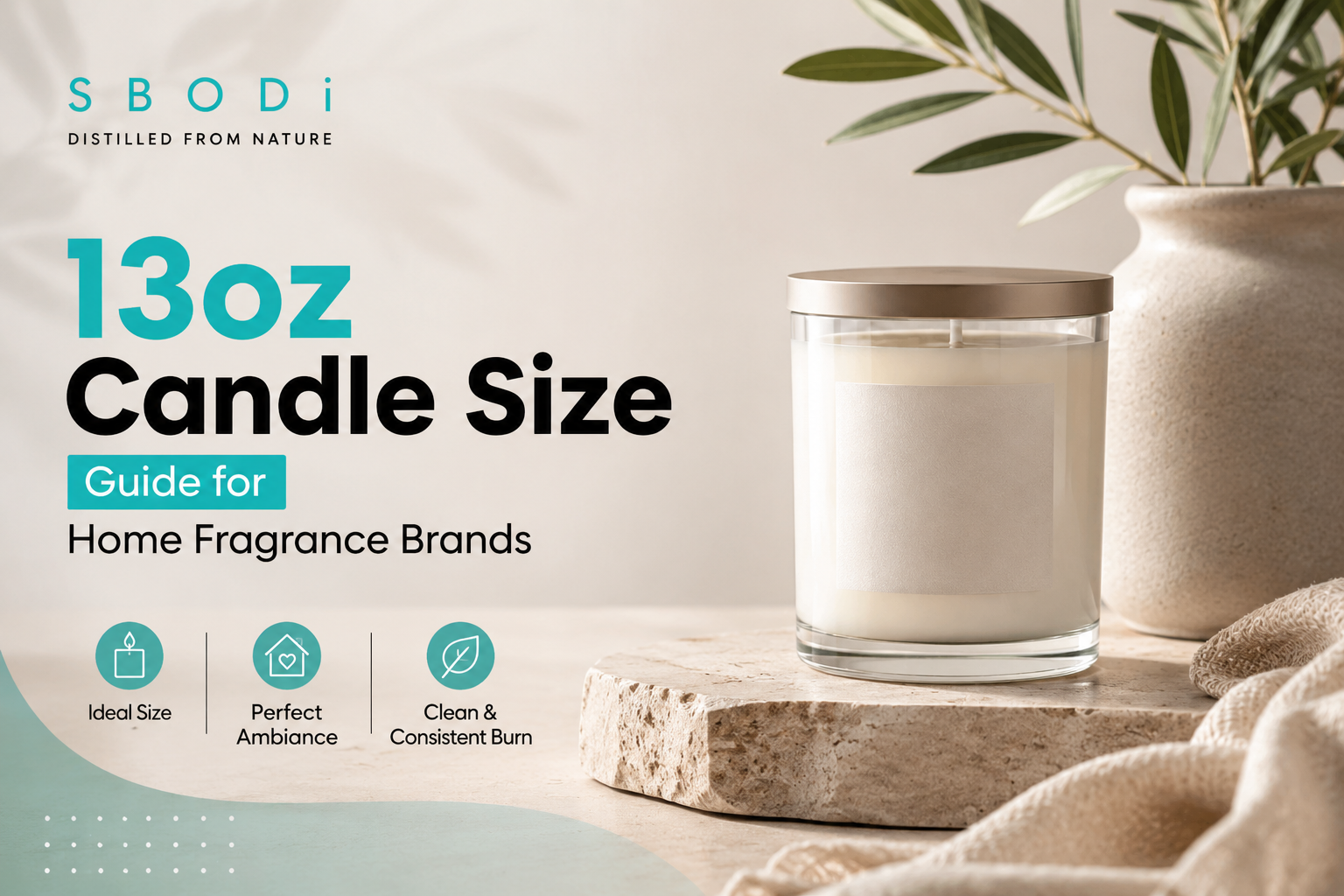
A 13oz candle is a popular full-size format for home fragrance brands because it offers noticeable shelf presence without feeling oversized. It can work as a core retail candle, a premium gift product, or the main size within a private label collection.
However, the weight printed on the label does not explain the vessel dimensions, wick system, burn performance, packaging needs, or production cost. Brands must evaluate the finished candle rather than choosing a format based on weight alone.
This guide explains how the size compares with other candle formats and what to review before placing a wholesale order. For a broader introduction to sourcing, testing, waxes, and supplier selection, read the complete guide to wholesale candles.
- What Is a 13oz Candle?
- Where This Candle Size Fits
- Common Vessel Formats
- Benefits for Home Fragrance Brands
- How to Evaluate the Finished Candle
- Manufacturing and Burn Testing
- Labeling and Packaging
- Wholesale and Private Label Considerations
- Common Buying Mistakes
- Future Candle Size Trends
- SBODi Candle Resources
- Frequently Asked Questions
- Conclusion
What Is a 13oz Candle?
A 13oz candle usually contains 13 ounces of wax by net weight, equal to approximately 369 grams. It does not refer to a standardized jar shape or vessel capacity.
Two candles with the same net weight may have different:
- Heights and diameters
- Glass thicknesses
- Wax formulations
- Wick systems
- Fragrance concentrations
- Headspace
- Packaged weights
For that reason, buyers should request complete product specifications instead of assuming every 13-ounce candle will look or perform the same.
The net quantity should also be clearly displayed on the product label. The Federal Trade Commission’s Fair Packaging and Labeling Act provides general guidance on product identity, responsible business information, and net quantity declarations.
Where the 13oz Candle Size Fits
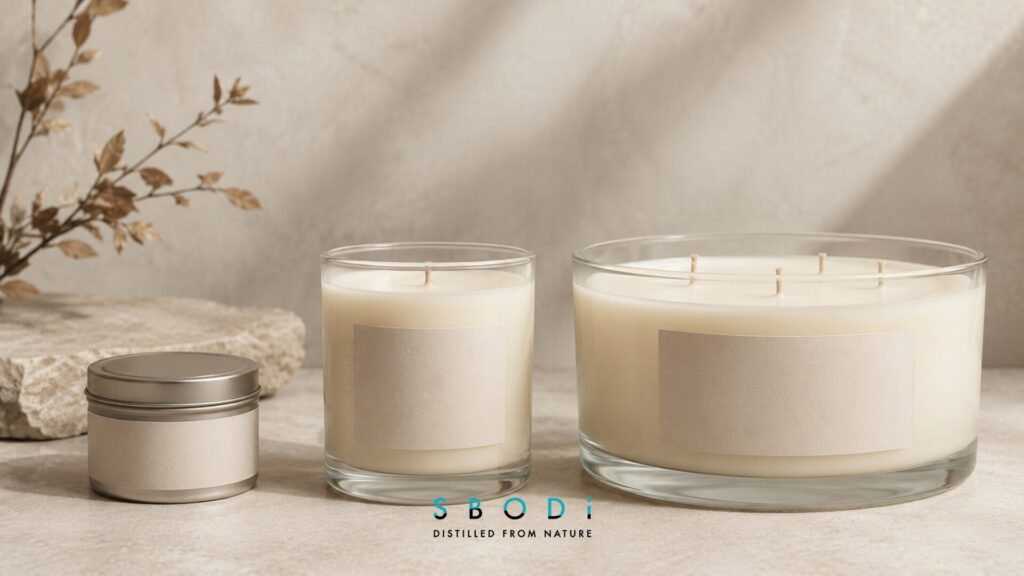
A 13oz candle generally sits between travel-size candles and oversized decorative formats.
| Candle Format | Typical Use |
|---|---|
| Mini or Sample Candle | Fragrance discovery and promotional sets |
| Travel Candle | Small gifts and portable use |
| 13oz Candle | Core retail and home fragrance collections |
| Large Multi-Wick Candle | Premium gifts and decorative displays |
The 13-ounce format is often large enough to feel substantial while remaining manageable for standard shelving, storage, ecommerce fulfillment, and gift packaging.
Brands should still compare the actual vessel dimensions. A tall, narrow candle may occupy less shelf width than a short, wide candle containing the same wax weight.
Common 13oz Candle Formats
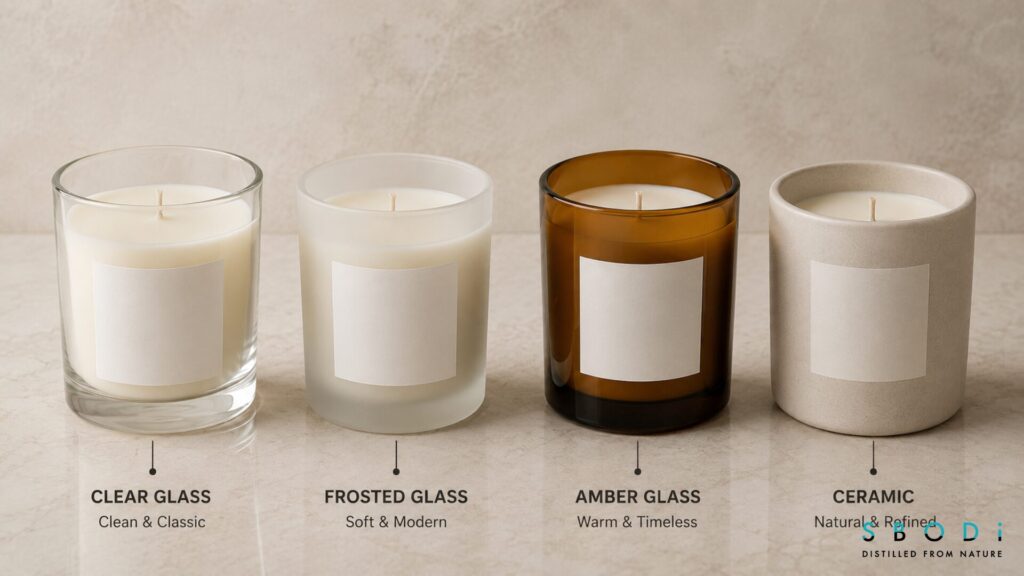
Straight-Sided Glass Tumbler
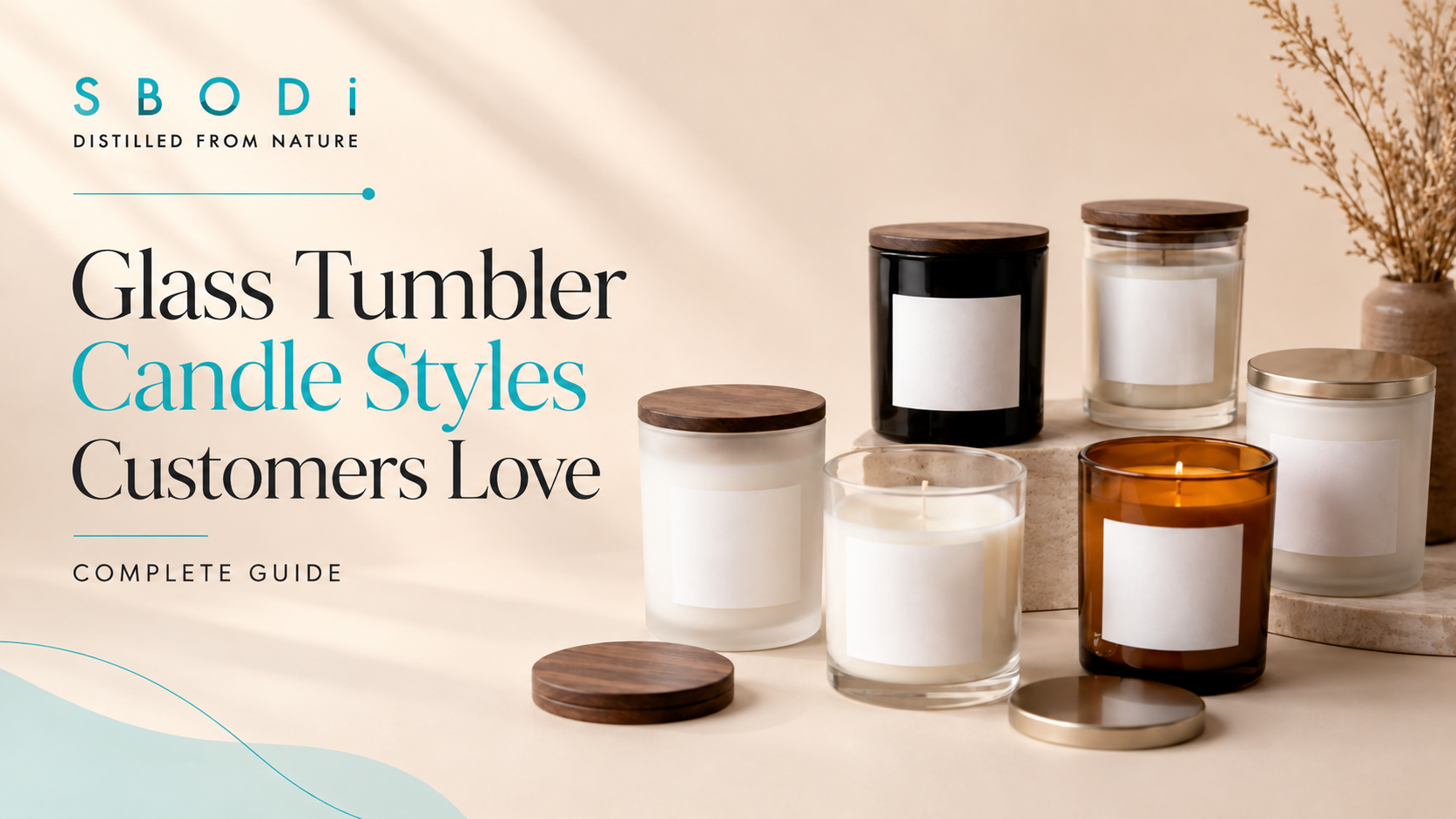
A straight-sided tumbler provides a clean surface for custom candle labels and works well with clear, frosted, white, black, amber, or colored glass.
This format is practical for private label candles because brands can use one vessel across several fragrances and seasonal collections.
Amber or Apothecary Jar
Amber jar candles create a warm, natural appearance that suits woody, herbal, resinous, and wellness-inspired fragrances.
The colored glass supports the visual identity, but it does not replace proper vessel qualification or burn testing.
Ceramic Vessel
Ceramic containers can give a candle a decorative or luxury appearance. They may also encourage customers to reuse the vessel.
Buyers should check glaze consistency, wall thickness, heat performance, and dimensional variation before production.
Single-Wick or Multi-Wick Vessel
A 13oz candle may use one or more wicks. The correct number depends mainly on vessel diameter, wax, fragrance, and melt-pool performance.
Wick count should never be selected from candle weight alone.
Benefits for Home Fragrance Brands
A properly developed 13-ounce candle offers several practical benefits.
Strong Retail Presence
The vessel is usually large enough to stand out on shelves without taking up the space required by oversized candles.
Useful Label Area
Straight-sided jars and tumblers provide room for the fragrance name, brand identity, net weight, responsible business details, and required safety information.
Flexible Product Positioning
Changes to the glass finish, lid, fragrance, carton, and label can position the same basic size for wellness, spa, seasonal, boutique, or luxury collections.
Collection Consistency
Brands can use one full-size candle alongside fragrance samples, wax melts, soaps, bath salts, or shower steamers. Coordinated fragrance and packaging help connect the categories without making the collection feel forced.
Gift Potential
A 13oz candle can work as an individual gift or as the main item in a home fragrance or bath and body set.
How to Evaluate a 13oz Candle
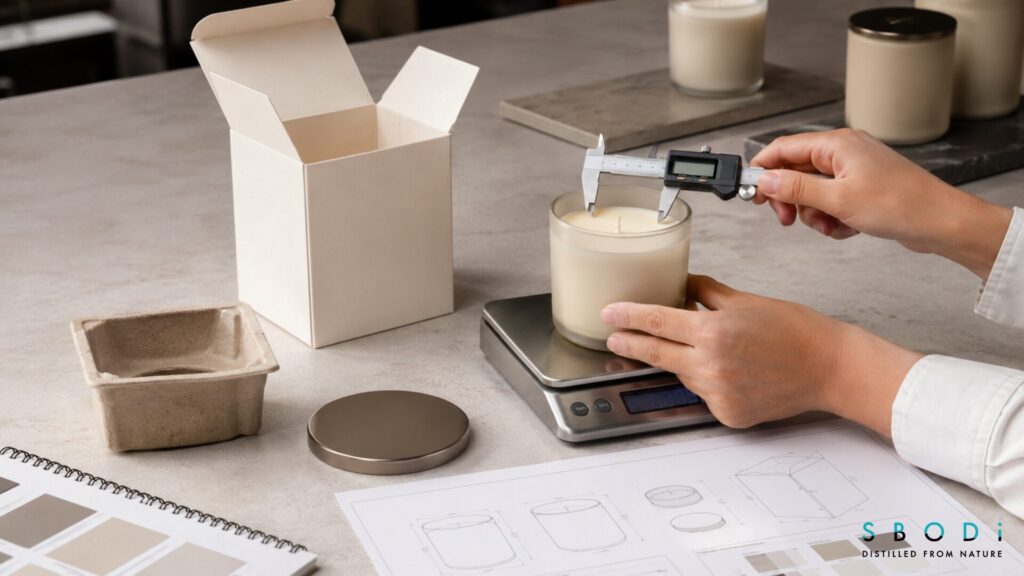
Confirm the Product Specifications
Request the following information from the candle supplier:
- Finished net weight
- Filled vessel dimensions
- Empty vessel capacity
- Packaged dimensions
- Case quantity
- Total case weight
- Weight and fill tolerances
- Lid and carton specifications
Confirm that 13 ounces refers to the finished net contents rather than the maximum capacity of the empty jar.
Review Physical Samples
Inspect the sample under normal retail lighting and check:
- Wick position
- Wax surface
- Glass consistency
- Label alignment
- Lid fit
- Fragrance quality
- General presentation
The sample should represent the intended production configuration, not a similar candle using different components.
Compare the Landed Cost
The candle price is only one part of the total cost. Include:
- Vessel and wax
- Fragrance
- Wick
- Lid
- Labels
- Carton and insert
- Master case
- Freight
- Storage
- Breakage allowance
- Fulfillment labor
A cheaper candle can become more expensive when damaged packaging, heavy freight, or inconsistent components create additional costs.
Manufacturing and Burn Testing
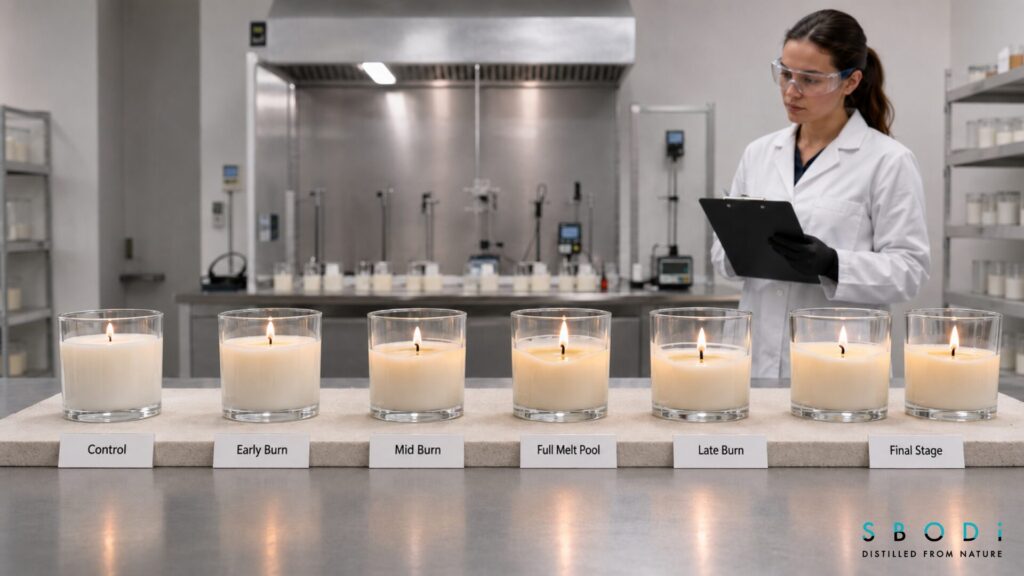
A candle should be tested as a complete system. The wax, wick, fragrance, dye, vessel, and fill level all affect performance.
Controlled testing should review:
- Flame height
- Wick stability
- Melt-pool development
- Visible soot
- Vessel temperature
- Fragrance performance
- Remaining wax
- Glass condition
ASTM F2417 addresses fire-safety performance requirements for candles, while ASTM F2058 covers candle fire-safety labeling.
A candle manufacturer should also maintain consistent production procedures for wick placement, wax heating, fragrance mixing, pouring, cooling, curing, weight control, batch identification, and retained samples.
Any meaningful change to the vessel, wick, wax, fragrance, or dye should be reviewed before the revised product enters full production.
The U.S. Consumer Product Safety Commission candle guidance provides additional information about candlewicks, hazardous substances, and applicable federal requirements.
Labeling and Packaging
Product Labels
The main label should remain readable and securely attached during storage and normal use.
Depending on the product and market, the label system may include:
- Product identity
- Fragrance name
- Net weight
- Responsible business information
- Batch reference
- Safety instructions
- Burning guidance
The National Candle Association’s safety label guide provides a useful overview of common candle warning information.
Lids
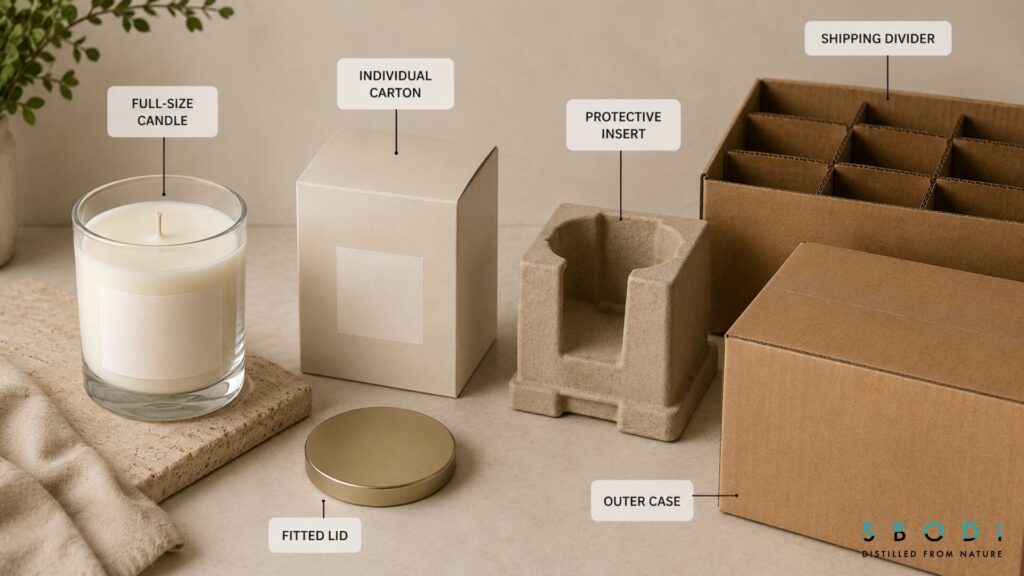
Metal, wood, glass, and molded lids can protect the wax and complete the retail presentation.
Test the lid for fit, scratching, odor transfer, finish durability, and movement during shipping.
Individual Cartons
An individual carton can provide glass protection and additional branding space. Ecommerce candles may also need a fitted insert to reduce movement.
Packaging should protect the candle without adding unnecessary size or material.
Master Cases
Wholesale candles require dividers or inserts that prevent glass-to-glass contact.
Before ordering, confirm:
- Case quantity
- Case weight
- Divider design
- Pallet configuration
- Stacking limits
- Damage-reporting process
Wholesale and Private Label Considerations
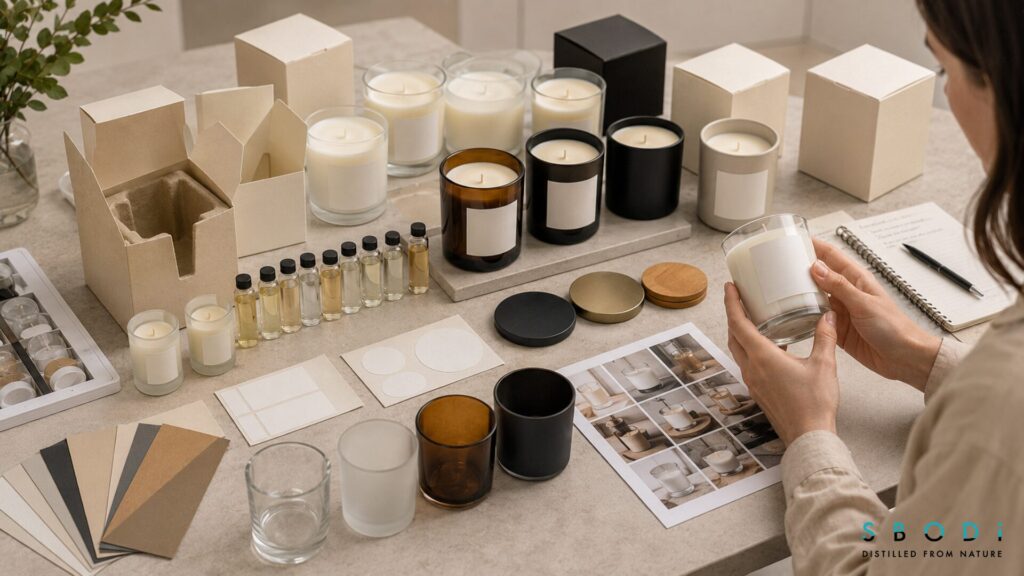
When comparing private label candles or scented candles wholesale, ask the supplier:
- Is the candle a stock formula or custom product?
- Which vessels, waxes, fragrances, and lids are available?
- What is the minimum order per fragrance?
- Are candle fragrance samples available?
- What testing documents are provided?
- How are production tolerances handled?
- Can the same components be reordered?
- What are the standard lead times?
- Who owns custom artwork or fragrance development?
- How are product changes communicated?
White label candles may offer faster development because the base product is already established. A custom program offers greater control but usually requires more sampling, packaging development, testing, and approval stages.
Buyers can also review SBODi’s private label scented candles to understand how vessel, fragrance, label, and packaging choices fit within a finished collection.
Common Buying Mistakes
Assuming Every 13oz Candle Is the Same Size
Net weight does not determine vessel dimensions. Always compare the filled product and packaged measurements.
Choosing a Wick Based on Weight
Wick selection depends on the complete formulation and vessel diameter, not just the number printed on the label.
Publishing Unverified Burn-Time Claims
Burn time varies by product design and customer use. Publish only a range supported by finished-product testing.
Prioritizing Appearance Over Performance
An attractive jar cannot compensate for excessive soot, unstable flames, weak fragrance, label failure, or poor glass performance.
Ignoring Shipping Tests
A candle that performs well on a shelf may still fail during parcel delivery. Test the complete packaging system before approving large orders.
Overlooking Reorder Consistency
Confirm whether the supplier can maintain the same glass, lid, fragrance, carton, and finish across future production runs.
Future Candle Size Trends
Home fragrance brands are increasingly focusing on practical product systems rather than launching many unrelated sizes.
Relevant directions include:
- Reusable-looking vessels
- Reduced-material cartons
- Coordinated wax melts
- Seasonal labels on standard vessels
- Neutral glass finishes
- QR-linked candle care
- Smaller fragrance launches
- Simplified packaging components
A consistent full-size vessel can make sampling, manufacturing, photography, packaging, and reordering easier. Brands can then create variety through fragrance and design rather than changing every physical component.
SBODi Candle Resources
SBODi operates within wholesale and private label bath and body manufacturing, including candles, soaps, bath products, and wellness-focused collections.
This category experience helps brands evaluate how candle fragrances, labels, packaging, and retail presentation can connect with related products.
This article focuses on the 13-ounce format. Brands that need broader information about candle waxes, wicks, product types, testing, packaging, and supplier evaluation can continue with SBODi’s wholesale candle sourcing guide.
Frequently Asked Questions