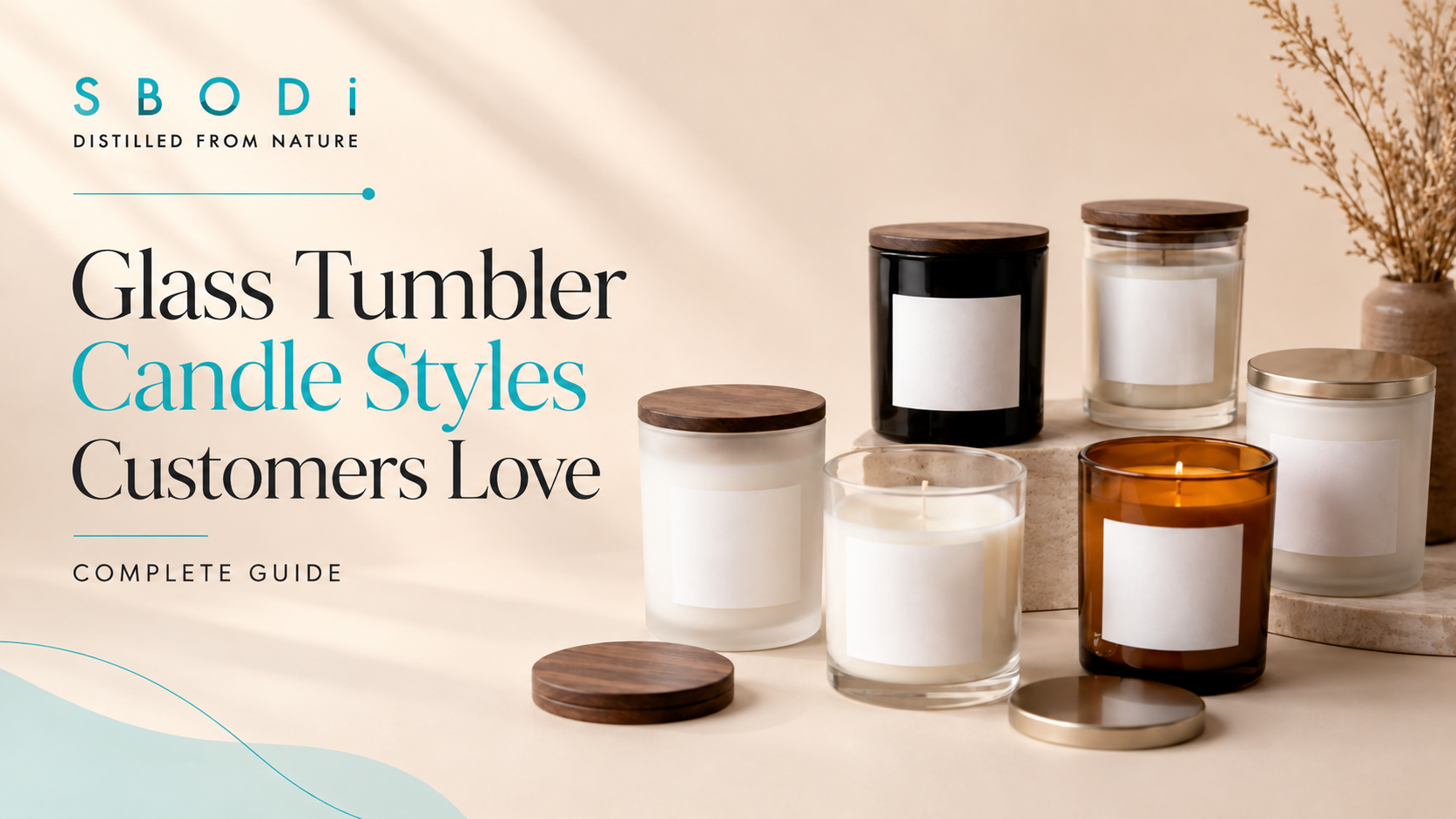
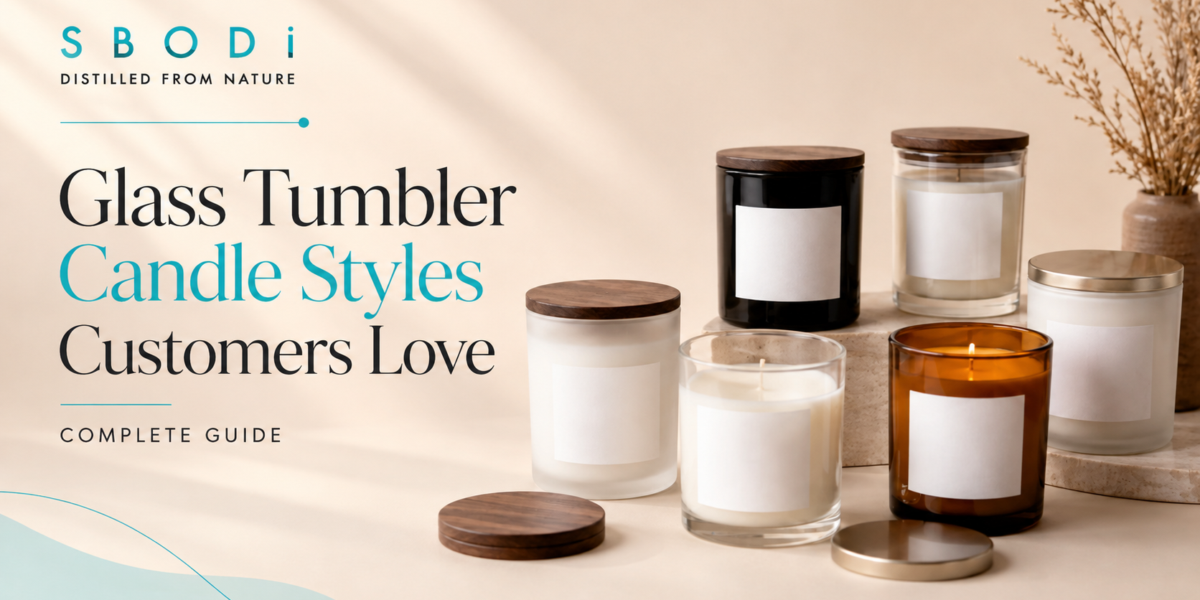
A glass tumbler candle combines fragrance, packaging, and home décor appeal in a simple retail format. Its straight-sided shape provides space for labels, fits many lid styles, and works across luxury, spa, seasonal, and everyday candle collections.
However, the vessel is only one part of the finished product. Wax type, wick size, fragrance, labeling, packaging, and burn performance also influence customer satisfaction.
This guide explains the most popular tumbler styles, how to choose the right finish, and what buyers should test before ordering. For a broader overview of sourcing, waxes, packaging, and supplier selection, read SBODi’s complete wholesale candles guide.
- What Is a Glass Tumbler Candle?
- Why Customers Like Glass Tumbler Candles
- Popular Glass Tumbler Candle Styles
- Choosing the Right Style
- Manufacturing and Burn Testing
- Labels, Lids, and Packaging
- Common Buying Mistakes
- Future Tumbler Candle Trends
- Wholesale Candle Resources
- Frequently Asked Questions
- Conclusion
What Is a Glass Tumbler Candle?
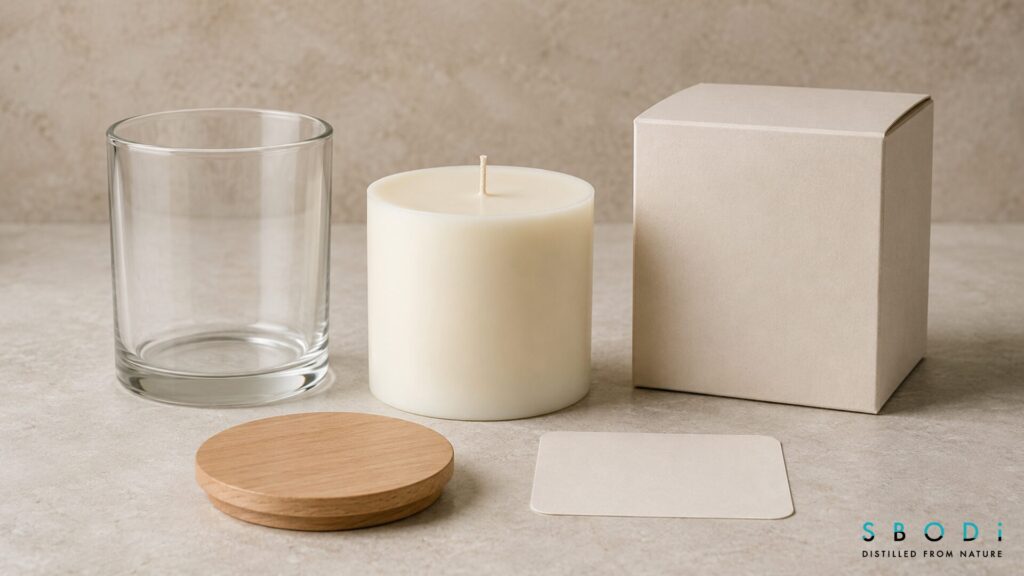
A glass tumbler candle is a container candle poured into a usually straight-sided glass vessel. Unlike traditional jars, tumblers generally have no narrow neck or pronounced shoulder.
This structure creates a clean surface for custom labels, screen printing, or minimal branding. Common finishes include clear, frosted, white, black, amber, and colored glass.
Tumblers can hold soy wax, paraffin, coconut blends, or other candle wax formulations. The vessel diameter, wick, wax, fragrance, and fill level must work together for consistent performance.
Why Customers Like Glass Tumbler Candles
Glass tumbler candles are popular because they fit many interiors and fragrance categories without looking overly decorative.
Their main benefits include:
- A clean and modern shape
- Space for custom candle labels
- Multiple glass colors and finishes
- Easy placement on shelves and gift displays
- Compatibility with wooden, metal, or glass lids
- Strong visual appeal in ecommerce photography
- Flexible use across permanent and seasonal ranges
The same vessel shape can also be reused across several fragrances, helping retailers maintain a consistent collection.
Popular Glass Tumbler Candle Styles
Different finishes create different customer expectations. The best choice should support the fragrance, label design, price point, and retail environment.
| Tumbler Style | Visual Character | Suitable Fragrance Styles |
|---|---|---|
| Clear Glass | Clean and simple | Citrus, floral, aquatic, and fresh |
| Frosted Glass | Soft and calming | Spa, herbal, linen, and wellness |
| White Glass | Bright and refined | Floral, vanilla, and clean scents |
| Black Glass | Bold and premium | Woods, leather, spice, and smoke |
| Amber Glass | Warm and natural | Amber, resin, sandalwood, and herbal scents |
| Colored Glass | Expressive and seasonal | Fruit, floral, and holiday fragrances |
Clear Glass Tumblers
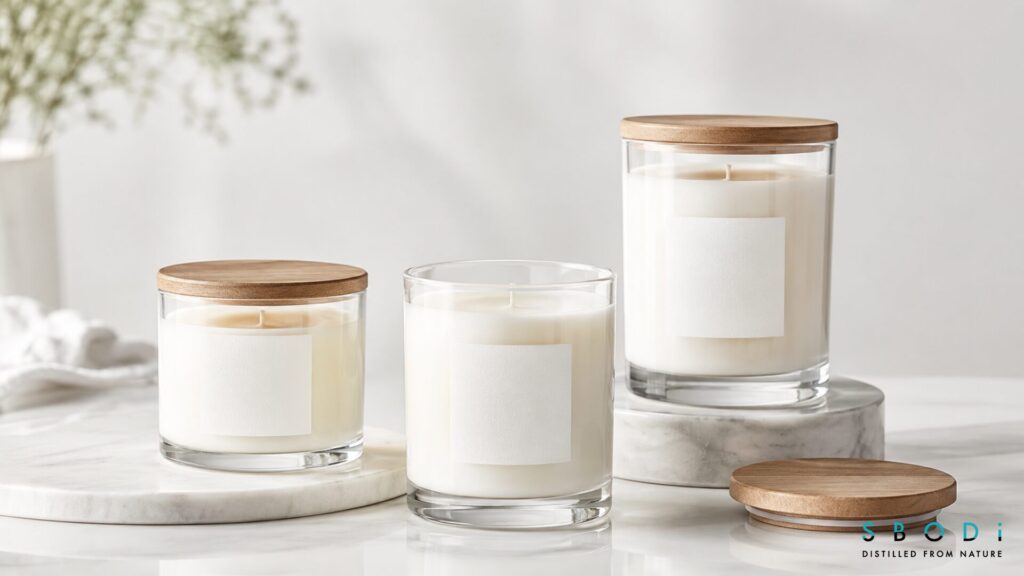
Clear glass shows the wax, wick placement, and remaining candle level. It works well for brands that prefer a simple presentation or want the label to carry most of the visual identity.
Because the wax remains visible, buyers should inspect surface texture, discoloration, wick centering, and adhesion marks carefully.
Frosted Glass Tumblers
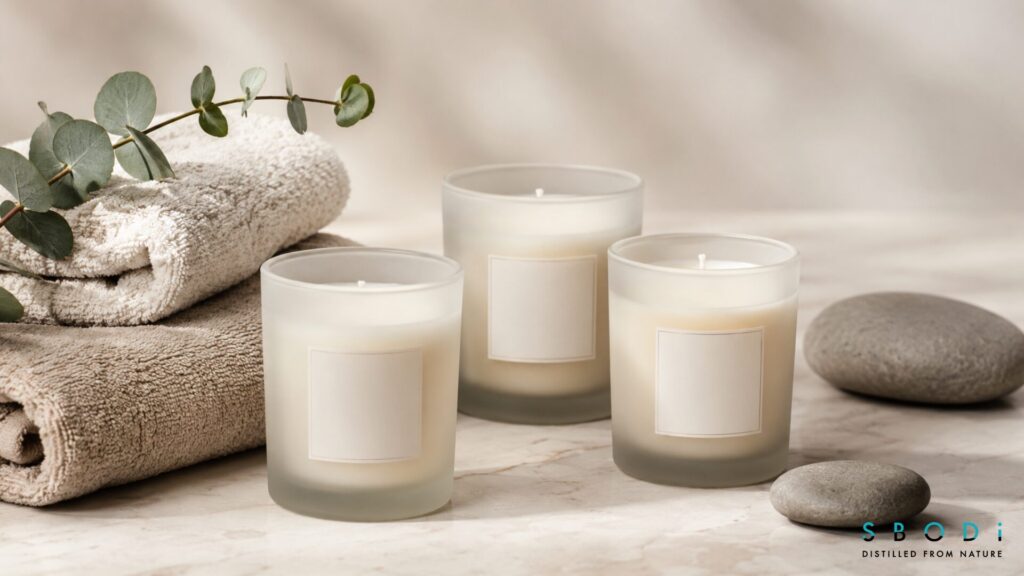
Frosted glass produces a softer appearance and diffuses light while the candle burns. It is commonly used for spa candles, wellness collections, and minimal home-fragrance branding.
The finish can make the product feel more refined without requiring complex packaging.
Black and White Tumblers
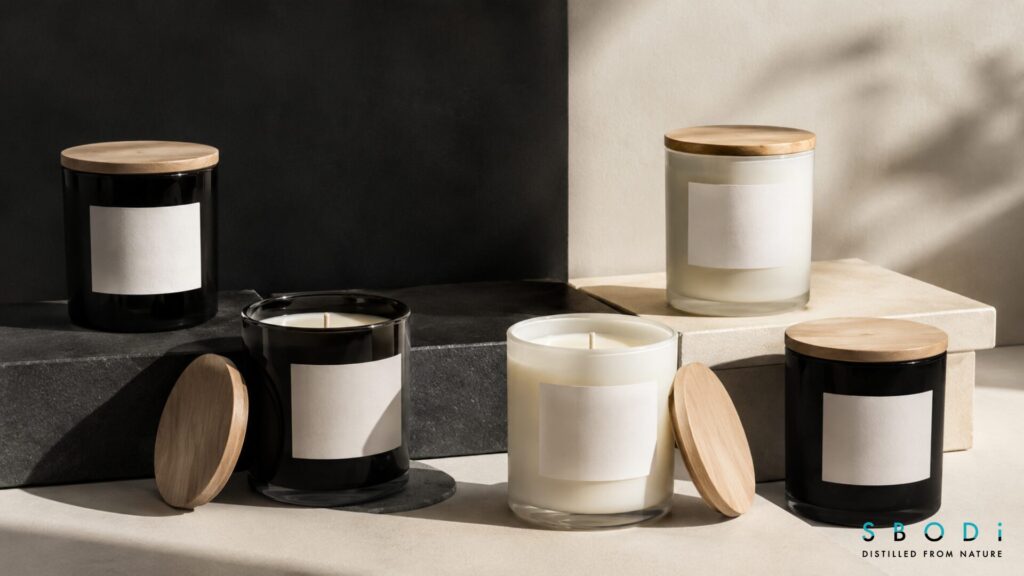
Black glass supports woody, smoky, spicy, and evening-inspired fragrances. It often works well with cream labels, metallic details, or understated custom candle branding.
White glass creates a lighter presentation. It suits floral, clean, bridal, spa, and modern fragrance collections.
Amber Glass Tumblers
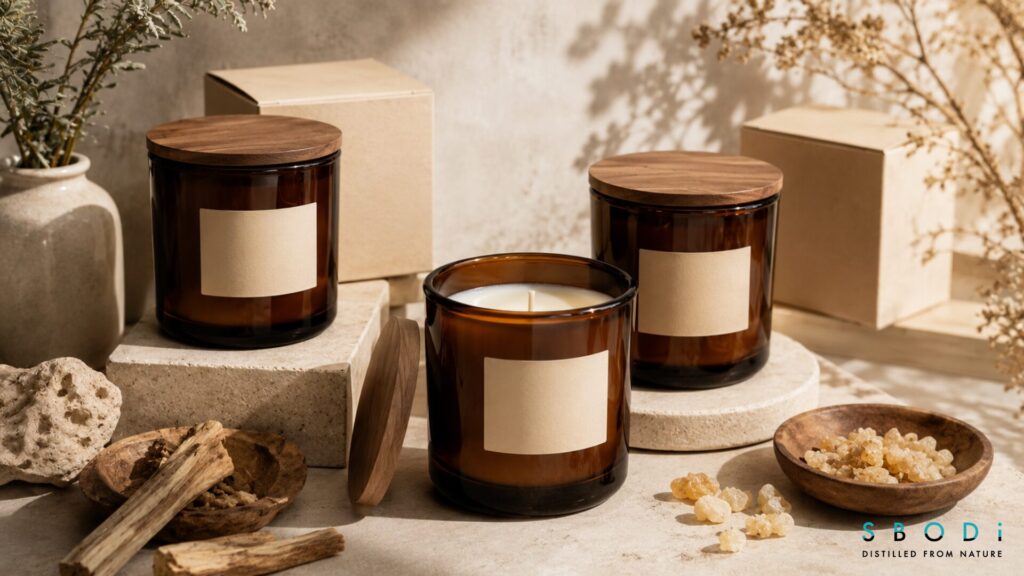
Amber glass creates warmth before the candle is lit. It pairs naturally with resinous, herbal, woody, vanilla, and amber-scented fragrances.
It also works well with cream, kraft, black, or botanical packaging. Buyers comparing this style can review SBODi’s amber glass scented candle as a product-format example.
Colored Glass Tumblers
Colored vessels help distinguish seasonal launches or fragrance families. Soft pink, blue, green, and warm neutral tones can reinforce a product theme.
However, using too many unrelated colors may weaken collection consistency. A limited palette is usually easier to merchandise and reorder.
How to Choose the Right Glass Tumbler Candle Style
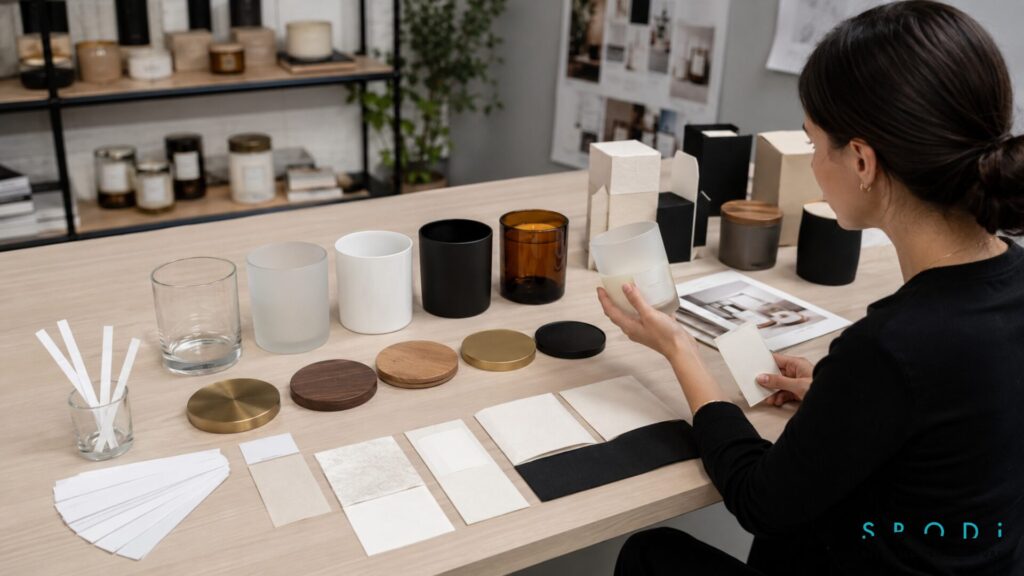
Match the Vessel to the Customer
Begin with the target customer and selling environment. A wellness retailer may prefer frosted or white glass, while a boutique gift collection may use amber, black, or seasonal colors.
The vessel should also match the website, product photography, and surrounding packaging.
Connect the Color to the Fragrance
The vessel should help communicate the fragrance:
- Clear or frosted glass suits fresh and aquatic scents.
- White glass works well with floral and clean fragrances.
- Amber glass supports woody, herbal, and resinous profiles.
- Black glass fits smoky, spicy, and darker fragrance concepts.
- Colored glass can support seasonal or fruit-based collections.
These are useful design directions, not fixed rules.
Measure the Label Area
Do not assume the complete vessel surface can hold a label. Check for tapering, seams, coatings, and curved areas.
Apply a full-size printed sample to a finished candle before approving production. This helps identify lifting corners, poor alignment, and readability problems.
Select a Practical Lid
Wooden lids create a warm, natural presentation, while metal lids may suit modern or apothecary-inspired branding.
The lid should fit securely without scratching the glass or pressing against the wick.
Manufacturing and Burn Testing
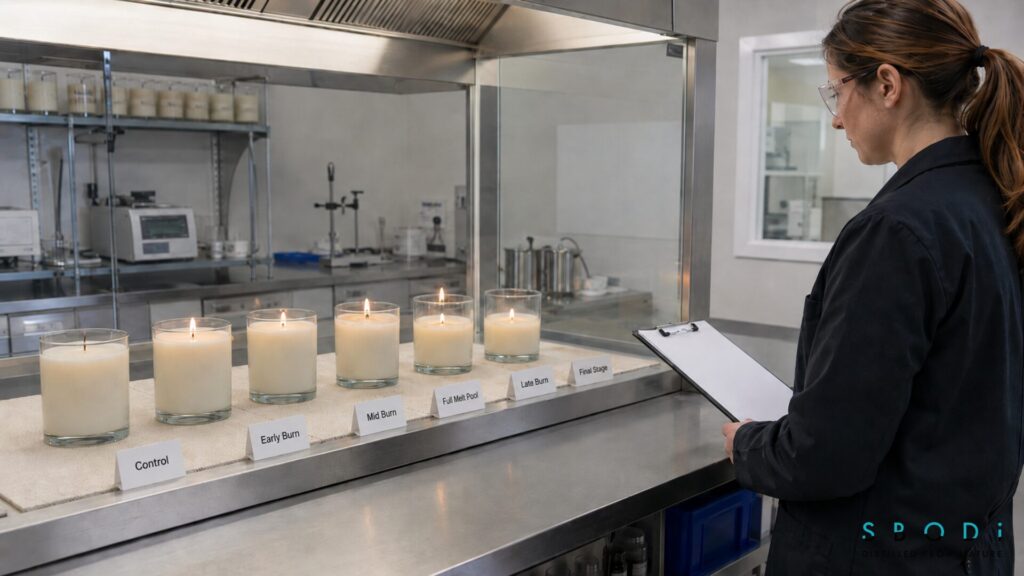
A decorative glass container should not automatically be treated as candle-safe. Candle vessels must tolerate the heat generated during normal use.
The ASTM candle products standards cover several areas related to candle fire safety and glass containers. The U.S. Consumer Product Safety Commission also lists voluntary standards for candles and accessories.
Manufacturers should test each meaningful combination of:
- Vessel size and diameter
- Wax formulation
- Fragrance
- Wick type and size
- Dye or additives
- Fill weight
- Glass coating
Changing the vessel or fragrance can alter the melt pool, flame height, soot level, and glass temperature. For this reason, one successful test should not be applied to every candle variation.
Before ordering private label candles, buyers should request finished samples and evaluate cold throw, hot throw, wick behavior, wax remaining on the sides, and vessel condition.
Labels, Lids, and Candle Packaging
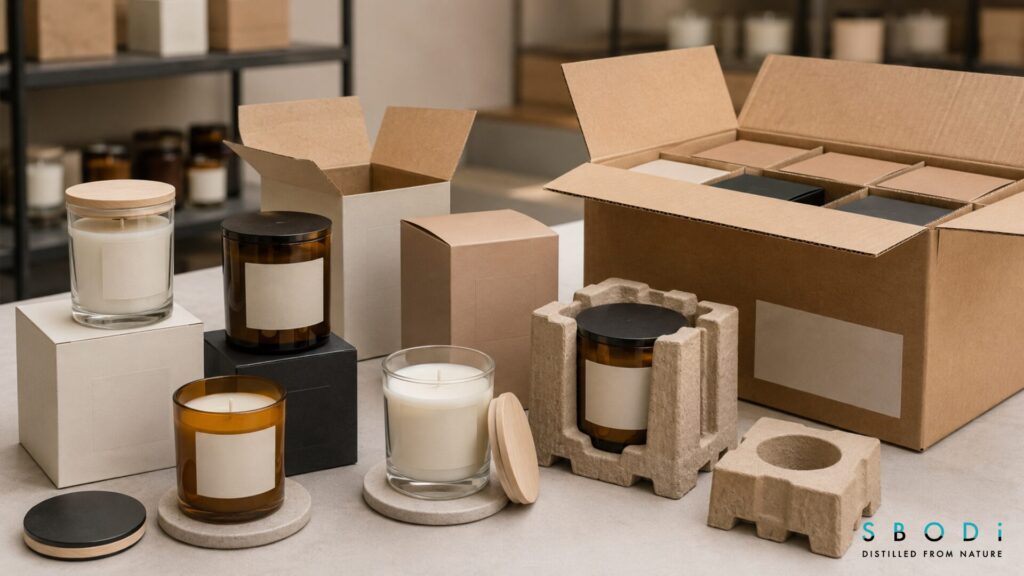
Candle packaging should protect the product, communicate essential details, and remain consistent with the brand.
A complete packaging system may include:
- Front product label
- Safety label
- Lid
- Individual carton
- Protective insert
- Shipping divider
- Outer case
The National Candle Association’s labeling guidance explains the importance of cautionary labeling and basic fire-safety instructions.
Buyers should also review applicable packaging requirements for product identity, net quantity, and business information.
For ecommerce shipping, test the finished candle inside its actual carton and outer case. Inspect for broken glass, scratched coatings, loose lids, damaged labels, and wax movement.
Common Buying Mistakes
Avoid these problems when selecting wholesale or private label glass tumbler candles:
- Choosing glass based only on appearance
- Using a label before testing it on the vessel
- Assuming decorative glass is candle-safe
- Skipping burn tests for individual fragrances
- Ignoring cartons, lids, and freight when comparing costs
- Ordering too many vessel colors at once
- Failing to confirm future vessel availability
- Using packaging that does not protect the glass
A smaller, coordinated collection is often easier to photograph, store, reorder, and expand.
Future Glass Tumbler Candle Trends
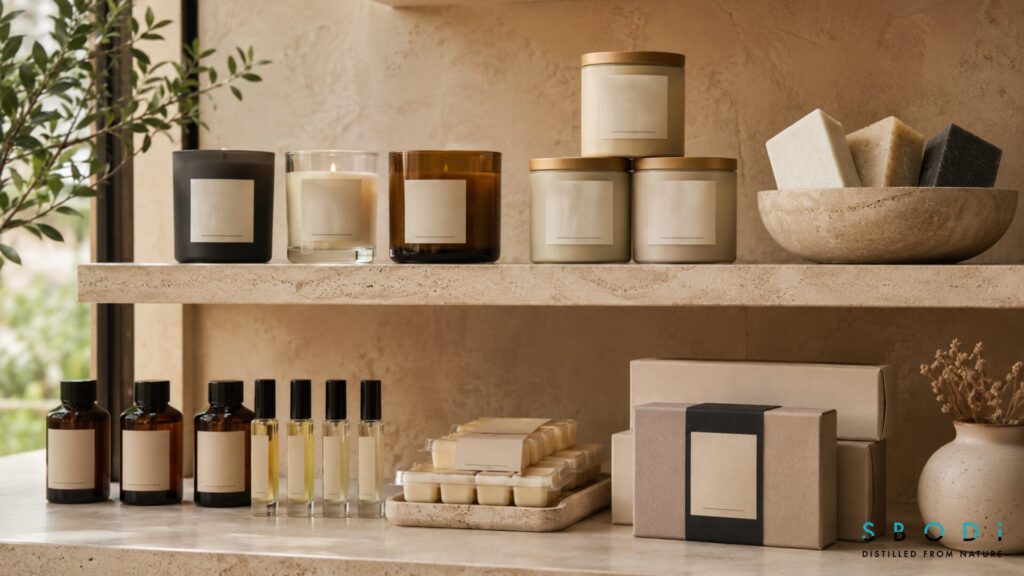
Future collections are likely to focus on coordinated vessel systems instead of unrelated individual products.
Important trends include:
- Reusable glass containers
- Softer matte and translucent finishes
- Neutral permanent collections
- Limited seasonal color releases
- Smaller candle fragrance samples
- Reduced packaging where protection allows
- Coordinated candles, soaps, wax melts, and bath products
- More readable and accessible label designs
These trends favor practical packaging and consistent branding over excessive decoration.
Wholesale Candle Resources
Choosing a glass tumbler candle is only one part of product development. Wax, wick performance, fragrance strength, landed cost, supplier communication, minimum orders, and packaging should also be reviewed.
SBODi’s wholesale candle sourcing guide explains wholesale, ready-to-label, white label, and private label candle models in more detail.
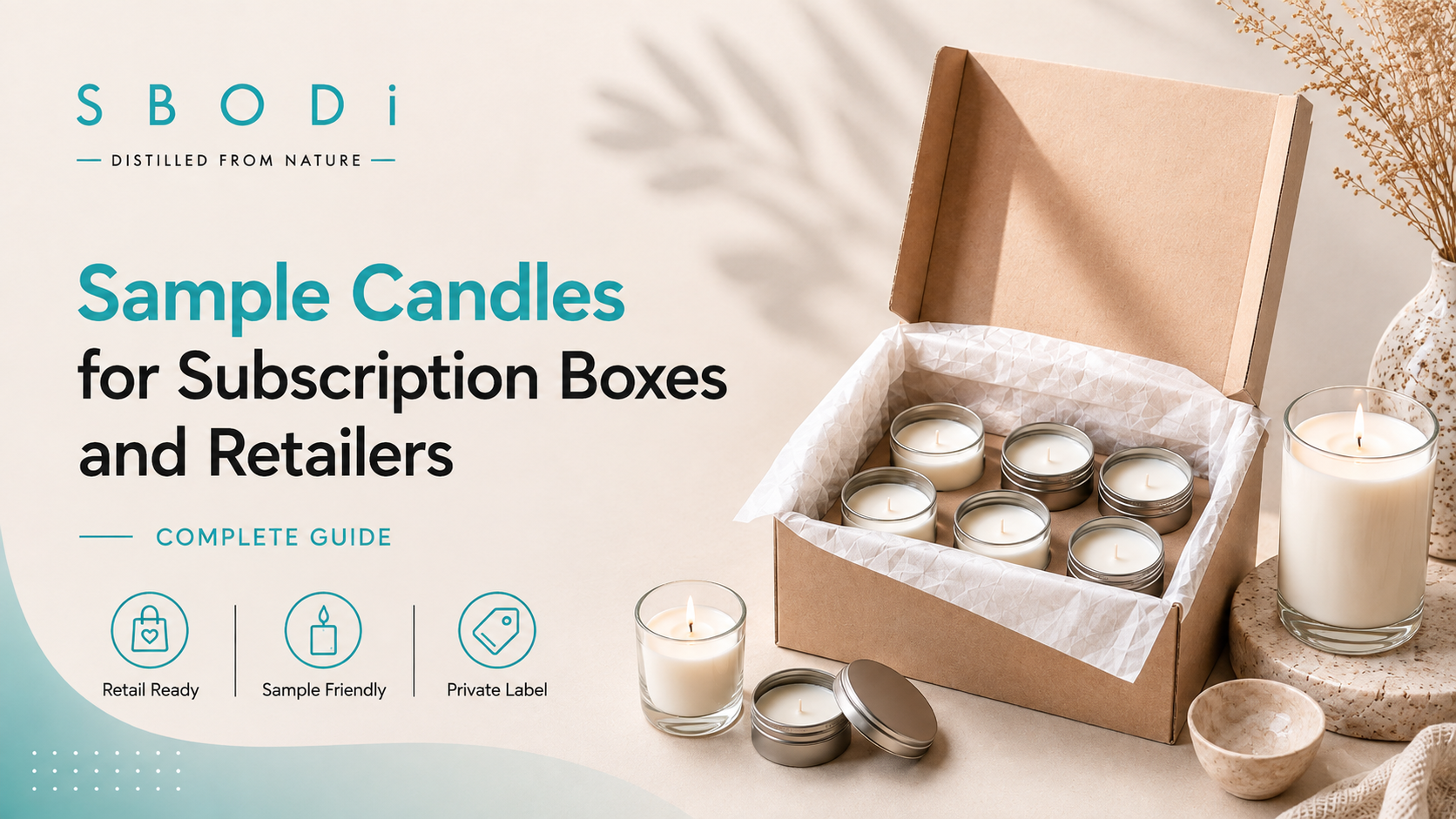
Businesses comparing scents before ordering larger quantities can also review available candle fragrance samples. Sampling helps buyers compare fragrance direction without relying only on written scent descriptions.
SBODi works across wholesale and private label bath, body, wellness, and home-fragrance categories. Its candle resources provide practical context for businesses researching vessel styles, fragrance selection, packaging, and coordinated self-care collections.