Introduction
Private label bath salts USA are becoming an important product category for wellness brands that want simple, retail-ready, and easy-to-understand bath products. Bath salts are familiar to customers, flexible for packaging, and suitable for spas, boutiques, ecommerce stores, gift sets, and private label bath and body collections.
For brand owners, the opportunity is not only the product itself. It is the ability to build a complete self-care line around mineral bath salts, scented bath salts, Epsom salt bath products, bath soaks, candles, soaps, shower steamers, and other wholesale bath products.
This guide explains how private label bath salts work, what buyers should evaluate, how packaging affects brand positioning, and how wellness brands can plan a stronger bath salts collection for long-term retail growth.
Table of Contents
- What Are Private Label Bath Salts?
- Why Private Label Bath Salts USA Matter for Wellness Brands
- How the Bath Salts Market Fits Into Self-Care and Bath Product Trends
- Private Label Bath Salts vs Wholesale Bath Salts
- Common Types of Bath Salts for Private Label Brands
- Key Benefits for Wellness Brands, Spas, Boutiques, and Ecommerce Stores
- How to Plan a Private Label Bath Salts Collection
- Manufacturing Considerations for Private Label Bath Salts
- Packaging Considerations for Retail-Ready Bath Salts
- Buying Considerations Before Choosing a Bath Salts Supplier
- How Bath Salts Connect With Bath Bombs, Shower Steamers, Candles, and Soaps
- Common Mistakes to Avoid
- How SBODI Fits Into Bath Salts Brand Planning
- Helpful Resource for Broader Bath Salts Planning
- Future Trends in Private Label Bath Salts USA
- Frequently Asked Questions
- Conclusion
What Are Private Label Bath Salts?
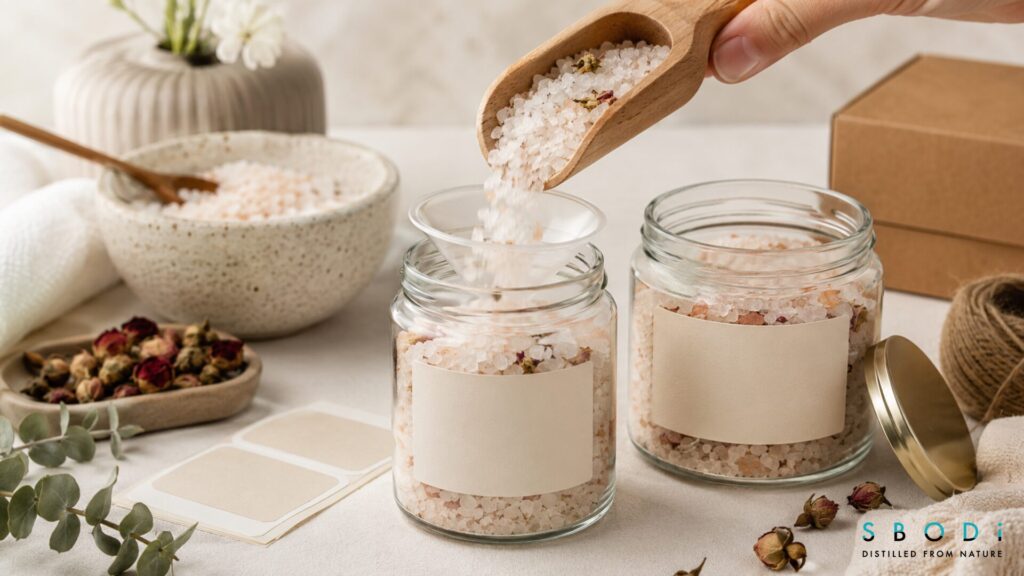
Private label bath salts are bath soaking products manufactured by one company and sold under another brand’s name. A wellness brand, spa, boutique, or ecommerce business can work with a bath salts manufacturer or supplier to create products with its own label, packaging, scent direction, and brand presentation.
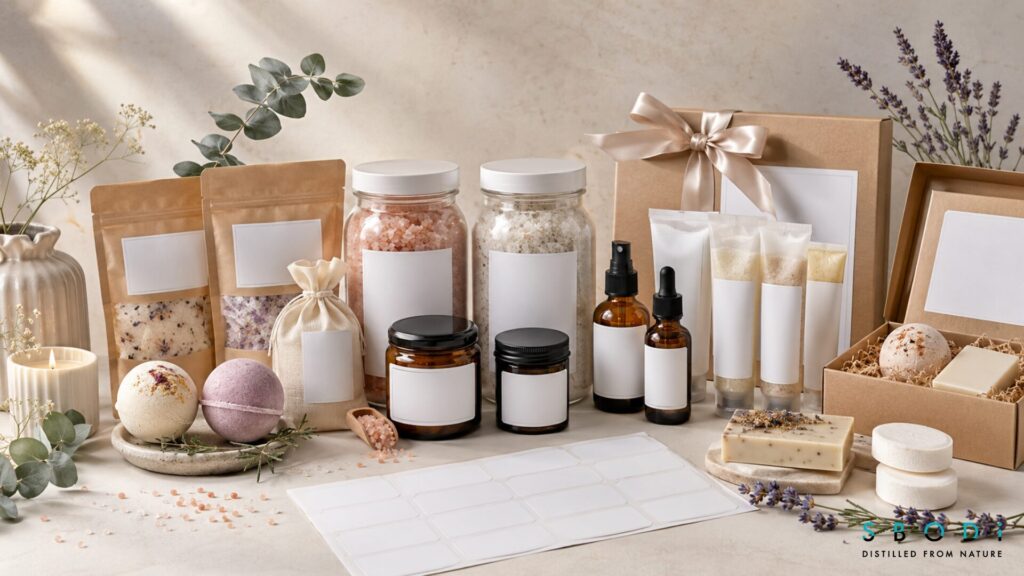
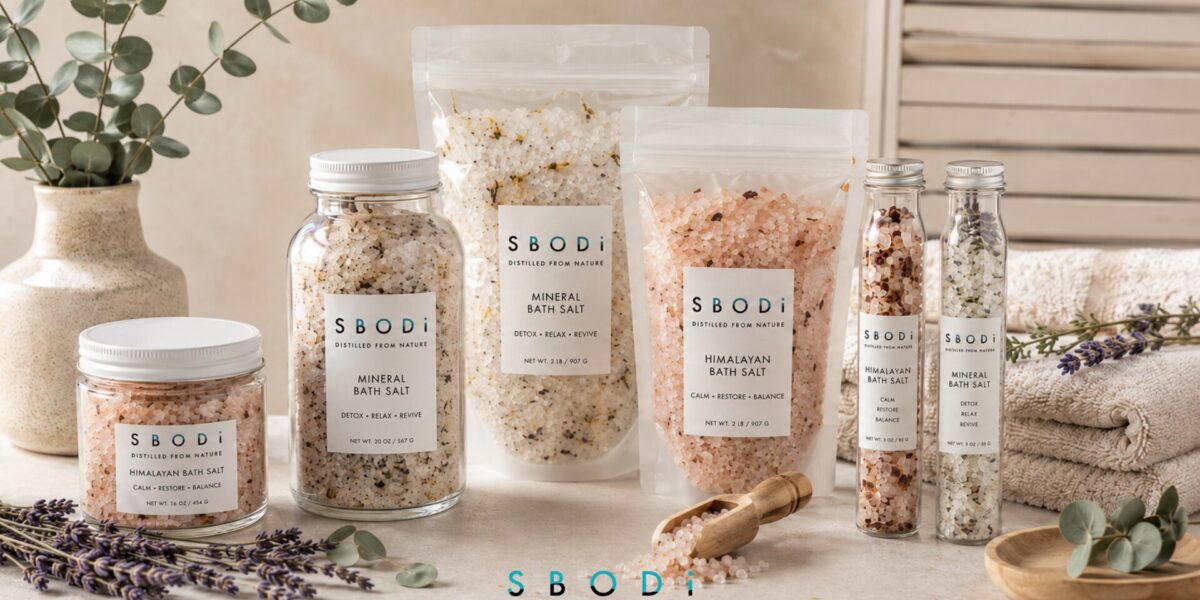
In most cases, private label bath salts USA may include salt-based bath soak products such as Epsom salt bath products, sea salt blends, mineral bath salts, scented bath salts, aromatherapy bath salts, and custom bath salts. These products are usually packaged in jars, pouches, tubes, sachets, or gift-ready containers.
The private label model is useful for businesses that want branded bath products without building their own manufacturing facility. Instead of sourcing every ingredient, managing production, and packaging each product internally, brands can work with an experienced supplier that already understands bath product wholesale, packaging, bulk production, and retail presentation.
A private label bath salt product usually includes:
- A finished bath salt or bath soak formula
- Brand label or packaging design
- Fragrance or scent direction
- Product size and packaging format
- Ingredient information
- Retail or ecommerce positioning
- Optional collection planning with related products
For wellness brands, private label bath salts offer a practical entry point into bath and body products because they are easy to explain, simple to merchandise, and highly adaptable across different brand styles.
Why Private Label Bath Salts USA Matter for Wellness Brands
Private label bath salts USA matter because wellness brands need products that are approachable, practical, and flexible. Bath salts fit naturally into self-care routines, spa merchandising, gift bundles, and ecommerce product collections.
Unlike more complex bath and body categories, bath salts are visually simple and easy for customers to understand. A buyer can immediately recognize a jar, pouch, or tube of bath salts as a bath soak product. This reduces the need for heavy product education and helps brands communicate value through packaging, scent, ingredients, and positioning.
For wellness brands, bath salts can support several goals:
- Expanding a bath and body product line
- Creating retail-ready gift products
- Offering spa-inspired self-care items
- Building seasonal collections
- Adding products with flexible packaging options
- Pairing bath salts with bath bombs, candles, soaps, and shower steamers
- Creating branded bath soak products for resale
The USA market is especially relevant for businesses that want domestic sourcing, faster communication, lower shipping complexity, and supplier relationships that may better support packaging, labeling, and quality expectations.
When brands search for private label bath salts USA, they are often looking for more than a basic product. They usually want a supplier that can support product consistency, brand presentation, ingredient clarity, and scalable production.
How the Bath Salts Market Fits Into Self-Care and Bath Product Trends
Bath salts sit inside the larger bath, body, and wellness product category. Current wellness research shows continued consumer interest in daily wellness routines, personalization, and at-home self-care products. McKinsey’s 2025 wellness survey also highlights consumer demand across multiple wellness subcategories, including products connected to daily routines and personal care.
The bath salts market also reflects steady interest in mineral-based bath products, aromatherapy bath salts, spa bath salts, and premium bath soak formats. Grand View Research estimated the global bath salts market at USD 3.02 billion in 2024 and projected growth through 2033, with consumer interest connected to relaxation, skin care, and wellness-oriented routines.
For private label brands, this matters because bath salts are not limited to one customer type. They can work across multiple channels:
- Spa retail shelves
- Wellness boutiques
- Gift shops
- Ecommerce stores
- Subscription boxes
- Hotel amenity collections
- Private label bath and body brands
- Self-care product bundles
Bath salts also fit well with other product categories. A brand can sell private label bath salts as a standalone product or combine them with wholesale bath bombs, shower steamers, private label candles, handmade soap bars, and body care wholesale products.
This makes bath salts useful for brands that want product variety without creating a confusing product line.
Private Label Bath Salts vs Wholesale Bath Salts
Private label bath salts and wholesale bath salts are related, but they are not exactly the same.
Wholesale bath salts are usually purchased in larger quantities for resale, spa use, or retail merchandising. They may be sold in bulk packaging, supplier-branded packaging, or retail-ready containers.
Private label bath salts are designed to be sold under your own brand name. The product may be manufactured by a bath salts supplier, but the label, branding, and packaging presentation belong to your business.
Main Differences
| Category | Wholesale Bath Salts | Private Label Bath Salts |
|---|---|---|
| Branding | Supplier brand or generic packaging | Your brand name and label |
| Best For | Resale, spas, boutiques, bulk buying | Brand building and product line development |
| Customization | Usually limited | More packaging and label flexibility |
| Buyer Goal | Stock products quickly | Build a branded bath salts collection |
| Long-Term Value | Useful for resale | Better for brand recognition |
Both options can work, depending on the business model.
A spa may purchase wholesale bath salts USA for treatment rooms or retail shelves. An ecommerce wellness brand may choose private label bath salts USA to build a recognizable product line. A boutique may use private label wholesale bath salts USA to create giftable products under its own store brand.
Common Types of Bath Salts for Private Label Brands
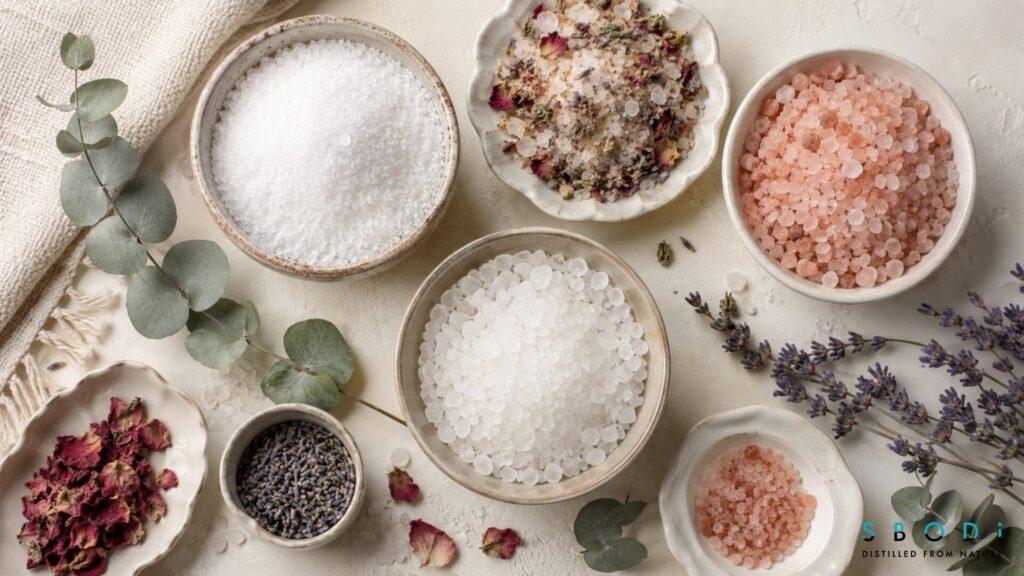
A strong private label bath salts collection usually starts with product type selection. The right product type depends on the target customer, retail price, packaging format, and brand story.
Epsom Salt Bath Products
Epsom salt bath products are among the most familiar bath soak options. They are often used in self-care product lines because customers recognize the ingredient and understand its bath soak purpose.
For private label brands, Epsom salt blends can be positioned as simple, clean, spa-inspired, or everyday bath products. They can also be paired with scent profiles such as lavender, eucalyptus, citrus, vanilla, rose, or botanical blends.
Mineral Bath Salts
Mineral bath salts can include sea salts, Dead Sea salt-style blends, Himalayan salt-style blends, or other mineral salt formats. These products often work well for premium bath and body collections because the texture, color, and mineral positioning can create a more elevated retail feel.
Mineral bath salts are especially useful for brands that want natural bath products, spa bath salts, or luxury bath soak products.
Scented Bath Salts
Scented bath salts use fragrance direction as the main product appeal. This category works well because scent is one of the easiest ways to create product variety.
Common scent directions include:
- Lavender
- Eucalyptus
- Rose
- Citrus
- Vanilla
- Coconut
- Peppermint
- Sandalwood
- Green tea
- Sea salt
- Floral blends
- Herbal blends
A scented bath salts collection can be designed around mood, season, color, retail theme, or gift set strategy.
Aromatherapy Bath Salts
Aromatherapy bath salts are often built around scent experience. Brands should be careful with wording here. It is better to describe the sensory experience rather than making strong wellness or therapeutic claims.
For example, use language such as:
- “Lavender-inspired bath soak”
- “Eucalyptus-scented bath salts”
- “A spa-style soaking experience”
- “A calming scent profile”
- “A refreshing shower and bath collection”
Avoid unsupported claims that suggest a product treats medical conditions or delivers guaranteed health outcomes.
Custom Bath Salts
Custom bath salts may include unique scent blends, color direction, packaging styles, botanical accents, or brand-specific product themes. This format can work well for brands that want differentiation.
Custom bath salts may include:
- Signature scent collections
- Branded bath salts
- Seasonal bath soak products
- Gift-ready bath salts
- Spa retail collections
- Boutique-exclusive bath products
- Private label bath soak lines
Custom options are useful, but buyers should always review minimum order quantity, lead time, cost, packaging compatibility, and labeling requirements before moving forward.
Key Benefits for Wellness Brands, Spas, Boutiques, and Ecommerce Stores
Private label bath salts USA can support different business models because the product category is flexible and easy to package.
Benefits for Wellness Brands
Wellness brands can use private label bath salts to expand beyond one product type. Bath salts can support a larger self-care line that may include candles, soaps, bath bombs, shower steamers, body care products, and bath soak products.
Key benefits include:
- Easy product education
- Strong gift potential
- Flexible scent development
- Retail-friendly packaging
- Simple product bundling
- Low barrier to customer understanding
- Strong fit for self-care content
Benefits for Spas
Spas can sell spa bath salts as retail products after treatments or use them in gift packages. Bath salts also support a spa’s brand identity because they connect naturally with relaxation, sensory experience, and bath rituals.
Spas may use bath salts for:
- Retail shelves
- Gift bags
- Seasonal promotions
- Branded take-home products
- Spa membership gifts
- Hotel or resort retail programs
Benefits for Boutiques
Boutiques need products that look good on shelves and are easy to explain. Bath salts work well because packaging can create visual appeal even when the product itself is simple.
Boutique buyers often care about:
- Label design
- Container quality
- Scent appeal
- Giftability
- Shelf size
- Price point
- Product story
Benefits for Ecommerce Stores
Ecommerce stores can use private label bath salts USA to create content-rich product pages, SEO blog clusters, bundle pages, gift guides, and seasonal campaigns.
Bath salts are useful online because they can be explained through:
- Ingredient descriptions
- Scent notes
- Packaging images
- Bath routine content
- Product pairing guides
- Gift collection pages
- FAQ sections
This makes bath salts a practical category for SEO-driven ecommerce growth.
How to Plan a Private Label Bath Salts Collection
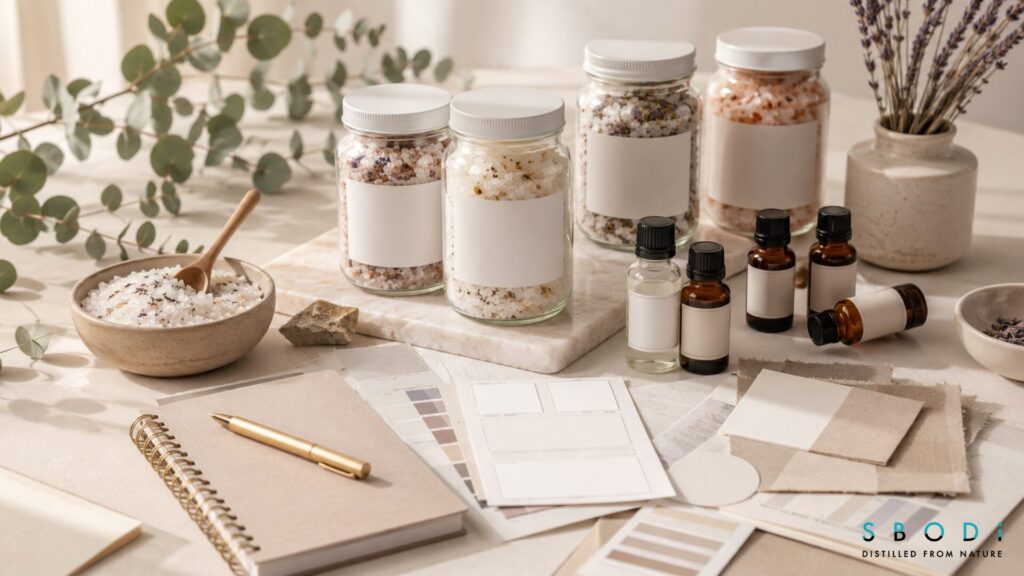
Planning a private label bath salts collection should start before product selection. A strong collection is not just a group of random scents. It should reflect a clear brand strategy.
Step 1: Define the Target Customer
Start by identifying who the product is for. A spa customer, boutique shopper, gift buyer, and ecommerce customer may all respond to different packaging, scent, and price points.
Useful customer profiles include:
- Spa and wellness shoppers
- Boutique gift buyers
- Natural bath product customers
- Minimalist self-care customers
- Luxury bath and body buyers
- Seasonal gift shoppers
- Ecommerce wellness customers
Once the customer is clear, product decisions become easier.
Step 2: Choose the Product Positioning
Product positioning determines how the bath salts should look, feel, and be described.
Common positioning options include:
- Luxury bath salts
- Natural bath salts
- Spa bath salts
- Aromatherapy bath salts
- Minimalist bath soaks
- Gift-ready bath salts
- Boutique bath salts
- Private label bath soak products
The positioning should match your brand design, packaging budget, and customer expectations.
Step 3: Select Salt Type and Scent Direction
Next, choose the salt base and scent strategy. Some brands may focus on Epsom salt bath products, while others may prefer mineral bath salts or blended bath soak products.
A balanced starting collection may include:
- One lavender or floral scent
- One eucalyptus or herbal scent
- One citrus scent
- One unscented or minimal option
- One seasonal or limited-edition scent
This gives customers variety without making the collection too difficult to manage.
Step 4: Decide Packaging Format
Packaging affects shelf appeal, shipping cost, retail price, and customer perception.
Common packaging options include:
- Stand-up pouches
- Glass jars
- Plastic jars
- Paper tubes
- Single-use sachets
- Gift boxes
- Bulk refill bags
- Retail-ready containers
Premium products may use jars or tubes. Value-focused products may use pouches. Gift-ready products may use boxes, ribbons, sleeves, or bundled packaging.
Step 5: Review Label and Compliance Needs
Bath salts sold as cosmetic-style bath products should be reviewed carefully for labeling, ingredient declaration, net quantity, identity statement, business information, and claim language. The FDA provides cosmetic labeling guidance, including information about ingredient declarations and label presentation.
Brands should also avoid unclear environmental claims. The FTC Green Guides explain how marketers should avoid misleading environmental claims, including claims related to recyclable, degradable, and eco-friendly language.
Step 6: Build Product Bundles
Bath salts become stronger when they connect with other products. A private label bath salts USA collection can be paired with:
- Wholesale bath bombs
- Bath bombs and soaks
- Private label shower steamers
- Spa candles
- Wholesale soap bars
- Body care wholesale products
- Gift packaging
- Self-care accessories
This helps the brand create a complete bath and body experience rather than relying on one product category.
Manufacturing Considerations for Private Label Bath Salts

Choosing a bath salts manufacturer is one of the most important steps in building a reliable product line. The supplier should understand formulation, packaging, labeling support, production capacity, and quality consistency.
Formula Consistency
Formula consistency matters because customers expect the same product experience every time they reorder. Inconsistent scent strength, texture, color, or fill weight can weaken trust.
Buyers should ask about:
- Salt base options
- Fragrance options
- Color options
- Botanical inclusion options
- Batch consistency
- Quality control process
- Storage recommendations
- Shelf life guidance
Ingredient Clarity
Ingredient clarity is important for customer confidence and retailer approval. Brands should request clear ingredient information before finalizing product pages, labels, or wholesale catalogs.
Ingredient clarity helps with:
- Label writing
- Product descriptions
- Retail buyer review
- Ecommerce transparency
- Customer service responses
- Future product updates
Minimum Order Quantity
MOQ affects cash flow, inventory planning, and product testing. Private label bath salts USA suppliers may offer different minimums depending on packaging type, scent customization, label requirements, and production complexity.
Brands should compare:
- MOQ per scent
- MOQ per packaging format
- MOQ for custom labels
- MOQ for custom formulas
- Sample availability
- Reorder minimums
- Lead times
A lower MOQ can help new brands test demand. A higher MOQ may reduce unit cost but requires stronger forecasting.
Production Lead Time
Lead time affects launch planning. Brands should not wait until the last minute to order private label bath salts, especially for seasonal collections.
Lead time may be affected by:
- Ingredient availability
- Packaging availability
- Label printing
- Custom scent approval
- Batch scheduling
- Holiday demand
- Shipping timelines
A good launch plan should include enough time for samples, packaging review, production, product photography, website setup, and retail preparation.
Packaging Considerations for Retail-Ready Bath Salts
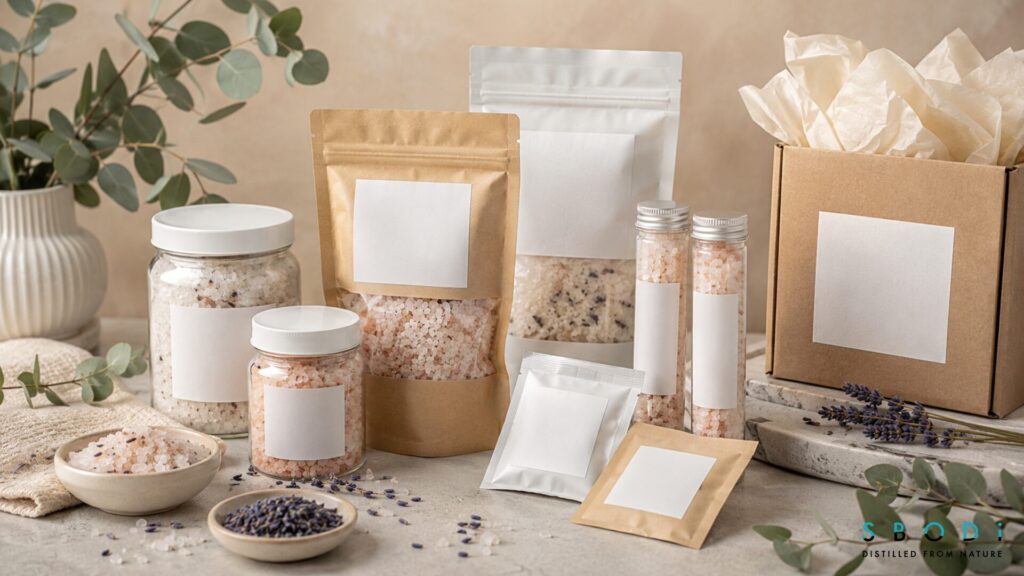
Packaging is one of the biggest factors in bath salts branding. The same bath salt formula can feel affordable, natural, luxury, spa-inspired, or boutique-ready depending on packaging.
Pouches
Pouches are popular because they are lightweight, practical, and flexible. They work well for ecommerce, wholesale bath salts, and mid-priced retail products.
Pouches are useful for:
- Larger bath salts bulk sizes
- Refill-style products
- Affordable retail collections
- Minimalist branding
- Online shipping
Jars
Jars give bath salts a premium presentation. They work well for luxury bath salts, spa bath salts, and boutique retail displays.
Jars are useful for:
- Premium shelf appeal
- Gift-ready products
- Visual product texture
- Branded bath salts
- Spa retail collections
Label Design
Label design should be clear, readable, and aligned with the product’s retail positioning. A bath salts label should not be overloaded with unnecessary text.
Important label elements may include:
- Product name
- Bath salt or bath soak identity
- Scent name
- Net quantity
- Ingredient information
- Brand name
- Business information
- Directions
- Caution language when appropriate
- Batch or lot information when used
The goal is to make the product look professional while keeping the customer experience simple.
Buying Considerations Before Choosing a Bath Salts Supplier
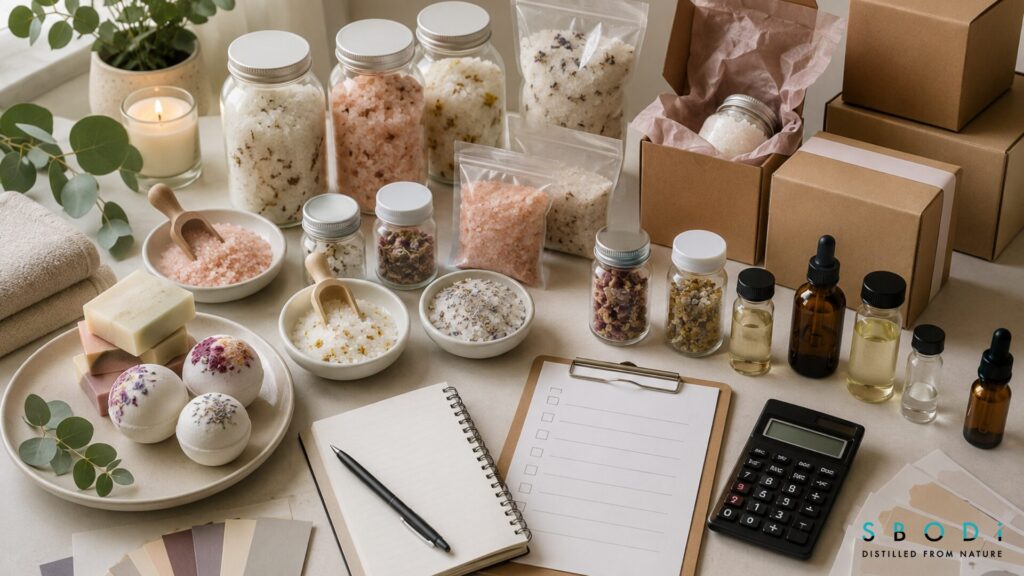
A bath salts supplier should be evaluated carefully before placing a larger order. The right supplier should help protect product quality, timelines, brand consistency, and customer confidence.
Supplier Experience
Look for a supplier that understands bath and body products, not just bulk ingredient sales. Experience with private label bath products, wholesale bath products, bath bombs and soaks, shower steamers, candles, and soaps can be helpful if you plan to build a larger collection.
Product Samples
Samples help brands evaluate scent, texture, packaging, fill weight, and overall presentation before committing to a larger order.
Review samples for:
- Scent quality
- Salt texture
- Color consistency
- Packaging durability
- Label fit
- Product appearance
- Ease of use
- Shipping protection
Packaging Support
Packaging support is important because a bath salt product must survive storage, shipping, retail handling, and customer use. Poor packaging can create leakage, clumping, label damage, or weak shelf appeal.
Communication
A good supplier should communicate clearly about timelines, pricing, packaging, MOQ, sample options, ingredient information, and reorder requirements.
Poor communication often creates problems later, especially when brands prepare for seasonal launches, wholesale orders, or ecommerce campaigns.
Total Cost
Do not evaluate bath salts wholesale pricing only by unit cost. The real cost includes packaging, labels, shipping, storage, photography, website setup, and potential retail margins.
A stronger calculation includes:
- Product cost
- Label cost
- Packaging cost
- Shipping cost
- Storage cost
- Product photography cost
- Marketplace or website fees
- Retail margin
- Wholesale margin
- Promotional costs
This helps brands avoid underpricing their private label bath salts USA collection.
How Bath Salts Connect With Bath Bombs, Shower Steamers, Candles, and Soaps
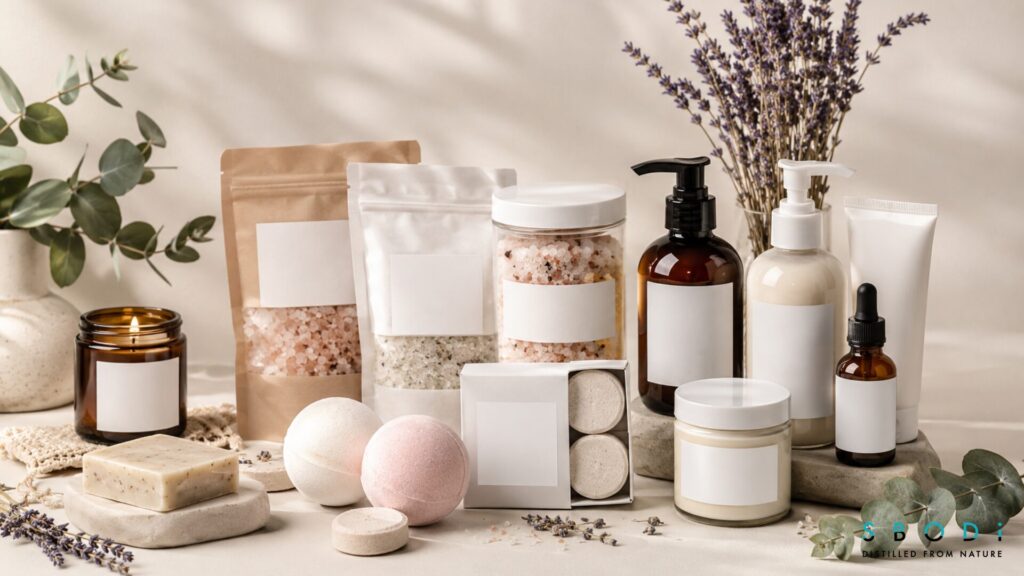
Bath salts become more powerful when they are part of a complete bath and body strategy. Many wellness customers prefer collections that feel coordinated.
Bath Salts and Bath Bombs
Bath salts and bath bombs serve different customer preferences. Bath bombs are visual, fizzy, colorful, and giftable. Bath salts are simple, practical, mineral-based, and often more flexible for routine use.
A brand may use both categories together through:
- Bath bombs and soaks gift sets
- Wholesale bath bombs and soaks collections
- Private label bath bombs and bath salts
- Seasonal bath product bundles
- Spa-inspired bath routines
This allows a brand to serve customers who like fizzing bath products and customers who prefer mineral bath soak products.
Bath Salts and Shower Steamers
Not every customer takes baths. Shower steamers help brands serve customers who prefer shower-based self-care products.
Private label shower steamers, wholesale shower steamers USA, eucalyptus shower steamers, aromatherapy shower steamers, and spa shower steamers can pair well with bath salts in a broader wellness line.
This combination helps brands create both bath and shower products without losing category focus.
Bath Salts and Candles
Candles support the atmosphere around bath routines. Private label candles, scented candles wholesale, spa candles, amber jar candles, and luxury candles wholesale can help turn a simple bath salt product into a complete self-care gift set.
A bath salts and candle bundle can work well for:
- Holiday gifts
- Spa retail
- Boutique shelves
- Ecommerce gift boxes
- Subscription products
Bath Salts and Soap Bars
Soap bars are practical everyday products. Wholesale soap bars, natural soap wholesale, handmade soap wholesale, private label soap bars, and branded soap products can help balance a bath salts collection.
This creates a useful mix of routine body care products and more gift-focused bath soak products.
Common Mistakes to Avoid
Private label bath salts USA can be a strong category, but mistakes in planning, packaging, or positioning can reduce results.
Choosing Too Many Scents at Launch
Too many scent options can create inventory problems. New brands often perform better with a focused collection of three to five scents.
A smaller launch is easier to photograph, describe, package, and test.
Ignoring Packaging Costs
Packaging can significantly affect product margins. A beautiful jar may look premium, but it may increase shipping weight, breakage risk, and total cost.
Brands should compare packaging appeal with real operational costs.
Using Weak Product Descriptions
Bath salts need clear descriptions. A weak product page that only lists the scent and size may not give customers enough information.
A strong product description should explain scent profile, salt type, packaging, use case, and product positioning.
Making Unsupported Claims
Avoid strong claims that suggest a bath salt product treats, cures, prevents, or diagnoses health conditions. Keep the language focused on sensory experience, bath routine, fragrance, packaging, ingredients, and self-care context.
Skipping Samples
Samples are essential. They help confirm whether the scent, texture, packaging, and product presentation match the brand’s expectations.
Skipping samples can lead to costly product revisions later.
Treating Bath Salts as a Standalone Product Only
Bath salts can sell alone, but they often become stronger when used in bundles, gift sets, and bath and body collections.
A better strategy connects bath salts with bath bombs, shower steamers, candles, soaps, and body care products.
How SBODi Fits Into Bath Salts Brand Planning
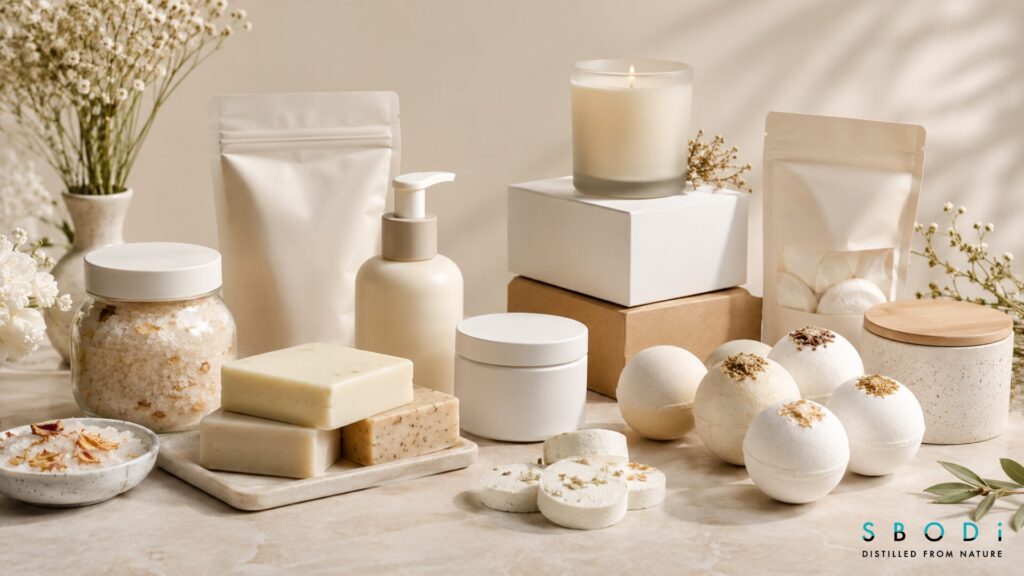
SBODi operates in the bath and body product space, where product planning, packaging, and category alignment are important for wellness brands. For businesses researching private label bath salts USA, SBODi can be positioned as an educational industry resource for understanding how bath salts fit into a larger bath and body strategy.
This includes how bath salts connect with wholesale bath products, private label bath products, bath bombs, shower steamers, candles, soaps, and wellness-focused product collections.
The key value for readers is education. A brand should understand product type, packaging format, supplier expectations, label clarity, scent direction, and retail strategy before making buying decisions.
Bath salts may look simple, but a well-planned private label bath salts collection requires clear thinking around product quality, packaging, merchandising, and long-term brand fit.
Helpful Resources for Broader Bath Salts Planning
Building a successful private label bath salts USA collection requires more than choosing a scent and packaging style. Wellness brands also need to understand how bath salts fit into wholesale sourcing, product presentation, label clarity, customer expectations, and long-term bath and body product planning.
For a deeper overview of this category, SBODI’s guide on wholesale bath salts for wellness brands provides helpful context on sourcing, packaging options, product positioning, and how bath salts can support broader wellness collections.
That resource is especially useful for readers comparing private label bath salts, wholesale bath salts USA, bath soak products, and related bath and body categories. It explains how product selection connects with supplier evaluation, packaging decisions, resale planning, and brand development.
Brands should also review trusted external resources when planning bath salt products for retail or ecommerce. The FDA Cosmetics Labeling Guide is a useful reference for understanding cosmetic-style labeling basics, including product identity, ingredient declaration, net quantity, and label presentation. The FDA Summary of Cosmetics Labeling Requirements can also help brands better understand general labeling expectations for cosmetic products.
If a brand plans to use packaging terms such as recyclable, eco-friendly, biodegradable, sustainable, or environmentally friendly, it should also review the FTC Green Guides. These guidelines help marketers avoid environmental claims that may confuse or mislead customers.
For broader market context, the McKinsey Future of Wellness Trends Survey can help brand owners understand how consumer interest in wellness, self-care, and personal care routines continues to shape product development decisions.
Together, these resources help wellness brands make better decisions before launching or expanding a private label bath salts collection. Instead of viewing bath salts as a simple standalone product, brand owners can approach them as part of a complete bath and body strategy that includes packaging, sourcing, compliance awareness, ecommerce content, and customer experience.
Future Trends in Private Label Bath Salts USA
The future of private label bath salts USA will likely be shaped by product simplicity, packaging quality, scent storytelling, and retail-ready presentation.
More Minimalist Bath Products
Many wellness brands are moving toward cleaner visual design. Minimal labels, neutral packaging, soft colors, and simple scent names can make bath salts feel more premium and modern.
More Gift-Ready Collections
Bath salts are well suited for gift boxes. Brands may increasingly package bath salts with candles, soap bars, shower steamers, bath bombs, and small body care products.
More Seasonal Scent Strategy
Seasonal scents can help brands refresh product lines without changing the core formula. Examples include winter mint, spring floral, summer citrus, autumn spice, and holiday vanilla blends.
More Focus on Packaging Experience
Packaging will continue to influence customer perception. Brands that invest in clean labels, quality containers, and professional product photography may have stronger shelf appeal and ecommerce presentation.
More Product Pairing Across Bath and Body
Bath salts will continue to connect with related categories such as wholesale bath bombs, private label shower steamers, private label candles, wholesale soap bars, and body care wholesale products.
This category pairing helps wellness brands build more complete collections instead of relying on one product type.
Frequently Asked Questions