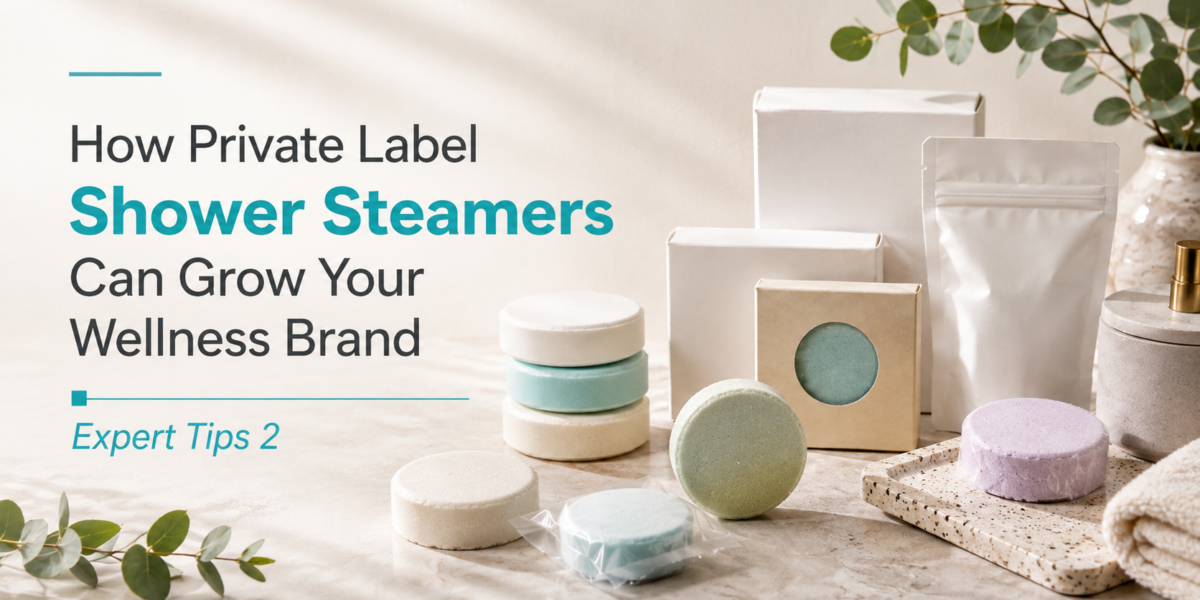
Wellness brands are constantly looking for products that are easy for customers to understand, visually appealing, and suitable for everyday self-care routines. Private label shower steamers can fit naturally into that strategy.
Instead of developing a shower steamer formula, production process, packaging system, and supply chain from the beginning, private labeling allows a business to work with an established manufacturer and sell finished products under its own branding.
For boutiques, spas, ecommerce stores, gift companies, and growing bath and body brands, this approach can make it easier to expand a product collection while keeping the customer experience consistent.
This guide explains how private label shower steamers can support brand growth, where they fit within a wellness product strategy, and what businesses should consider before launching them.
What Are Private Label Shower Steamers?
Private label shower steamers are products manufactured by one company and sold by another business under its own brand.
The manufacturer generally handles the physical production of the shower steamers, while the retailer or brand focuses on areas such as:
- Brand identity
- Product positioning
- Packaging
- Label design
- Product photography
- Merchandising
- Marketing
- Customer experience
The exact level of customization varies between manufacturers. Some suppliers offer ready-made formulas with customizable labels, while others may provide additional choices involving fragrances, colors, packaging formats, shapes, or product sizes.
This makes private labeling different from developing a completely custom formulation from the ground up.
Why Shower Steamers Fit the Wellness Market
Shower steamers provide wellness brands with a bath-and-body product that does not require customers to have a bathtub.
They are generally placed in the shower where moisture gradually activates the tablet and releases its fragrance into the surrounding shower environment.
From a merchandising perspective, shower steamers also work well alongside products such as:
- Bath bombs
- Soaps
- Candles
- Bath salts
- Gift sets
This makes them particularly useful for brands trying to build a broader self-care collection rather than relying on a single product category.
Brands should also be careful about how fragrance and aromatherapy products are described, because a product’s intended use and marketing claims can affect how it is regulated in the United States. The FDA provides additional guidance on aromatherapy products and claims.
How Private Label Shower Steamers Can Expand Your Product Line
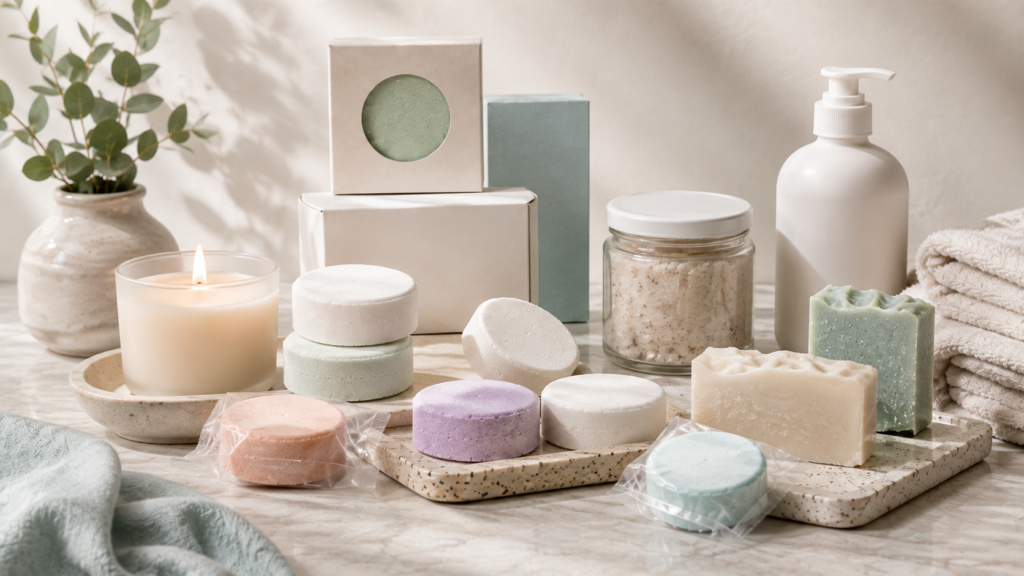
Adding a new product does not always require creating an entirely new brand direction.
A wellness company already selling bath, body, fragrance, or relaxation-oriented products can use shower steamers as a logical product extension.
For example, a brand offering candles and handmade soaps could introduce complementary shower steamers in similar fragrance families.
A spa-oriented business could include them within home-care or gift collections.
An ecommerce wellness brand could offer individual steamers, multipacks, or themed sets.
The main advantage is category expansion without forcing the brand into an unrelated market.
A well-chosen product extension can make an existing collection feel more complete.
Creating a More Cohesive Brand Experience
Private labeling is not simply about placing a logo on a product.
The strongest private label collections usually maintain consistency across multiple customer touchpoints.
That includes:
- Packaging colors
- Typography
- Product naming
- Photography style
- Fragrance descriptions
- Label layout
- Product sizes
- Gift packaging
For example, if a wellness brand uses minimal white packaging and botanical colors across its soaps and body products, its shower steamers should ideally follow the same visual direction.
Consistency helps customers understand that different products belong to the same collection.
Using Scent to Build Product Variety
Fragrance can be one of the simplest ways to create variety within a shower steamer collection.
Instead of launching many unrelated products, a brand might develop a focused assortment around several scent profiles.
Examples could include:
Fresh and Clean
Citrus, mint, eucalyptus-inspired, or herbal fragrance profiles can work well within fresh wellness collections.
Soft and Relaxing
Lavender-inspired, floral, vanilla, or gentle botanical profiles may fit brands with a softer self-care aesthetic.
Seasonal Collections
Brands may also rotate limited collections based on seasons, holidays, or gifting periods.
The key is not necessarily offering as many fragrances as possible.
A smaller, well-organized collection is often easier for customers to understand and easier for retailers to merchandise.
Packaging and Presentation Matter
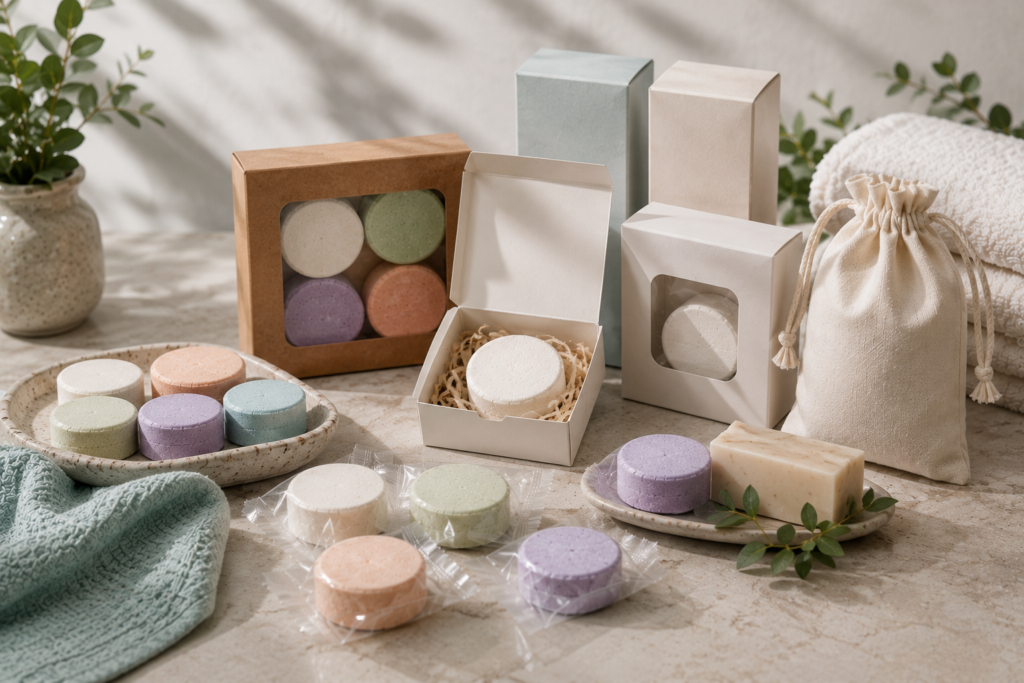
Packaging plays an important role because customers often encounter the packaging before they experience the actual product.
Private label shower steamers may be offered in several formats, including:
- Individually wrapped tablets
- Paper sleeves
- Small retail boxes
- Multipacks
- Gift boxes
- Pouches
Individually wrapped shower steamers can be especially practical for retail environments because the packaging helps keep individual products separated and organized.
Brands should consider both appearance and functionality when selecting packaging.
Important questions include:
- Will the packaging protect the product?
- Is there enough space for required label information?
- Does it match the rest of the brand?
- Is it suitable for ecommerce shipping?
- Can retailers display it easily?
Good packaging should support both branding and practical product handling.
Opportunities for Bundles and Gift Sets
Shower steamers can also help brands create additional product combinations without introducing entirely new formulas.
For example, a business could offer:
- Three-scent shower steamer sets
- Shower steamer and candle bundles
- Soap and shower steamer gift boxes
- Seasonal wellness boxes
- Spa-inspired gift collections
- Trial or discovery sets
Bundles can help customers explore multiple products while also giving brands more ways to organize their catalog.
They may also be useful during gifting periods when shoppers are looking for ready-to-present wellness products.
Retail and Ecommerce Applications
Private label shower steamers can work across several sales channels.
Boutiques
Individual products and small gift sets can be displayed near soaps, candles, skincare, or other self-care products.
Spas and Salons
Steamers may complement existing retail sections containing home wellness and body-care products.
Ecommerce Stores
Online brands can sell individual fragrances, multipacks, discovery sets, and curated bundles.
Subscription Boxes
Individually packaged products can potentially be incorporated into themed wellness boxes when their size, packaging, and presentation fit the subscription format.
Understanding the intended sales channel before placing a wholesale order can help determine the most suitable packaging and quantity.
Why Sampling Before Launch Matters
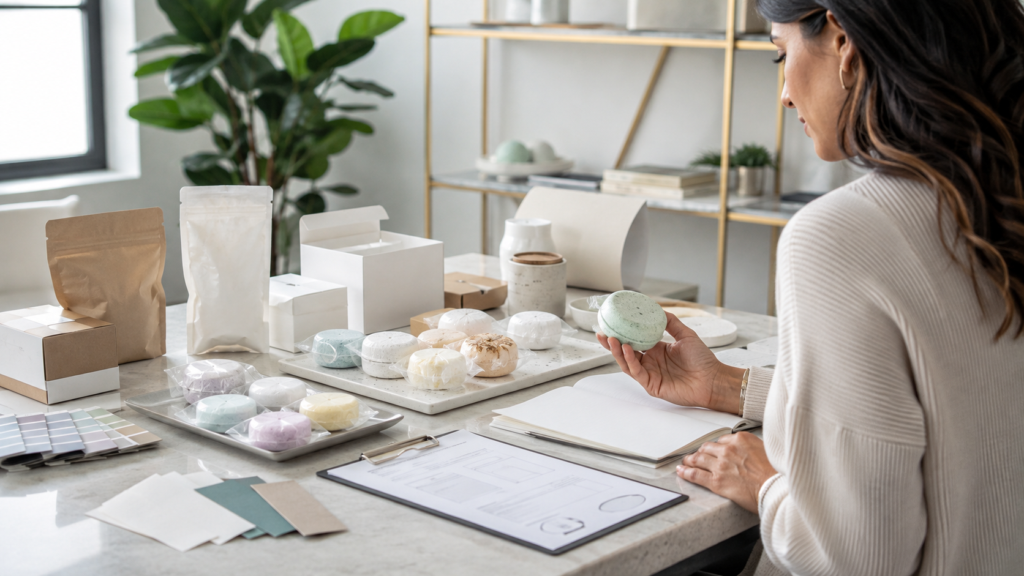
Product samples allow a brand to evaluate a supplier before committing to a larger order.
When reviewing shower steamer samples, businesses should examine:
- Tablet size
- Appearance
- Fragrance consistency
- Packaging quality
- Wrapping and seals
- Product durability
- Label space
- Overall presentation
It is also useful to compare several samples from the same product line rather than evaluating only one tablet.
Consistency matters when products will eventually be sold together under the same brand.
Choosing a Private Label Shower Steamer Supplier
The right supplier should support more than basic product availability.
Before choosing a manufacturer, ask about:
Minimum Order Quantities
Confirm the minimum quantity required for each fragrance, packaging format, or product variation.
Customization Options
Determine whether you can customize labels, scents, packaging, colors, shapes, or product sizes.
Production Lead Times
Understand how much time is normally required between placing an order and receiving finished products.
Packaging Options
Ask whether products are individually wrapped, boxed, labeled, or supplied ready for your own packaging process.
Product Consistency
Request samples and compare quality across multiple units.
Scaling Options
Consider whether the supplier can support larger quantities if demand increases.
A manufacturer that fits a small launch should ideally also support the next stage of the brand’s development.
Common Mistakes to Avoid
Private labeling can simplify product development, but planning is still important.
Common mistakes include:
- Launching too many fragrances at once
- Selecting packaging based only on appearance
- Ordering large quantities before testing samples
- Using inconsistent branding across products
- Ignoring ecommerce shipping requirements
- Choosing products that do not match the existing audience
- Failing to confirm production lead times
- Building too many SKUs before knowing what customers prefer
A focused initial collection usually provides clearer information about customer demand than an unnecessarily large launch.
Frequently Asked Questions
Conclusion
Private label shower steamers can give wellness brands a practical way to expand beyond their existing product categories while maintaining control over branding, packaging, merchandising, and customer positioning.
Their flexibility allows businesses to sell them individually, combine them into multipacks, create gift sets, or pair them with complementary bath and body products.
For wellness brands that approach private labeling strategically, shower steamers can become a natural extension of a broader bath, body, fragrance, or self-care collection.