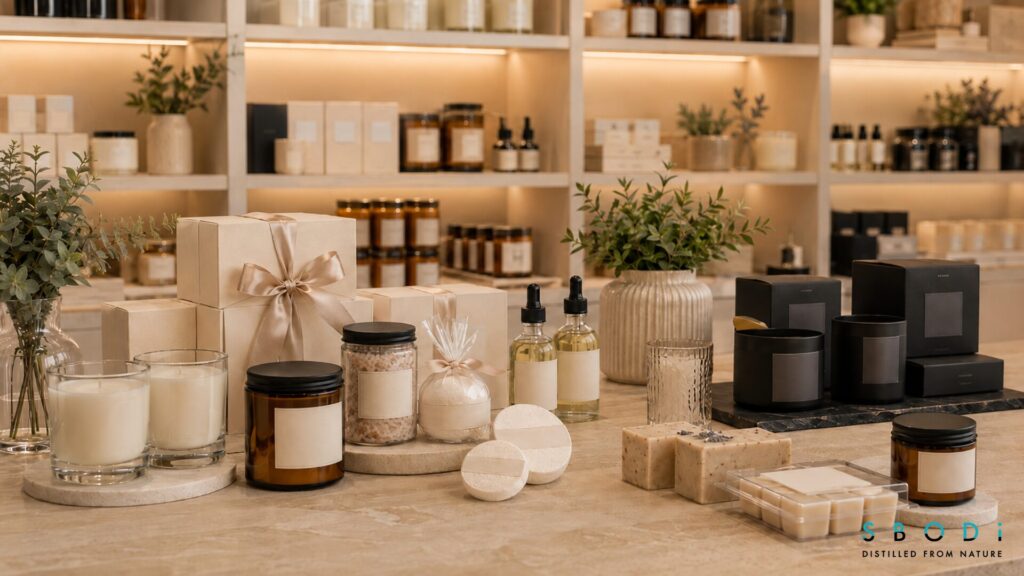
Finding the best wholesale candles US boutique stores can stock requires more than choosing attractive scents and containers. Retailers must consider product quality, fragrance performance, pricing, packaging, minimum orders, shipping durability, safety, and supplier reliability.
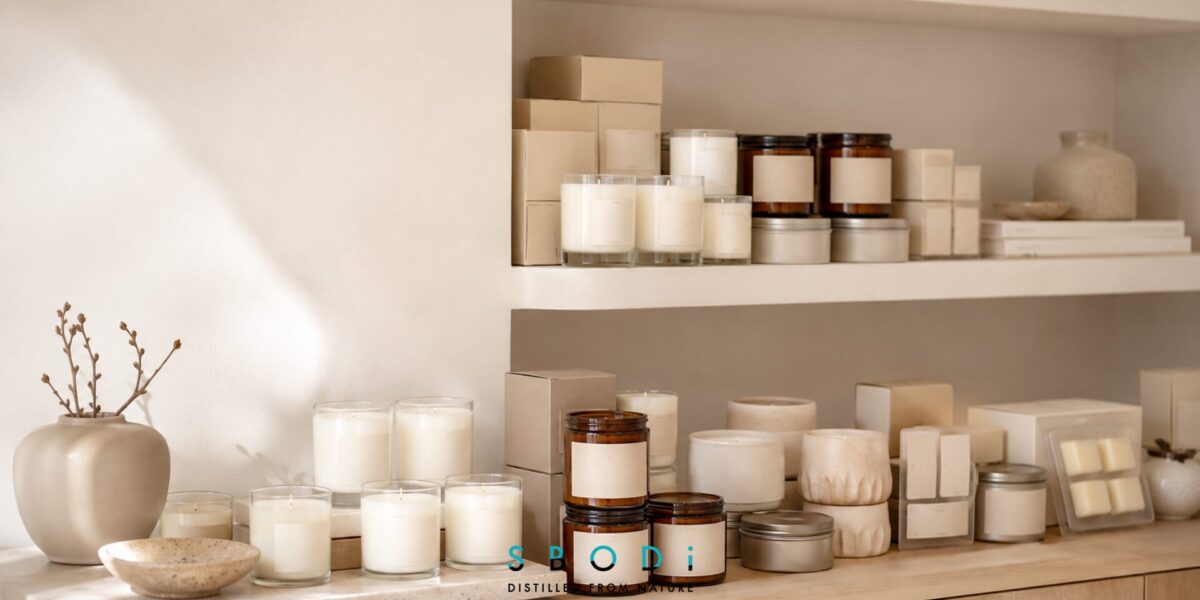
The right candle collection should match the boutique’s customers, retail price range, available shelf space, and brand style. This guide explains how to compare wholesale candle suppliers, evaluate candle samples, calculate costs, and build a focused collection that is easier to sell and reorder.
Table of Contents
- What Are Wholesale Candles?
- What Makes a Wholesale Candle Suitable for Boutiques?
- Wholesale Candle Suppliers to Research
- Best Candle Types for Boutique Stores
- How to Evaluate Wax, Wicks, and Fragrance
- Candle Packaging and Safety
- Step-by-Step Buying Process
- Pricing and Profit Margins
- Common Buying Mistakes
- Private Label Candle Options
- Frequently Asked Questions
- Conclusion
What Are Wholesale Candles?
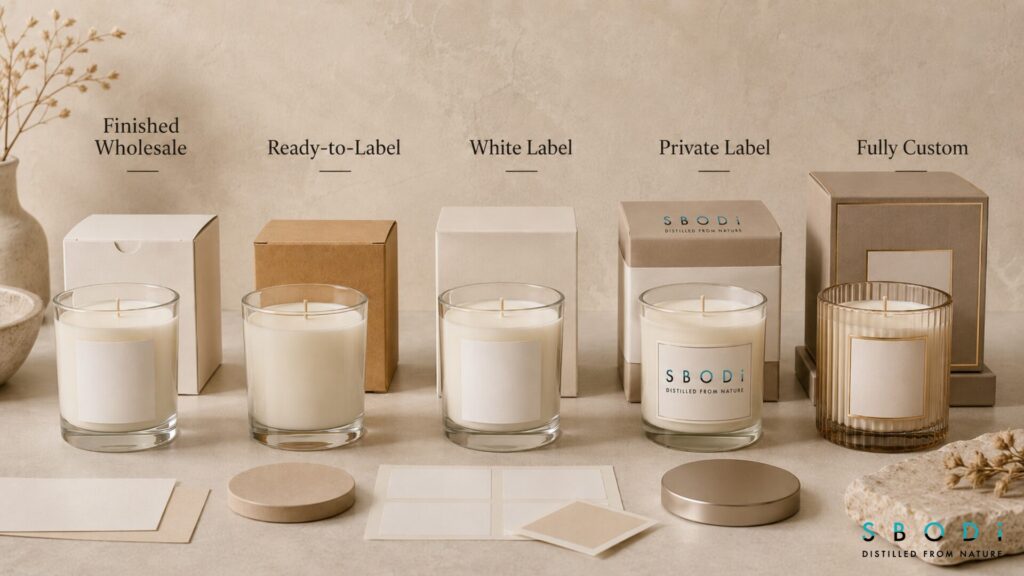
Wholesale candles are purchased by retailers at commercial prices for resale in boutiques, gift stores, spas, hotels, ecommerce shops, and subscription boxes.
They are usually sold in cases or minimum order quantities. The wholesale price is lower than the suggested retail price because the retailer handles merchandising, storage, marketing, and final customer sales.
Common wholesale candle models include:
Finished Wholesale Candles
These products carry the supplier’s branding and are ready for immediate resale.
They are suitable for boutiques that want established packaging, professional product presentation, and shorter setup times.
White Label Candles
White label candles use an existing candle formula and vessel but allow the retailer to add its own label.
Customization is usually limited to labels, fragrance names, lids, or simple packaging.
Private Label Candles
Private label candles provide more control over branding, fragrance selection, vessel style, packaging, and product presentation.
They normally require higher minimum orders and longer production times than finished wholesale candles.
What Makes the Best Wholesale Candles US Boutiques Can Stock?
The best wholesale candles for boutiques should offer:
- Consistent fragrance quality
- Reliable burn performance
- Attractive retail packaging
- Suitable wholesale margins
- Manageable minimum order quantities
- Secure shipping protection
- Clear safety instructions
- Reliable reorder availability
- Products that match the boutique’s audience
No single supplier is best for every store. A luxury home boutique may prefer decorative vessels and premium cartons, while a wellness store may focus on amber jar candles, herbal fragrances, and simple neutral packaging.
Wholesale Candle Suppliers to Research

The following U.S. suppliers and wholesale platforms are useful starting points. Their prices, policies, minimums, and product ranges may change, so buyers should verify current information before ordering.
P.F. Candle Co.
P.F. Candle Co. offers candles and home fragrance products through a wholesale program for approved retailers.
Its modern packaging and lifestyle-focused fragrances may suit contemporary boutiques, gift shops, and home stores.
Sweet Water Decor
Sweet Water Decor offers wholesale candles in clear, amber, white, and colored jars, along with gift and home décor products.
It may suit boutiques looking for coordinated candle collections and seasonal gift items.
Milkhouse Candle Company
Milkhouse produces candles using soy wax and beeswax blends and supplies independent retailers.
Its rustic packaging and fragrance selection may fit farmhouse stores, natural product shops, and regional gift boutiques.
Paddywax
Paddywax is known for decorative candle vessels and design-led collections.
It may suit bookstores, gift stores, home décor boutiques, and retailers that want candles with reusable or visually distinctive containers.
Bridgewater Candle Company
Bridgewater supplies candles and other home fragrance products through an authorized retailer program.
Its coordinated product collections may work well for traditional gift stores and fragrance-focused retailers.
Faire
Faire is a wholesale marketplace rather than a candle manufacturer.
It allows boutique owners to compare multiple candle brands, price points, case quantities, reviews, and opening-order requirements in one place.
Best Candle Types for Boutique Stores
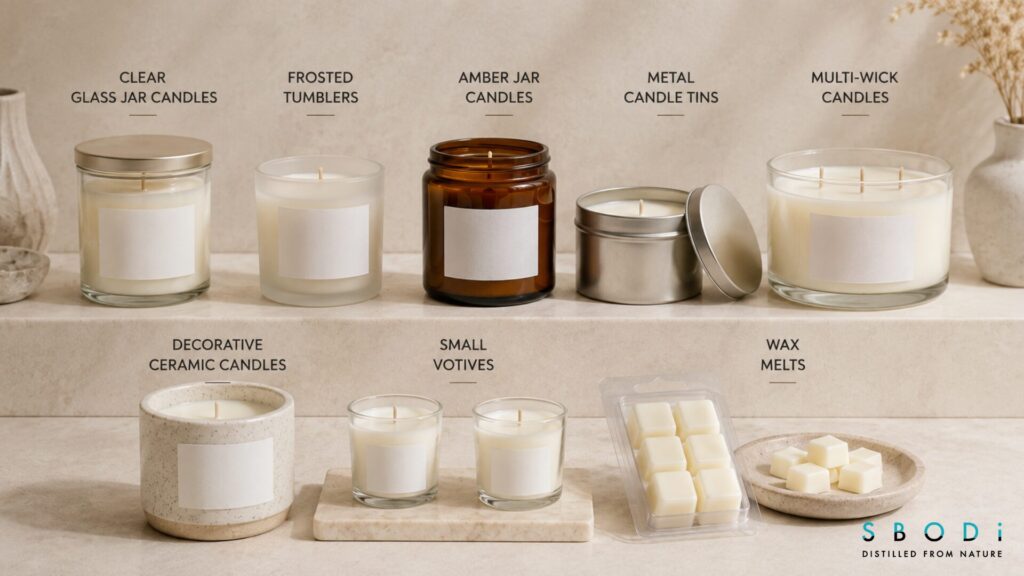
Glass Jar Candles
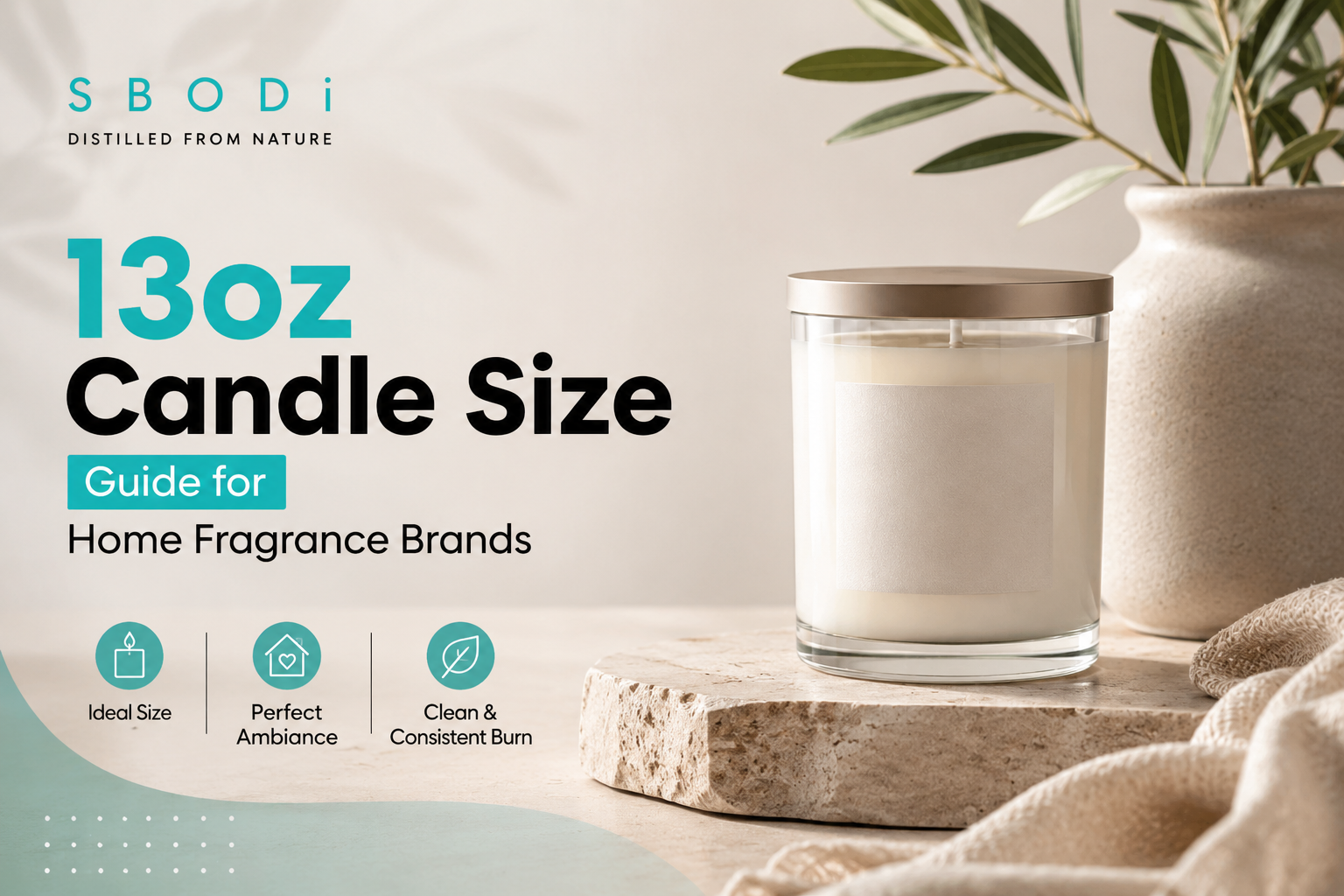
Glass jar candles remain one of the most practical wholesale formats.
They support labels, lids, cartons, gift packaging, and several design styles, including clear, frosted, black, white, and colored glass.
Glass Tumbler Candles
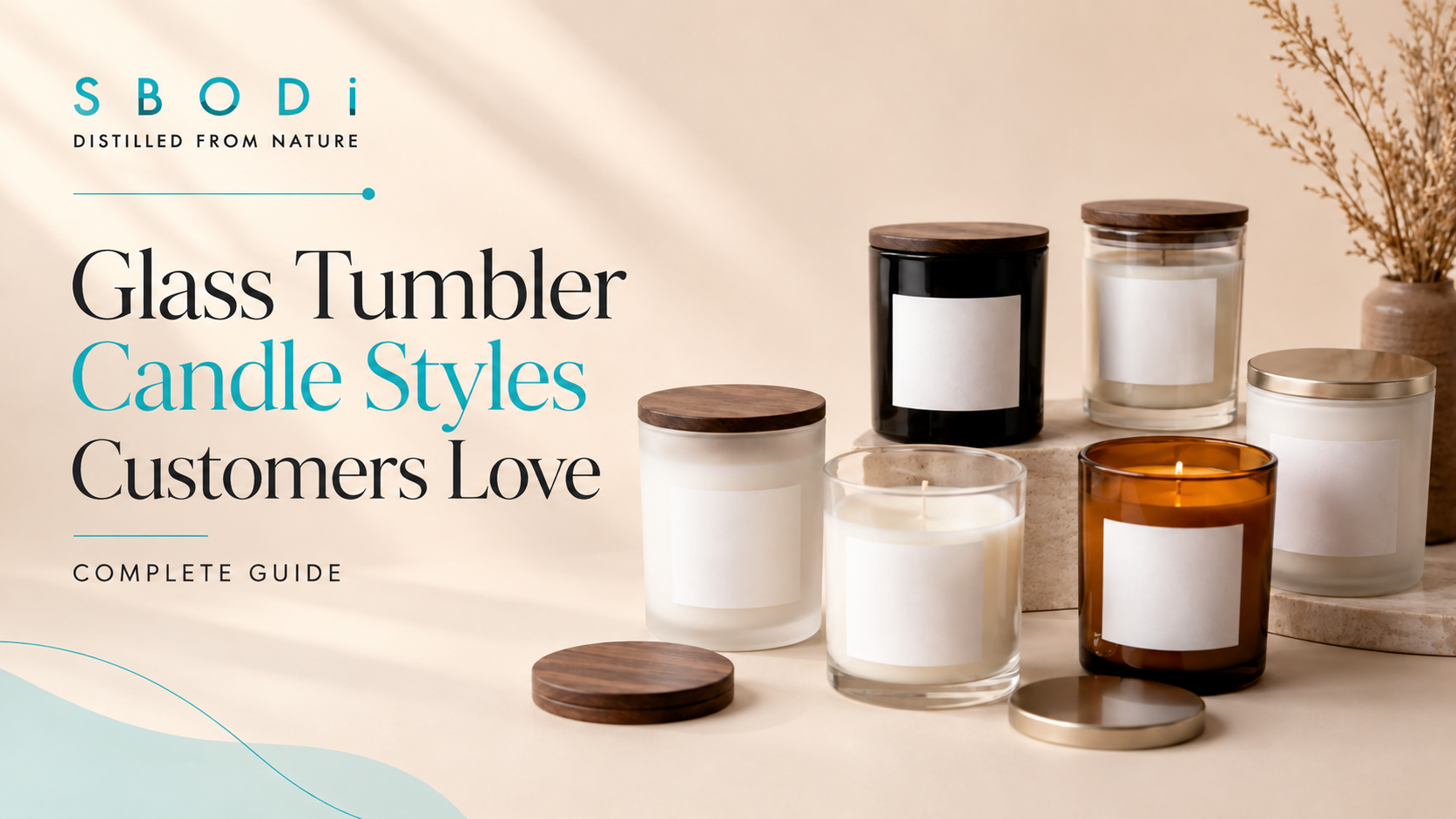
Glass tumblers offer a clean, modern appearance and work well for spa candles, luxury candles wholesale collections, and private label candles.
Their straight sides also simplify label placement and retail photography.
Amber Jar Candles
Amber jar candles create a warm, apothecary-inspired appearance.
They fit wellness boutiques, spas, natural product stores, and brands using neutral or botanical packaging.
Candle Tins
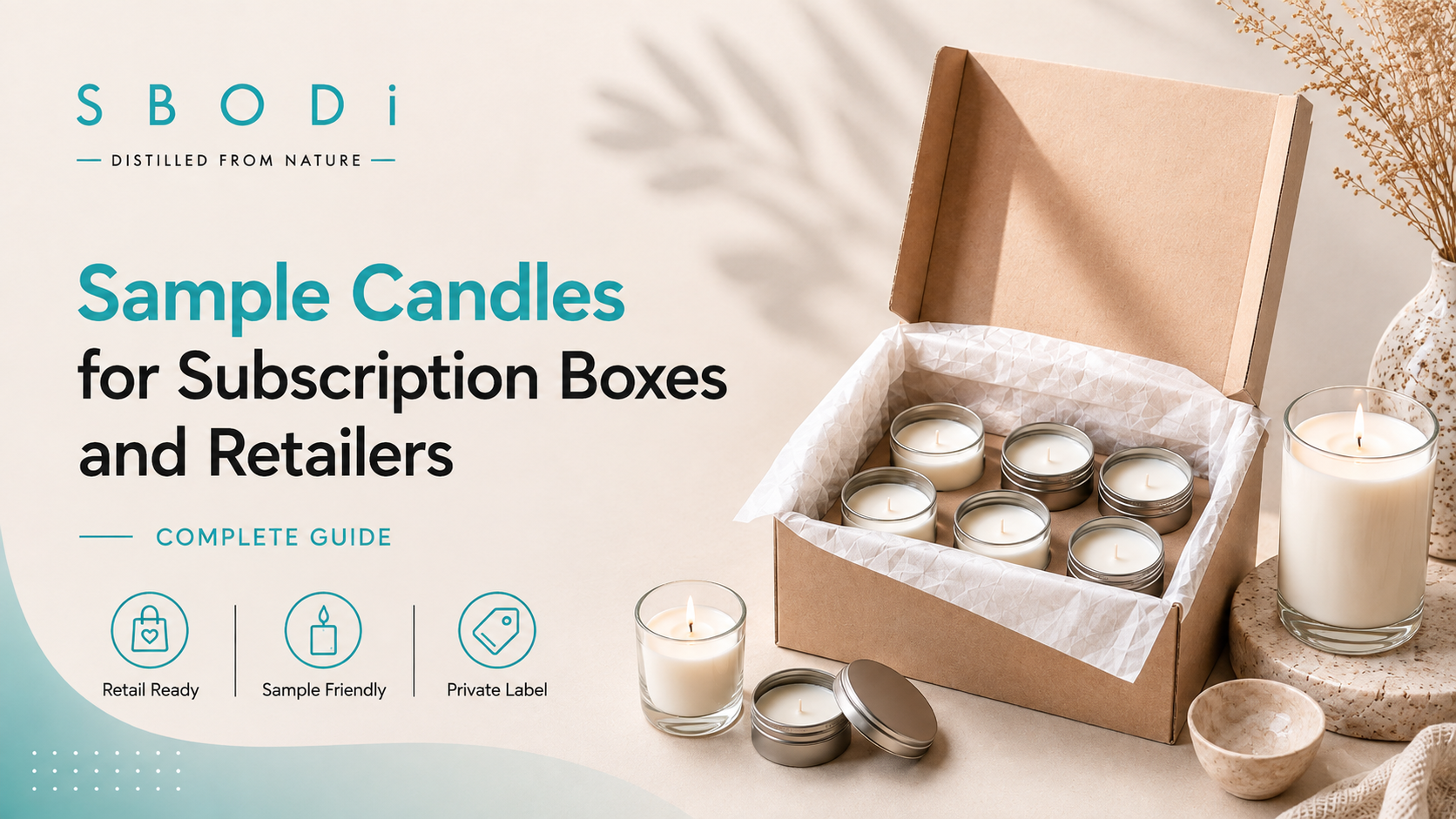
Candle tins are lightweight and practical for subscription boxes, travel sets, gift baskets, and lower-priced collections.
They also reduce breakage compared with glass vessels.
Wholesale Wax Melts
Wholesale wax melts allow retailers to offer popular fragrances in a flame-free format.
They can be sold individually or paired with matching candles as part of a coordinated home fragrance range.
How to Evaluate Wax, Wicks, and Fragrance
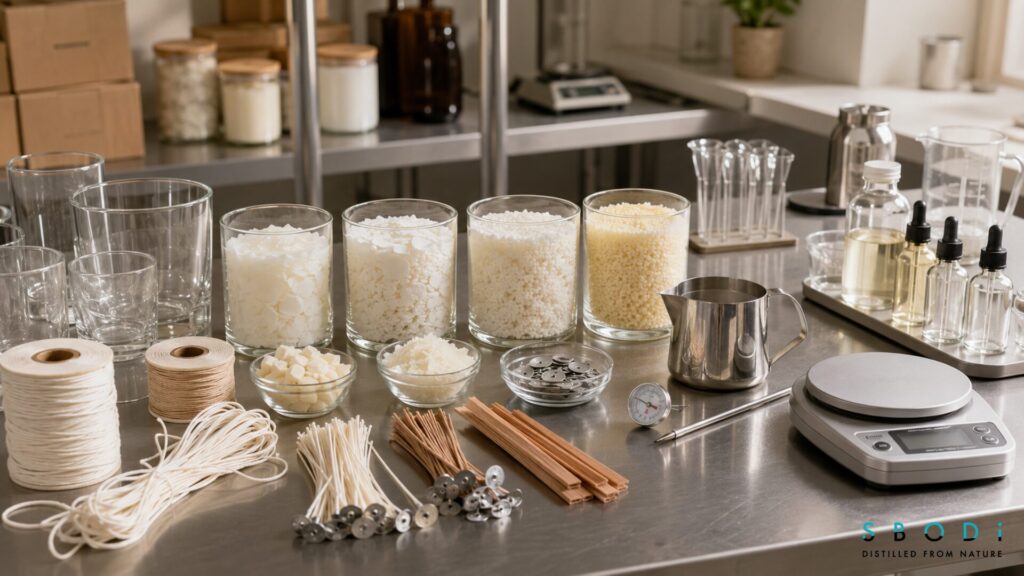
Candle Wax
Common candle wax systems include:
- Soy wax
- Paraffin wax
- Beeswax
- Coconut-based wax
- Vegetable wax blends
- Proprietary wax blends
Wax type alone does not determine candle quality. Buyers should evaluate how the wax performs with the wick, fragrance, vessel, and expected burn time.
Soy wax candles may support a natural or contemporary product image, but they can still perform poorly when the wick or fragrance system is unsuitable.
Candle Wicks
The wick controls how melted wax reaches the flame.
A wick that is too large may create an oversized flame, visible soot, or excessive vessel heat. A wick that is too small may cause tunneling, weak flames, or incomplete melt pools.
Retailers should ask whether the exact wax, wick, vessel, and fragrance combination has been tested.
Candle Fragrance
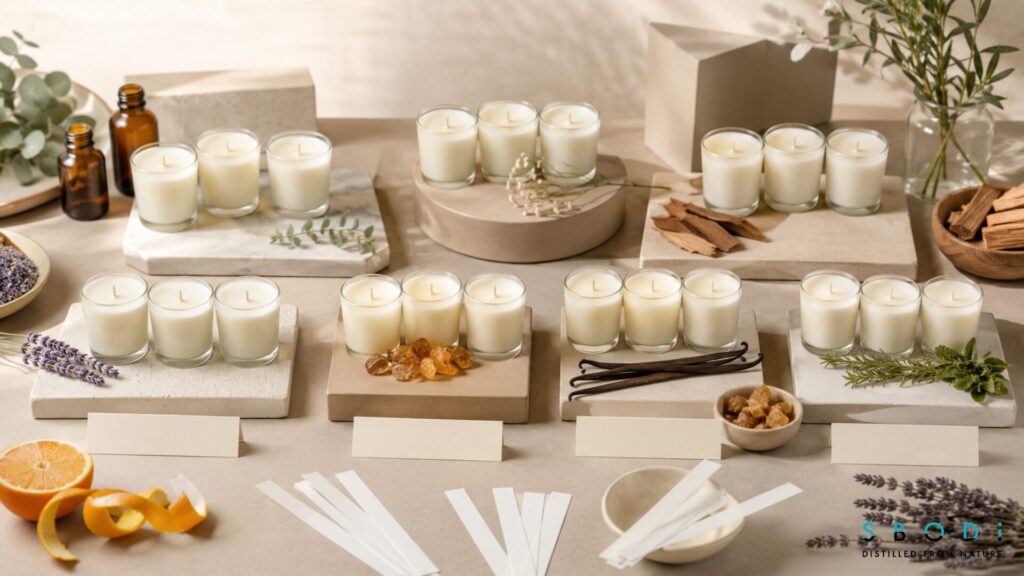
Fragrance strongly influences candle purchases, especially in physical boutiques where customers can smell products before buying.
Evaluate both:
- Cold throw: The fragrance released before the candle is lit
- Hot throw: The fragrance released while the candle burns
A balanced opening collection may include:
- One fresh scent
- One floral scent
- One woody scent
- One amber or gourmand scent
- One herbal or spa-inspired scent
- One seasonal scent
Starting with four to six fragrances usually makes inventory easier to manage.
Candle Packaging and Safety
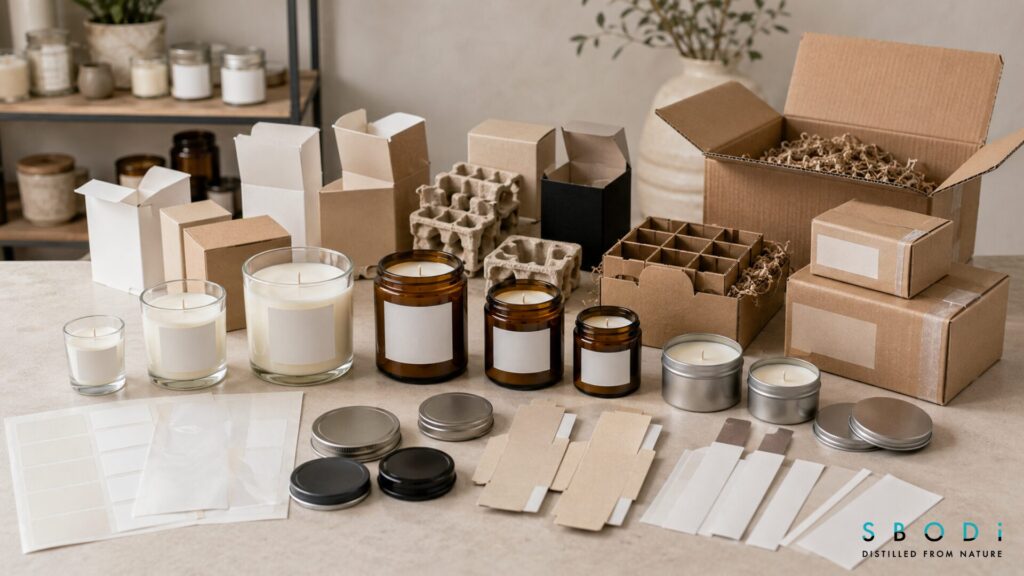
Packaging affects product presentation, shipping durability, and customer experience.
Retailers should review:
- Vessel quality
- Lid fit
- Label alignment
- Carton protection
- Shipping dividers
- Damage replacement policies
- Temperature sensitivity
- Packaging consistency
Candles are open-flame products, so safety information should never be treated as optional.
Retailers should ask suppliers about:
- Burn testing
- Vessel testing
- Wick materials
- Safety labels
- Batch consistency
- Fragrance documentation
- Applicable candle safety standards
Avoid candles with loose decorative materials near the wick unless the finished product has been properly developed and tested.
Step-by-Step Wholesale Candle Buying Process
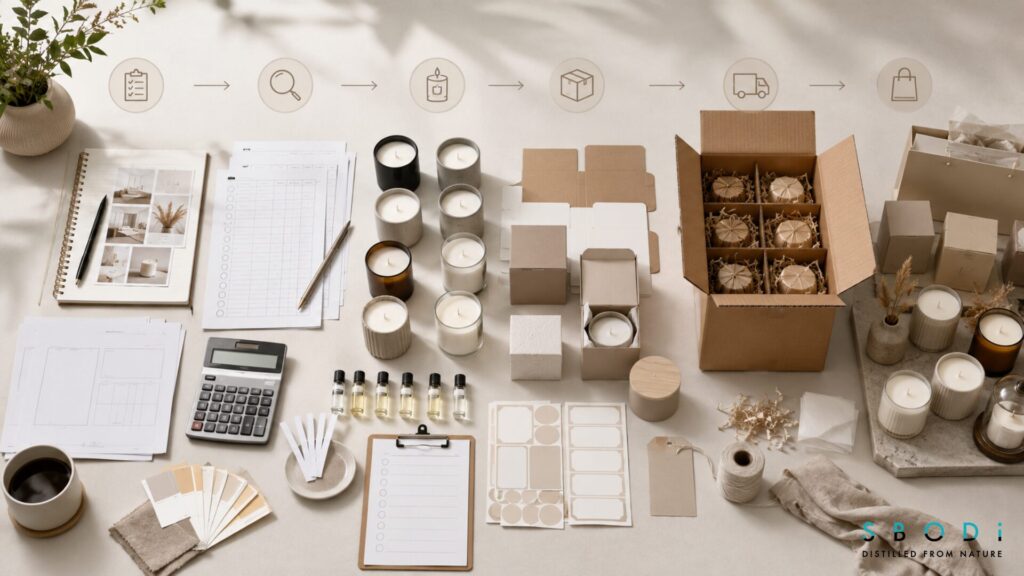
1. Define the Customer
Identify the customer’s preferred fragrance, price range, packaging style, and gifting habits.
2. Set a Target Retail Price
Choose a realistic retail price before selecting the candle size, vessel, lid, and packaging.
3. Choose a Wholesale Model
Decide whether you need finished wholesale, white label, private label, or custom manufacturing.
4. Compare Suppliers
Review minimum orders, case quantities, wholesale pricing, shipping terms, lead times, resale restrictions, and reorder capacity.
5. Order Samples
Never select a candle using photographs and fragrance names alone.
6. Test the Product
Inspect:
- Wax appearance
- Wick position
- Cold throw
- Hot throw
- Flame stability
- Melt pool
- Visible soot
- Vessel heat
- Label quality
- Packaging protection
7. Calculate Landed Cost
Include the wholesale price, shipping, packaging, preparation, and expected damage.
8. Place a Controlled Opening Order
Begin with a focused collection rather than buying too many sizes and fragrances.
9. Track Sales
Measure performance by fragrance, vessel, size, price, and season before reordering.
Pricing and Profit Margins
The wholesale price is not the complete product cost.
Use this formula:
Landed cost = wholesale cost + shipping + packaging + handling + damage allowance
Example
| Cost | Amount |
|---|---|
| Wholesale candle | $12.00 |
| Inbound shipping | $1.50 |
| Packaging and insert | $0.35 |
| Handling | $0.30 |
| Damage allowance | $0.40 |
| Estimated landed cost | $14.55 |
If the candle sells for $30, the estimated gross margin is about 51.5% before payment fees, rent, labor, promotions, and other expenses.
Retailers should also account for tester candles, unsold seasonal inventory, returns, breakage, and ecommerce fulfillment.
Common Wholesale Candle Buying Mistakes

Choosing Only by Price
A low wholesale price may be offset by poor packaging, high shipping costs, weak fragrance, or slow sales.
Buying Too Many Fragrances
Large collections divide the inventory budget across too many products and make reordering more difficult.
Skipping Samples
Samples reveal fragrance quality, burn performance, vessel condition, label quality, and packaging strength.
Assuming Wax Type Proves Quality
Terms such as soy wax or natural wax do not guarantee good candle performance.
Ignoring Sales Restrictions
Some candle suppliers restrict resale through Amazon, Etsy, eBay, or other third-party marketplaces.
Overlooking Reorder Capacity
A product is difficult to build into a long-term collection if the supplier regularly changes vessels, labels, or fragrance availability.
Private Label Candle Options
Private label candles can help boutiques create branded products without manufacturing candles themselves.
Before selecting a private label candle manufacturer, ask:
- What can be customized?
- What are the minimum order quantities?
- Which fragrances are already tested?
- Are custom labels included?
- Are cartons available?
- What are the production lead times?
- Who owns custom artwork?
- Can the fragrance be exclusive?
- What testing documentation is provided?
- What happens if a vessel is discontinued?
New brands should begin with controlled customization, such as labels, fragrance names, and existing vessels.
Custom glass, proprietary fragrances, and complex packaging can be considered after sales demand has been proven.
SBODi Wholesale Candle Resources
SBODi supports wholesale and private label planning across candles, wax melts, soaps, bath products, and wellness-focused collections.
For detailed guidance on candle formats, waxes, wicks, packaging, testing, supplier selection, and private label options, read the complete wholesale candles guide.
Retailers can also consult the CPSC candle business guidance, ASTM candle fire-safety standard, and National Candle Association industry research when reviewing product safety, labeling, and customer preferences.
This article focuses specifically on choosing suitable wholesale candles for boutique stores.
Frequently Asked Questions