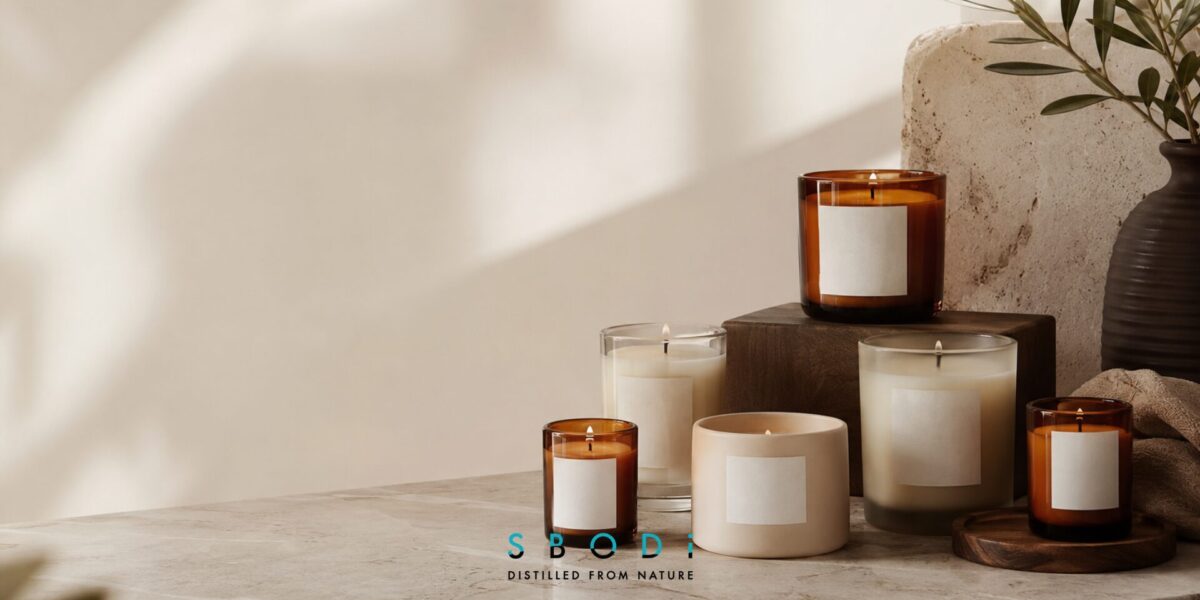
Amber candles are returning to home-fragrance collections because they offer warmth, depth, and year-round appeal. Their fragrance can feel woody, creamy, resinous, smoky, or lightly sweet, depending on the blend.
They also fit current preferences for neutral packaging, layered scents, and products that work across home décor, gifting, spa, and wellness categories. This explains what amber fragrance is, why demand has increased, and what retailers should evaluate before choosing a collection.
For a wider overview of waxes, vessels, testing, sourcing, and supplier selection, read SBODi’s complete wholesale candles guide.
- What Are Amber Candles?
- Why Amber Candles Are Trending Again
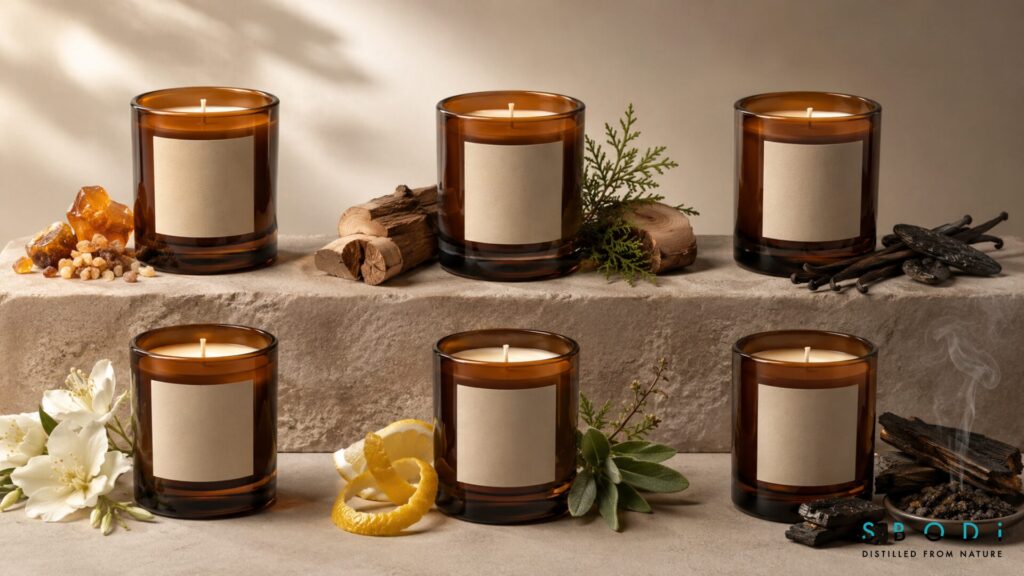
- Popular Amber Fragrance Styles
- Why Retailers Add Amber Candles
- How to Choose an Amber Candle Collection
- Manufacturing and Burn Testing
- Packaging and Merchandising
- Common Buying Mistakes
- Future Amber Candle Trends
- SBODi Candle Resources
- Frequently Asked Questions
- Conclusion
What Are Amber Candles?
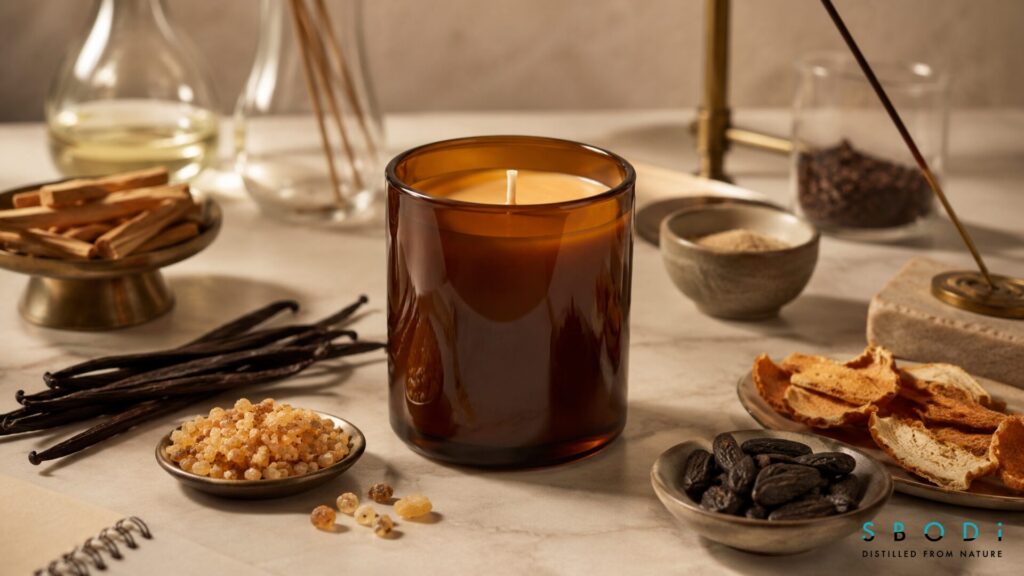
Amber candles contain a fragrance accord designed to smell warm, resinous, woody, or softly sweet.
Amber fragrance is usually created by blending notes such as:
- Vanilla
- Benzoin
- Labdanum
- Sandalwood
- Cedar
- Tonka bean
- Musk
- Incense
- Warm spices
Amber is not one fixed scent. One candle may smell creamy and sweet, while another may feel dry, smoky, or wood-focused.
Amber Scented Candles vs Amber Jar Candles
An amber scented candle contains an amber-style fragrance.
An amber jar candle simply uses brown or amber-colored glass. The candle inside may smell floral, citrus, herbal, woody, or gourmand.
Buyers should review the fragrance notes rather than assuming the vessel color identifies the scent.
Why Amber Candles Are Trending Again
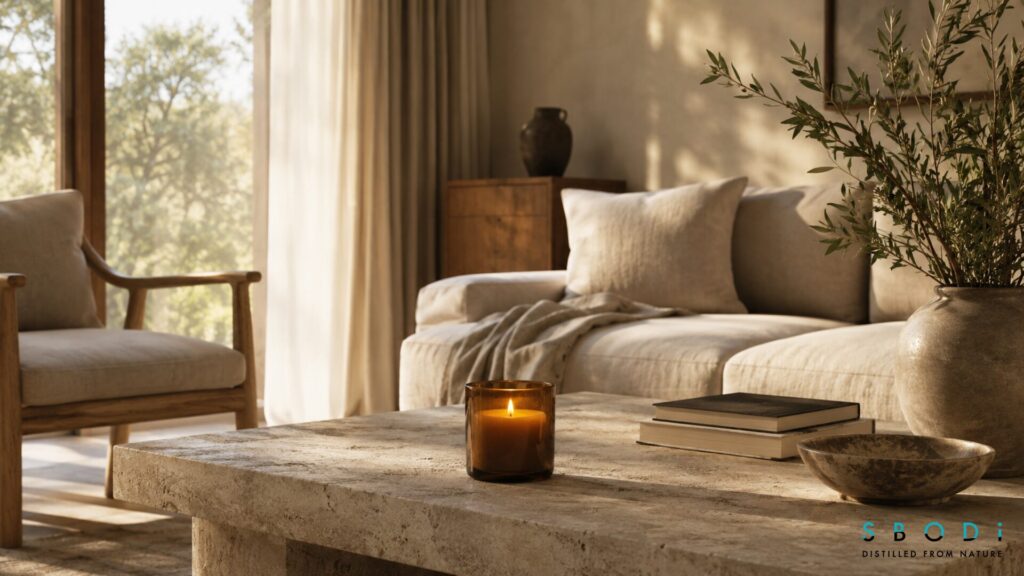
Consumers Prefer Layered Home Fragrance
Home fragrance is increasingly treated as part of interior styling rather than a simple air-freshening product.
Amber works well in layered fragrance collections because it blends easily with woods, florals, citrus, tea, vanilla, spices, and musk. This makes it suitable for candles, wax melts, diffusers, soaps, and other scented products.
Shoppers Want More Refined Seasonal Scents
Traditional pumpkin, cinnamon, and bakery fragrances remain popular, but some shoppers want warmer scents with less sweetness.
Fragrance combinations such as amber wood, smoky citrus, black tea, sandalwood, and incense provide a more balanced alternative. Publications such as Architectural Digest have highlighted similar woody and atmospheric approaches to seasonal home scent.
Neutral Packaging Supports the Trend
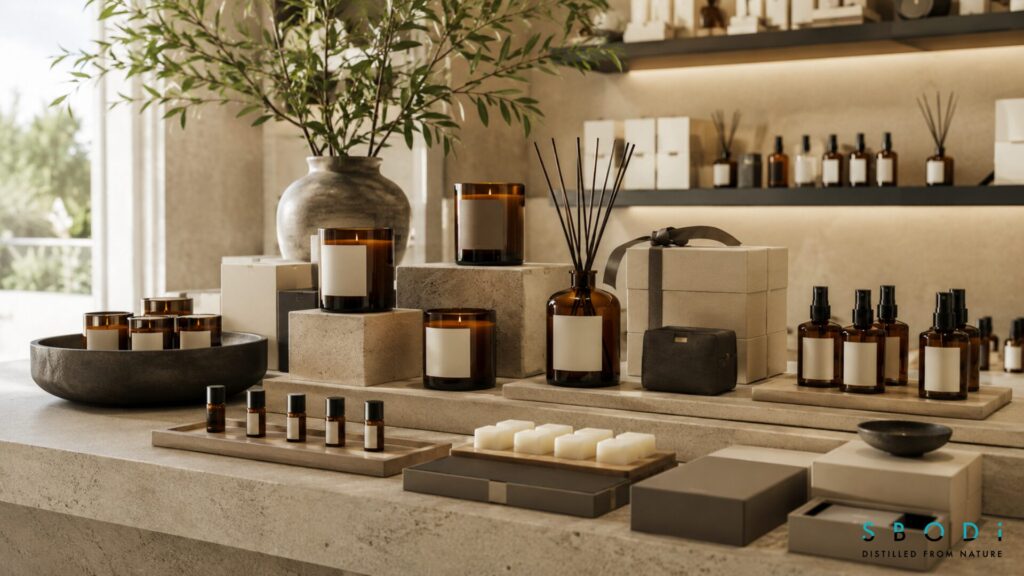
Amber glass works naturally with cream labels, kraft cartons, wood lids, stone surfaces, and minimalist branding.
This visual flexibility allows retailers to place amber candles beside bath products, soaps, wax melts, and wellness gifts without making the display feel inconsistent.
Amber Works Across Seasons
Gourmand and smoky amber fragrances suit autumn and winter, while floral, citrus, and tea-based amber blends can work during spring and summer.
This year-round potential makes amber easier to reorder than fragrances connected to one holiday or season.
Modern Fragrance Trends Favor Woods and Resins
Recent fragrance coverage has emphasized mature gourmands, woody amber, incense, mineral notes, and less predictable sweetness. These directions give amber a more modern identity than the heavy vanilla-forward blends often associated with earlier candle collections.
For additional fragrance context, Allure’s fragrance trend coverage explains how woody and resinous notes are being used in contemporary scent development.
Popular Amber Fragrance Styles
| Amber Style | Common Notes | Character |
|---|---|---|
| Classic Amber | Benzoin, labdanum, vanilla | Warm and resinous |
| Woody Amber | Cedar, sandalwood, musk | Dry and balanced |
| Gourmand Amber | Vanilla, tonka, caramel | Sweet and comforting |
| Floral Amber | Rose, jasmine, orange blossom | Soft and elegant |
| Fresh Amber | Bergamot, tea, herbs | Light and clean |
| Smoky Amber | Incense, patchouli, tobacco | Dark and atmospheric |
A small collection with clearly different profiles is usually more effective than several candles built around similar vanilla-heavy fragrances.
Why Retailers Add Amber Candles
Amber candles can support several retail and branding goals:
- They appeal to both traditional and modern fragrance preferences.
- They can remain relevant throughout the year.
- They pair well with soaps, bath salts, wax melts, and gift sets.
- They fit luxury, spa, botanical, rustic, and minimalist branding.
- They work in boutiques, hotels, salons, subscription boxes, and ecommerce stores.
Retailers can also extend a successful amber fragrance into matching wax melts or related bath and body products.
How to Choose an Amber Candle Collection
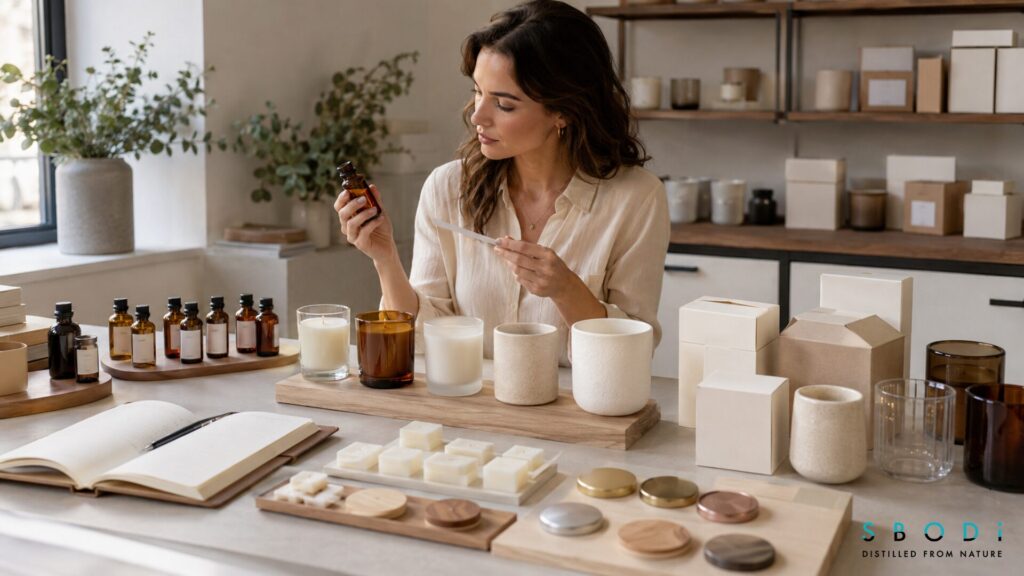
1. Identify the Intended Customer
A luxury boutique may prefer dry woods, incense, or floral amber. A general gift shop may need a softer blend of vanilla, musk, and sandalwood.
Choose the fragrance direction before selecting vessels and labels.
2. Test Finished Samples
Do not approve a fragrance from oil samples alone. Wax, wick, fragrance load, vessel size, and cure time can change how the scent performs.
Evaluate:
- Cold throw
- Hot throw
- Fragrance balance
- Sweetness level
- Room coverage
- Scent consistency
When reviewing SBODI’s private label scented candles, buyers should compare complete product specifications and finished samples before placing a production order.
3. Compare Fragrance Profiles
Avoid selecting several scents that smell almost identical.
A balanced collection might include:
- One soft vanilla amber
- One dry woody amber
- One floral or citrus amber
- One dark smoky amber
This gives customers clearer choices and improves product differentiation.
4. Review Packaging Quality
Check the vessel, lid, label, carton, protective insert, and case packing.
Packaging should protect the candle during storage and shipping while presenting the fragrance clearly.
5. Confirm Reorder Details
Before approving production, ask about:
- Minimum order quantities
- Lead times
- Fragrance availability
- Component substitutions
- Batch consistency
- Defect policies
- Repeat-order pricing
A strong sample is less useful when the supplier cannot reproduce it consistently.
Manufacturing and Burn Testing
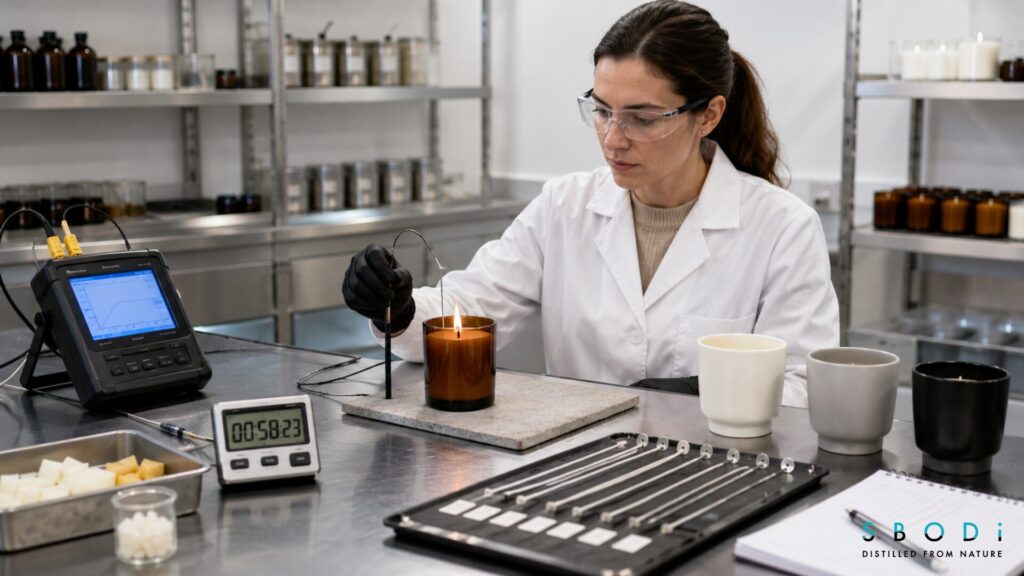
Every combination of wax, fragrance, wick, and vessel should be tested as a complete system.
Burn testing should review:
- Flame stability
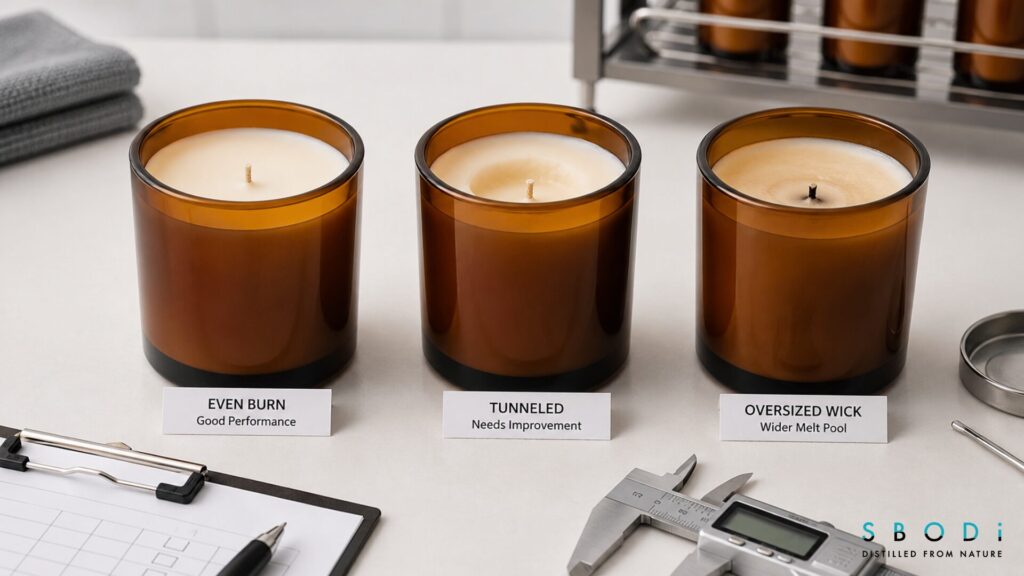
- Melt-pool development
- Wick mushrooming
- Visible smoke
- Vessel temperature
- Wax residue
- Burn time
- Fragrance performance
The U.S. Consumer Product Safety Commission candle guidance references applicable ASTM standards for candle fire safety, warning labels, glass containers, and visible emissions.
Fragrance documentation should also be reviewed. The International Fragrance Association Standards provide restrictions and conditions for the safe use of certain fragrance materials.
IFRA documentation does not replace finished-product testing or local regulatory requirements. The manufacturer remains responsible for the safety of the complete candle.
Packaging and Merchandising
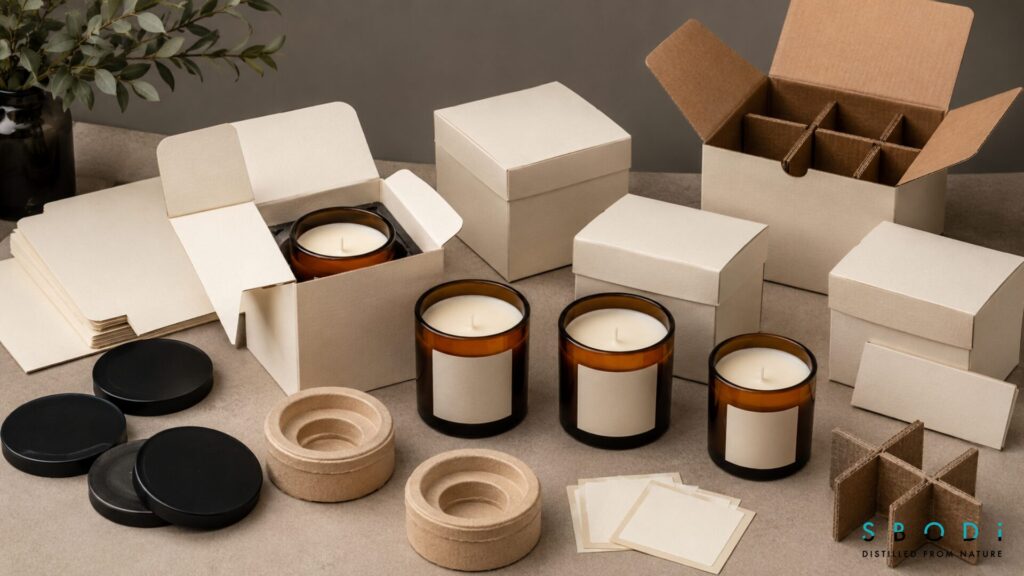
Packaging should explain the fragrance without relying on vague product names.
A clear label might include:
Amber, Sandalwood, Vanilla, and Bergamot
This gives shoppers a better idea of the fragrance before they open or smell the candle.
For retail displays, group products by scent character rather than vessel color. For example:
- Warm Woods: Amber, cedar, sandalwood, and tobacco
- Soft Comfort: Vanilla, musk, cashmere, and tonka
- Dark Atmosphere: Incense, patchouli, smoke, and resin
- Fresh Amber: Bergamot, tea, herbs, and light woods
The label should also leave enough space for product information, warnings, and safe-use instructions.
Common Buying Mistakes
Confusing Glass Color With Fragrance
An amber-colored jar does not confirm that the candle contains an amber fragrance.
Testing Only Cold Throw
A candle may smell strong when unlit but produce weak fragrance while burning.
Ignoring Burn Performance
Attractive packaging cannot compensate for tunneling, soot, overheating, or an unstable wick.
Selecting Too Many Similar Scents
Several sweet amber blends may compete with each other instead of expanding customer choice.
Using Unsupported Wellness Claims
Amber candles may help create a comfortable setting, but they should not be marketed as treatments for anxiety, insomnia, or medical conditions.
Overlooking Shipping Protection
Poor inserts, weak cartons, and insufficient glass separation can cause damage during fulfillment.
Future Amber Candle Trends
Future collections are likely to move beyond generic vanilla amber scents.
Potential directions include:
- Mineral and salt-air amber
- Tea and citrus amber
- Less-sweet gourmand blends
- Resin and incense profiles
- Refillable vessels
- Reusable candle containers
- Candle and wax melt sets
- Mini fragrance discovery collections
- Neutral year-round packaging
The most successful products will combine relevant fragrance design with reliable burn performance and clear product descriptions.
SBODi Candle Resources
SBODi works within wholesale and private label bath and body manufacturing, including candles, wax melts, soaps, bath products, and wellness-focused collections.
Retailers researching candle formats, waxes, testing, packaging, pricing, and supplier evaluation can review the wholesale candles guide. The guide provides broader sourcing context for businesses developing a private label or wholesale home-fragrance collection.
Frequently Asked Questions
Amber candles usually smell warm, woody, resinous, and lightly sweet. Common notes include vanilla, benzoin, sandalwood, musk, tonka, incense, and spice.
Amber candles fit current demand for layered fragrance profiles, woody and warm scent directions, neutral packaging, and candle collections that can be merchandised throughout much of the year.
No. An amber jar describes the color or finish of the glass vessel, while an amber-scented candle refers to the fragrance profile inside the container. The two do not have to be used together.
Amber fragrances can create a warm and atmospheric setting that works well for evening routines, reading, bathing, or home fragrance use. They should not, however, be marketed with unsupported medical or therapeutic claims.
Soy, coconut, paraffin, beeswax, and blended waxes can all be used successfully. Performance depends on the complete candle system, including the wax, fragrance load, wick, vessel dimensions, and manufacturing process.
Wholesale buyers should review cold and hot scent throw, flame stability, wick performance, melt pool development, vessel temperature, expected burn time, packaging quality, labeling, and consistency between production samples.
Yes. Woody, floral, and fresh amber fragrance styles can work throughout the year, while sweeter, spiced, resinous, and smoky amber blends often perform particularly well in fall and winter collections.