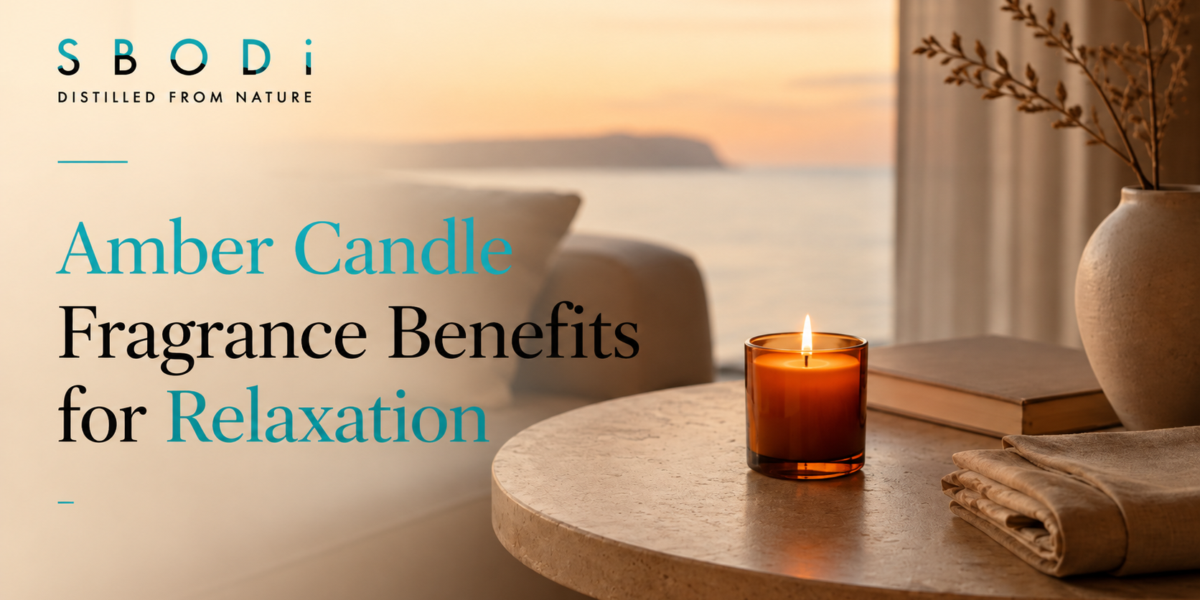
An amber candle can make a room feel warmer, quieter, and more inviting. Its fragrance is usually built from soft vanilla, resins, woods, musk, and gentle spices rather than one single ingredient.
This layered scent profile works well in bedrooms, living rooms, spa settings, and evening self-care routines. It can add comfort without feeling as sharp as citrus or as heavy as some floral fragrances.
This guide explains what amber fragrance smells like, why people use it to create a relaxing atmosphere, and how to choose a well-made candle. For a broader look at waxes, candle formats, sourcing, and supplier selection, read SBODi’s complete wholesale candles guide.
- What Is an Amber Candle?
- What Does Amber Fragrance Smell Like?
- Why Amber Fragrance Feels Relaxing
- Popular Amber Fragrance Styles
- How to Choose an Amber Candle
- Safe Candle Use
- Manufacturing and Burn Testing
- Candle Packaging
- Common Buying Mistakes
- Current Amber Candle Trends
- SBODi Candle Resources
- Frequently Asked Questions
- Conclusion
What Is an Amber Candle?
An amber candle is a scented candle based on an amber fragrance accord. In perfumery, an accord is a blend of several scent materials that work together to create one recognizable aroma.
Amber formulas often include:
- Benzoin
- Labdanum
- Vanilla
- Sandalwood
- Cedarwood
- Tonka bean
- Musk
- Patchouli
- Frankincense
- Warm spices
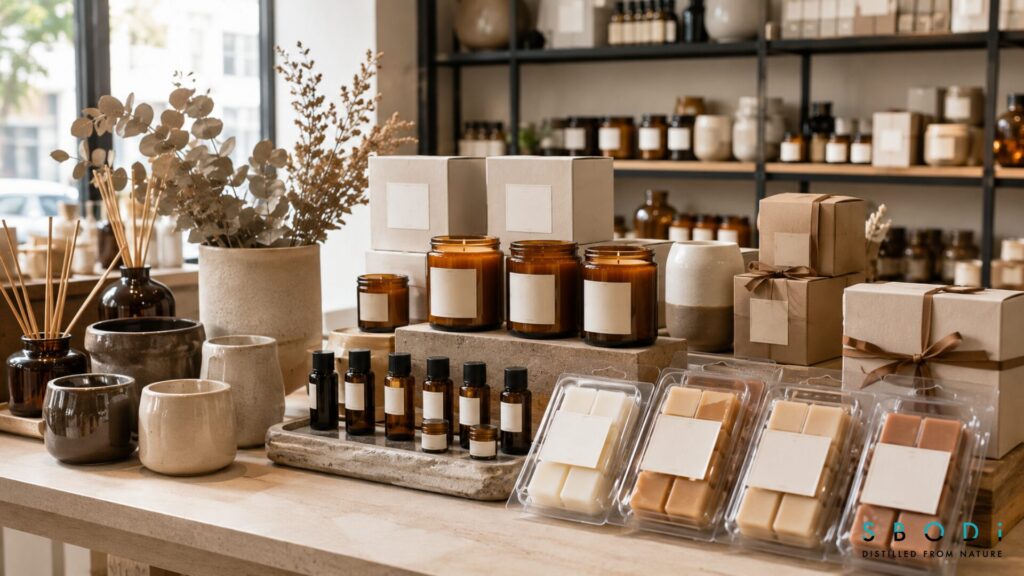
The word “amber” can also describe the color of the candle jar. An amber glass vessel does not always mean the candle has an amber fragrance, so buyers should check the scent notes and container details separately.
What Does Amber Fragrance Smell Like?
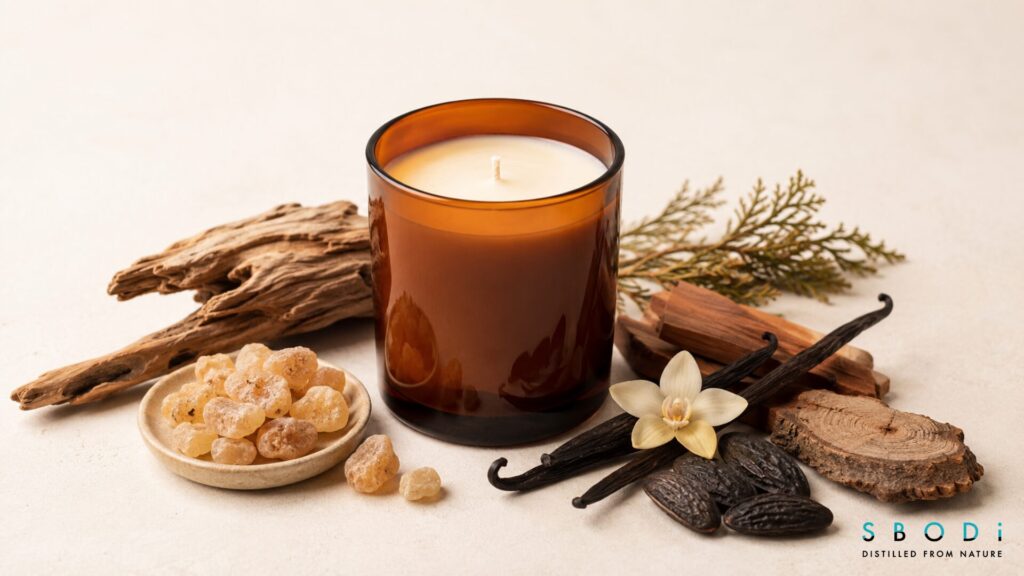
Amber fragrance is usually warm, smooth, woody, and lightly sweet. However, the final scent depends on the notes blended around it.
For example:
- Vanilla and tonka create a sweeter, creamier result.
- Cedarwood and sandalwood add a dry, grounded quality.
- Rose and jasmine make the fragrance softer and more floral.
- Patchouli and incense produce a darker, richer profile.
- Bergamot and tea make amber feel fresher and lighter.
This is why one amber scented candle may smell soft and comforting, while another feels smoky, spicy, or refined.
Why Amber Fragrance Feels Relaxing
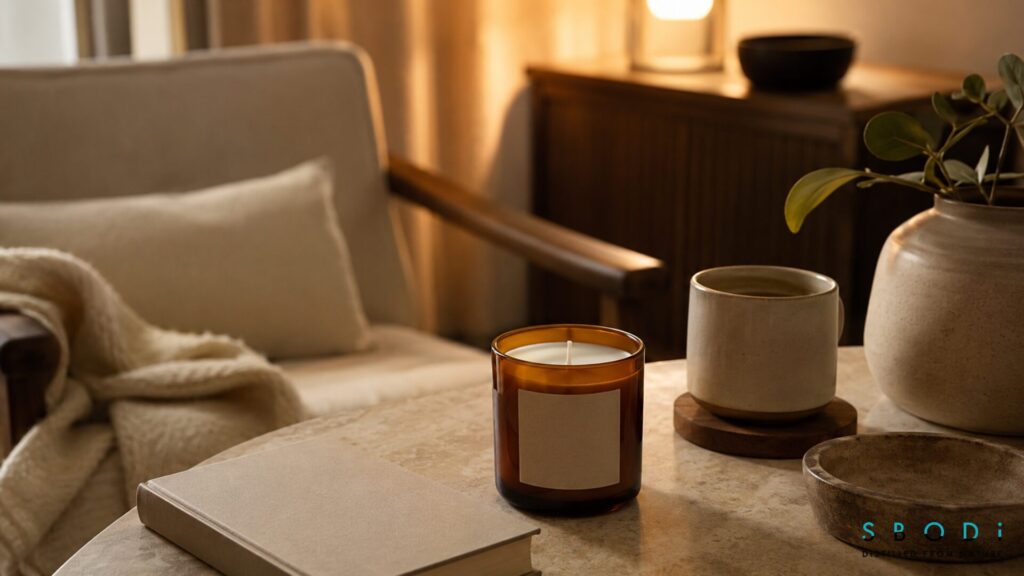
Amber is often used in evening and wellness candles because its scent tends to feel warm rather than bright or stimulating. Woods, vanilla, musk, and resinous notes can help create a more settled atmosphere for reading, bathing, stretching, or quiet reflection.
Fragrance can also become part of a routine. Lighting the same candle at the end of the day may help mark the transition from work and activity to personal time.
The effect is personal. Some people prefer sweet amber, while others find woody or fresh amber more comfortable. A candle may support a relaxing setting, but it should not be presented as a treatment for anxiety, insomnia, or stress-related conditions.
Popular Amber Fragrance Styles
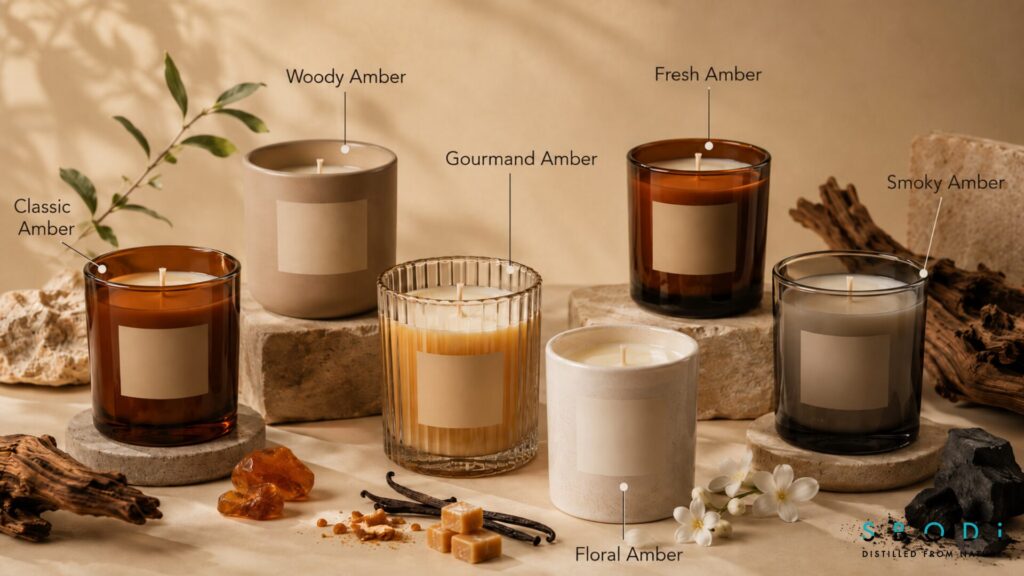
| Amber Style | Common Notes | Overall Character |
|---|---|---|
| Classic Amber | Benzoin, labdanum, vanilla | Warm and resinous |
| Woody Amber | Cedar, sandalwood, musk | Dry and balanced |
| Gourmand Amber | Vanilla, tonka, caramel | Sweet and comforting |
| Floral Amber | Rose, jasmine, orange blossom | Soft and elegant |
| Fresh Amber | Bergamot, tea, herbs | Light and clean |
| Smoky Amber | Incense, patchouli, tobacco | Dark and atmospheric |
Fresh and woody amber fragrances often suit year-round collections. Gourmand and smoky styles are more commonly used in fall, winter, and evening-focused products.
How to Choose an Amber Candle
Read the Full Fragrance Description
Do not choose a candle based only on the word “amber.” Look at the supporting notes to understand whether the scent will be sweet, woody, floral, smoky, or fresh.
A complete fragrance description gives buyers a clearer idea of how the candle may perform in a room.
Match the Candle to the Space
Room size matters. A strong candle can quickly become overpowering in a small bedroom or bathroom, while a larger living area may need a wider vessel or stronger hot throw.
The goal should be even fragrance distribution, not maximum strength.
Compare Cold and Hot Throw
Cold throw is the fragrance you notice before lighting the candle. Hot throw is the scent released once the wax begins to melt.
Businesses buying scented candles wholesale should evaluate both. A candle may smell excellent in the jar but release very little fragrance while burning.
Look at the Whole Candle System
Wax, wick, vessel diameter, fragrance concentration, and production method all affect performance.
Soy wax candles, coconut blends, paraffin blends, and other formulas behave differently. No single wax automatically guarantees better fragrance or burn quality.
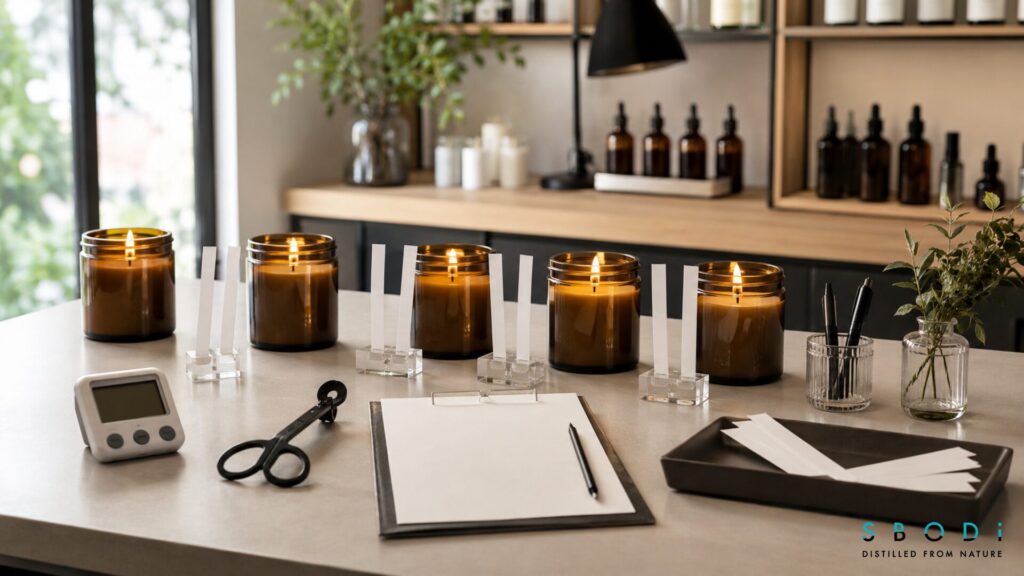
Test the Finished Product
Candle fragrance samples should match the intended production candle as closely as possible. The same fragrance may behave differently when used with another wick, wax, or vessel.
Finished samples provide a more reliable picture of scent strength, burn stability, and overall quality.
Safe Candle Use
A candle should always be placed on a stable, heat-resistant surface. Keep it away from curtains, bedding, paper, children, pets, drafts, and open windows.
The National Candle Association’s candle safety guidance recommends keeping burning candles at least 12 inches away from combustible materials and never leaving them unattended.
Basic candle care includes:
- Trim the wick as directed by the manufacturer.
- Keep the flame away from moving air.
- Do not move the candle while the wax is liquid.
- Follow the recommended burn-time limit.
- Extinguish the candle before leaving the room.
- Stop using it when the minimum wax level is reached.
People who are sensitive to fragrance may prefer shorter burn periods, lighter scents, and better ventilation.
Manufacturing and Burn Testing
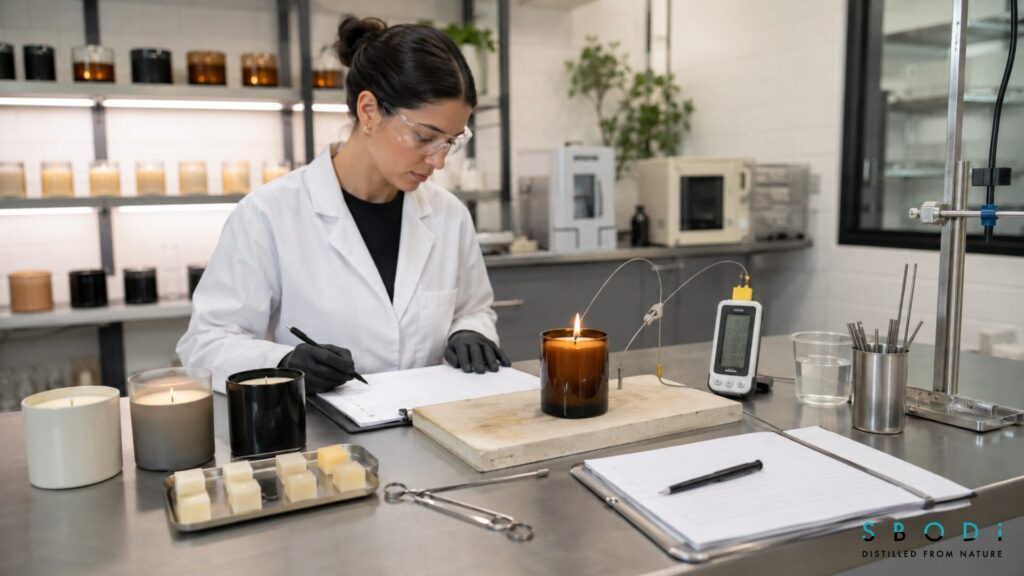
A quality amber candle should be tested as a complete product. Fragrance oil alone does not show how the candle will behave once it is combined with wax, a wick, and a vessel.
Manufacturers should check:
- Flame stability
- Wick size
- Melt-pool development
- Cold and hot throw
- Soot production
- Vessel temperature
- Total burn time
- Wax discoloration
- Performance near the bottom of the jar
Fragrance suppliers should also provide current product documentation. The International Fragrance Association Standards explain how certain fragrance materials are restricted or used under specific conditions.
Businesses selling candles in the United States should review the U.S. Consumer Product Safety Commission candle guidance for information on recognized candle safety and labeling standards.
Before approving a private label candle order, request:
- Finished samples
- Product specifications
- Burn-test records
- Fragrance documentation
- Packaging details
- Defect policies
- Production lead times
- Reorder requirements
Candle Packaging
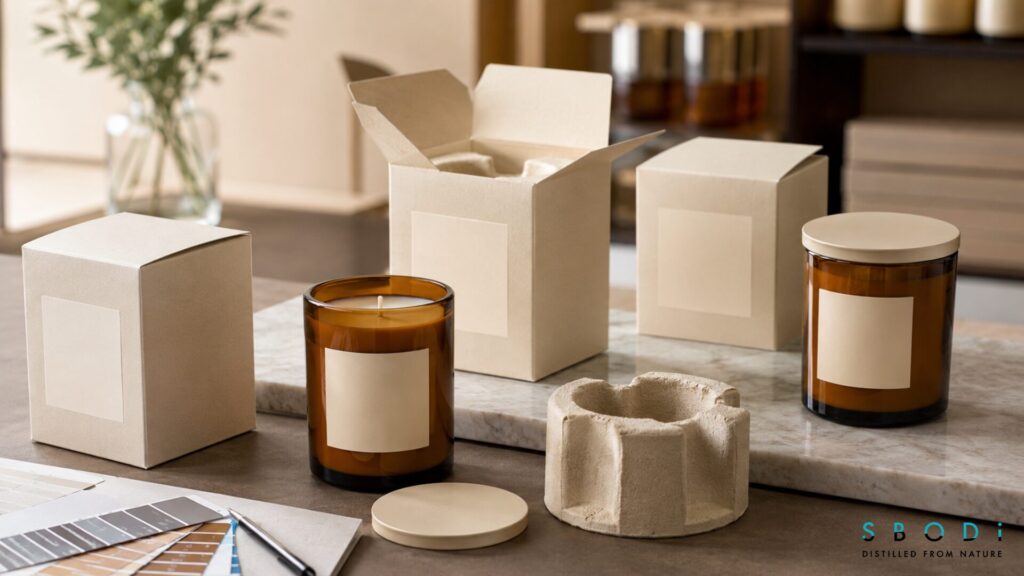
Amber candle packaging should support the fragrance concept while protecting the product during storage, display, and shipping.
Popular packaging options include:
- Amber or smoke-colored glass
- Matte cream cartons
- Dark brown or neutral labels
- Natural paper textures
- Fitted lids
- Protective inserts
- Minimal metallic accents
The design should remain practical. Product identity, net contents, safety information, and candle-care instructions must be easy to find and read.
For wholesale and online orders, packaging should be tested for movement, impact, broken glass, loose lids, and label damage.
Common Buying Mistakes
Treating Every Amber Scent as Identical
Amber fragrances vary widely. Some are sweet, while others are woody, smoky, floral, or spicy.
Choosing a Candle by Cold Throw Alone
A strong scent in the jar does not guarantee good fragrance performance during burning.
Skipping Burn Testing
Issues such as tunneling, soot, unstable flames, or excessive vessel heat may only appear after several burn cycles.
Assuming Stronger Means Better
An overly intense fragrance can feel uncomfortable and may not suit smaller rooms or wellness-focused settings.
Making Unsupported Claims
A candle can create a relaxing atmosphere, but brands should avoid claiming that it treats anxiety, sleep disorders, or medical conditions.
Adding Decorative Materials Near the Wick
Dried flowers, herbs, crystals, and loose decorations can create unnecessary fire risks when placed close to the flame.
Current Amber Candle Trends
Amber fragrances are becoming lighter and more flexible. Many modern blends move beyond heavy vanilla and resin by adding tea, citrus, florals, minerals, or clean woods.
Popular combinations include:
- Amber and bergamot
- Amber and lavender
- Amber and tea
- Amber and sandalwood
- Amber and soft florals
- Amber and mineral notes
Smaller fragrance sample candles are also becoming useful for discovery sets, subscription boxes, and gift collections. Other growing formats include coordinated wax melts, reusable jars, refill concepts, and neutral packaging.
These options allow retailers to offer more variety without committing to a large number of full-size candles.
SBODi Candle Resources
SBODi works within the wholesale and private label bath and body sector, including candles, wax melts, soaps, bath products, shower steamers, and wellness-focused collections.
Businesses comparing candle formats can review SBODi’s private label scented candles and the broader wholesale candle sourcing guide.
Together, these resources provide practical information on fragrance selection, product testing, packaging, customization, and supplier evaluation.
Frequently Asked Questions
An amber candle usually smells warm, woody, resinous, and lightly sweet. Common fragrance notes include vanilla, benzoin, sandalwood, musk, tonka bean, incense, and subtle spices.
Amber fragrances can help create a warm and calming atmosphere for reading, bathing, evening routines, or general home fragrance use. They should not be presented as medical, therapeutic, or sleep treatments.
Amber is typically a blended fragrance accord rather than a single ingredient. Depending on the formulation, it may contain naturally derived fragrance materials, synthetic aroma ingredients, or a combination of both.
Amber pairs well with vanilla, cedar, sandalwood, bergamot, lavender, rose, patchouli, incense, musk, tonka bean, and warm spices. The combination determines whether the finished fragrance feels woody, fresh, floral, sweet, or smoky.
Not necessarily. An amber jar refers to the brown or amber-colored glass vessel, while an amber-scented candle refers to the fragrance profile. An amber glass candle can contain almost any fragrance.
Wholesale buyers should evaluate cold and hot scent throw, wick performance, flame stability, melt pool development, vessel temperature, expected burn time, packaging quality, labeling, and consistency between production samples.