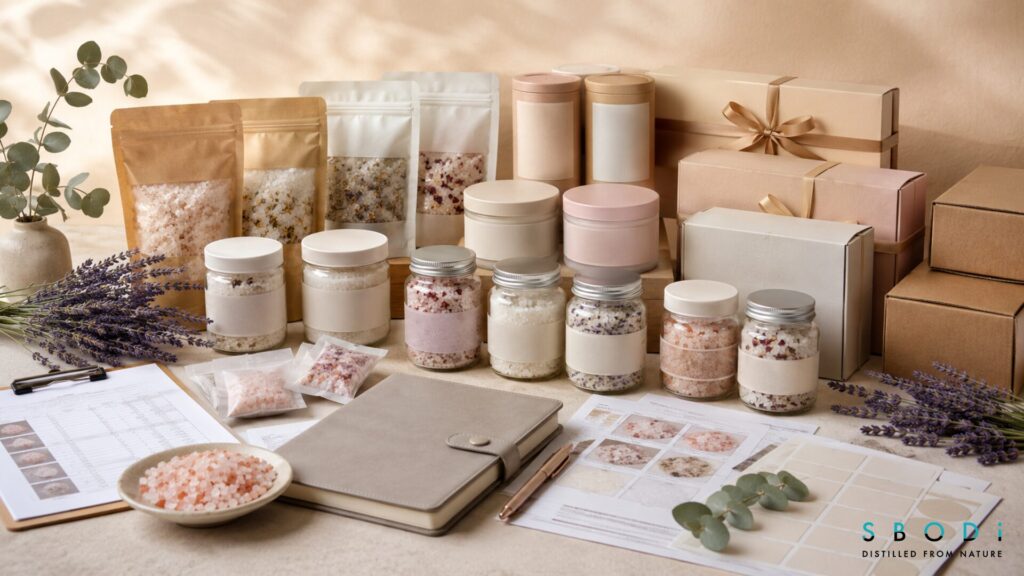
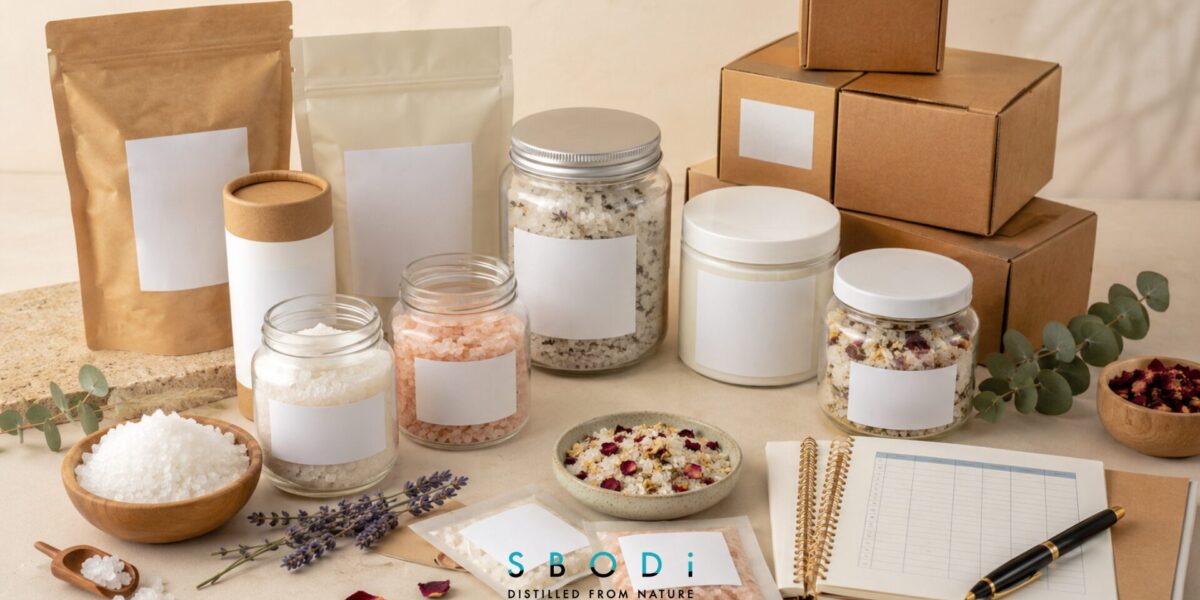
Finding the best private label wholesale bath salts USA suppliers requires more than comparing product photos and unit prices. A suitable partner must be able to support consistent formulas, appropriate packaging, realistic minimum order quantities, accurate documentation, dependable production, and the brand’s intended retail channel.
Some suppliers specialize in low-quantity ready-to-label products. Others focus on custom contract manufacturing, large-volume salt processing, or coordinated bath and body collections that include bath bombs, shower steamers, soaps, and candles.
This guide compares notable U.S. supplier programs using publicly available information. It also explains how to evaluate formulas, packaging, manufacturing capabilities, compliance support, lead times, landed costs, and related product opportunities before selecting a supplier.
Table of Contents
- What Are Private Label Wholesale Bath Salts?
- Private Label, White Label, and Wholesale Bath Salts
- Why Bath Salts Remain Relevant for Private Label Brands
- How the Suppliers in This Guide Were Evaluated
- Best Private Label Wholesale Bath Salts USA Suppliers
- Private Label Bath Salt Supplier Comparison
- How to Choose a Bath Salts Supplier
- Bath Salt Product Categories to Consider
- Essential Manufacturing Considerations
- Packaging Options for Private Label Bath Salts
- Step-by-Step Supplier Selection Process
- MOQ, Pricing, and Landed Cost
- Labeling, Claims, and Regulatory Responsibilities
- Building a Complete Bath and Body Collection
- Common Supplier Selection Mistakes
- Best Practices for a Successful Product Launch
- Future Trends in Private Label Bath Salts
- Learn More About Wholesale Bath Salts
- How SBODi Supports Bath Product Planning
- Frequently Asked Questions
- Conclusion
What Are Private Label Wholesale Bath Salts?
Private label wholesale bath salts are bath soak products manufactured, blended, filled, or packaged by one company and sold under another company’s brand.
The buyer may select an existing formula, request limited modifications, or develop a custom bath salt product. Depending on the supplier, the program can include ingredients, fragrance, packaging, filling, labels, lot coding, cartons, storage, and fulfillment.
Common product bases include:
- Epsom salt
- Sea salt
- Dead Sea salt
- Himalayan salt
- Magnesium flakes
- Blended mineral salts
- Baking soda and salt combinations
- Fragranced or essential oil-based blends
- Botanical bath soaks
Private label wholesale bath salts USA programs are commonly used by wellness brands, spas, boutiques, salons, gift retailers, hotels, subscription boxes, and ecommerce businesses.
The manufacturer manages some or all of the physical production process. However, the brand whose name appears on the product may still have important responsibilities for product safety, labeling, claims, recordkeeping, and customer complaints.
Private Label, White Label, and Wholesale Bath Salts
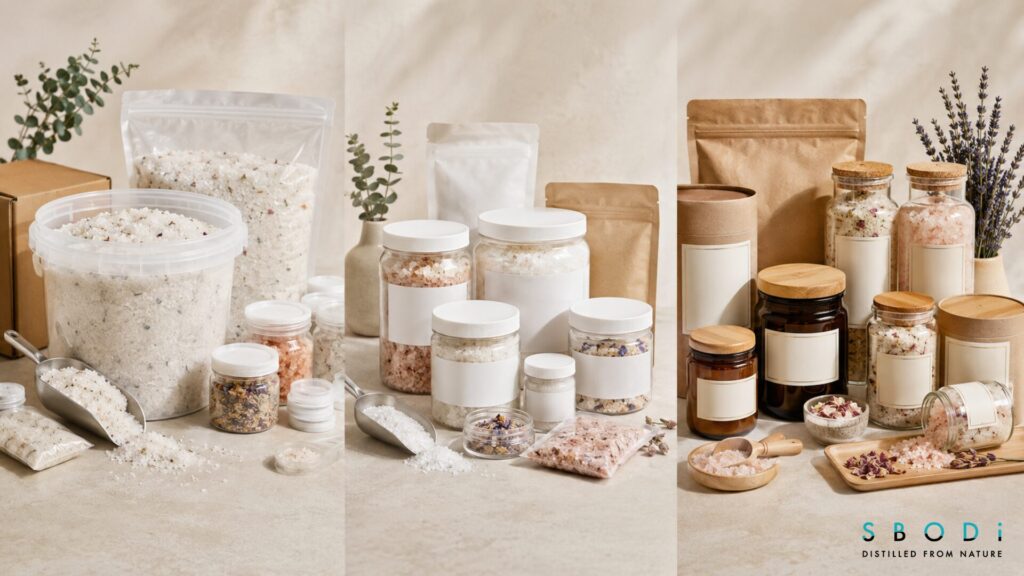
These sourcing models overlap, but they do not always provide the same level of control.
Wholesale Bath Salts
Wholesale bath salts are purchased at business pricing for resale, spa use, gift boxes, or in-house packaging. They may arrive under the supplier’s brand, in bulk containers, or as finished unbranded products.
Wholesale purchasing does not automatically include custom labels or exclusive formulas.
White Label Bath Salts
White label bath salts use a pre-developed formula that multiple businesses may sell under their own branding. The buyer usually selects from existing product, fragrance, size, and packaging options.
This approach can reduce development time and lower the initial financial commitment. It is often appropriate for a boutique, spa, or ecommerce brand testing customer demand.
Private Label Bath Salts
Private label bath salts usually provide more control over branding and may offer additional choices involving scent, color, ingredients, packaging, labels, or formula modifications.
The degree of customization varies significantly. One supplier may call an unlabeled stock product private label, while another reserves that term for customized production.
Custom Contract Manufacturing
Custom manufacturing involves developing or adapting a formula to meet a specific product brief. It generally requires higher minimums, development fees, longer timelines, and more extensive approval work.
Before comparing quotes, ask every supplier to define what its private label program actually includes.
Why Bath Salts Remain Relevant for Private Label Brands
Bath salts are relatively easy for customers to recognize and understand. Their familiar format can reduce the amount of product education required on a retail shelf or ecommerce page.
They are also flexible. The same general product category can support minimalist, botanical, luxury, seasonal, spa-inspired, or gift-focused positioning.
Private label bath salts can benefit brands by providing:
- Multiple packaging and price-point options
- Straightforward product bundling
- Flexible fragrance development
- Strong visual merchandising potential
- Compatibility with seasonal collections
- Opportunities for single-use and full-size formats
- Natural pairing with other bath and body products
Bath salts also connect naturally with wholesale bath bombs, shower steamers, handmade soap, candles, body scrubs, and body care products. This makes them useful as both an entry product and part of a larger self-care collection.
How the Suppliers in This Guide Were Evaluated
The suppliers were reviewed using publicly available information from their official websites. The evaluation considered:
- Availability of bath salts or bath soak products
- Private label, white label, or contract manufacturing capabilities
- U.S. operations or manufacturing presence
- Public MOQ or minimum investment information
- Stock and custom formula options
- Packaging and filling capabilities
- Product testing or documentation information
- Related bath and body product categories
- Fulfillment, warehousing, or ecommerce support
- Suitability for different business sizes
This is an editorial comparison, not a laboratory evaluation, paid endorsement, or guarantee of supplier performance. Samples, contracts, documentation, and facility capabilities should be independently reviewed before placing an order.
Best Private Label Wholesale Bath Salts USA Suppliers
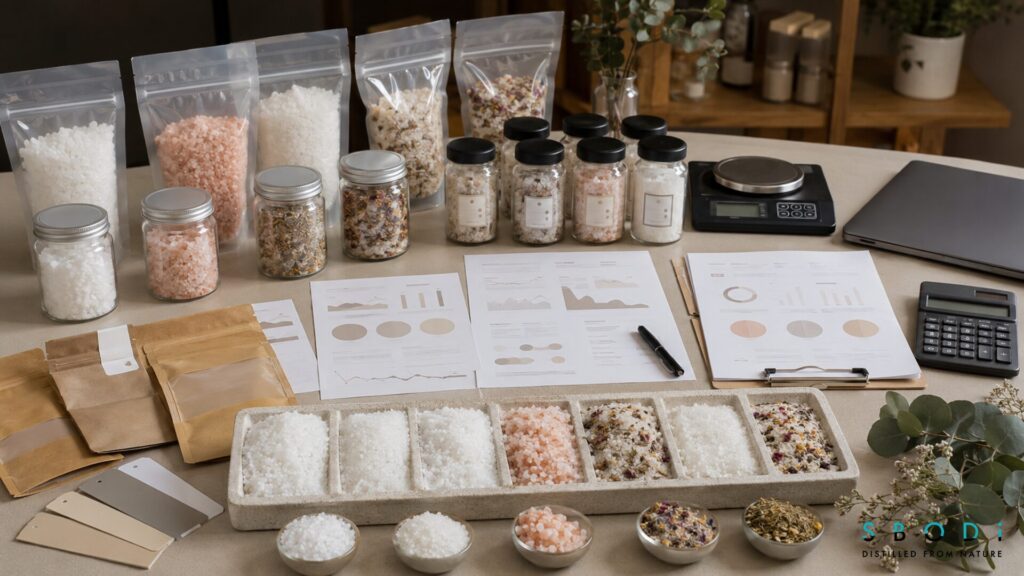
1. SBODi
Best fit: Brands building coordinated bath, body, and self-care collections
SBODI offers bath salts alongside bath bombs, shower steamers, soaps, candles, wax melts, and body care products. Its current bath salt range includes several fragrance directions, while its private label information refers to bulk orders, custom labels, scent options, packaging support, and quote-based project planning.
This category breadth can be useful for businesses that want bath salts to match related wholesale bath products rather than working with separate suppliers for every product type.
SBODI may be considered for:
- Branded bath salt collections
- Coordinated bath bombs and soaks
- Spa and wellness gift sets
- Private label bath products
- Boutique or ecommerce collections
- Product expansion into candles, soaps, or shower steamers
Public information does not present one universal MOQ for every project. Buyers should request a written quote covering quantities by scent, packaging, labeling, production time, and related products.
2. Midwest Sea Salt Company
Best fit: Startups and growing brands seeking both private label and bulk formulation options
Midwest Sea Salt Company offers private label, wholesale, and bulk bath and body products. Its public FAQ states that private label projects at the minimum level typically begin around a $2,000 investment, while bulk formulation projects often begin around $1,000. It also offers paid product samples for bulk formulation evaluation.
The investment-based structure may provide more flexibility than a fixed unit MOQ because the final quantity can depend on formula cost, container type, printing, and the number of SKUs.
Potential advantages include:
- Private label and bulk supply models
- Bath salts and related bath and body categories
- Sample evaluation
- Stock and custom packaging directions
- Support for brands at different stages
Buyers should ask how the minimum investment is distributed when launching several scents or container sizes.
3. PrivateLabelBathSalts.com by Better Bath Better Body
Best fit: Brands seeking specialized bath soak contract manufacturing
PrivateLabelBathSalts.com is operated by Better Bath Better Body in Kentucky. Its program focuses on bath salts, foot soaks, bath bombs, shower tablets, filling, packaging, warehousing, and fulfillment.
The company’s public FAQ states that some projects may begin at 300 units, while others require a 500-unit MOQ. Packaging capabilities include stand-up pouches, jars, sachets, buckets, and other formats. The company also states that it can provide certificates of analysis and coordinate stability, microbiological, and other third-party testing.
This specialized program may suit businesses that need:
- Stock or custom bath soak formulas
- Graphic and packaging design support
- Amazon FBA preparation
- Warehousing and fulfillment
- Third-party testing coordination
- Foot soaks and shower products
The exact MOQ depends on the formula, size, ingredients, and packaging configuration.
4. Bulk Apothecary
Best fit: Small test launches and brands that want ready-to-label inventory
Bulk Apothecary offers finished, unlabeled scented bath salts that can be purchased individually or by case. Its current product page lists multiple scent options and identifies the products as ready for a buyer’s label.
The company distinguishes this lower-quantity ready-to-label model from its turnkey private label service, which is publicly offered for runs as low as 2,500 units on the referenced bath salt product.
This creates two possible entry routes:
- Purchase finished unlabeled products in small quantities and apply approved labels.
- Request a larger turnkey production quote.
Bulk Apothecary can be practical for market testing, gift baskets, local retail, and new ecommerce stores. However, buyers should verify label dimensions, lot-code placement, tamper seals, available documentation, and whether the stock formula aligns with their ingredient and fragrance policies.
5. RainShadow Labs
Best fit: Brands seeking bath and body formulation expertise and a broader personal care laboratory
RainShadow Labs offers private label bath and body development, including the ability to create bath salts and related products. Its public information describes stock, semi-custom, and custom manufacturing pathways across personal care categories.
The company may be appropriate for brands that want bath salts to sit within a larger skincare or body care portfolio.
Potential use cases include:
- Bath salt formulation consultation
- Mineral and salt-based products
- Body oils, washes, scrubs, and moisturizers
- Stock or customized personal care products
- Professional spa and skincare collections
MOQ information can differ by product and service. Buyers should obtain bath salt-specific requirements rather than assuming that minimums published for another product category also apply to bath soaks.
6. NourishUs Naturals
Best fit: Brands comparing low-entry white label products with larger private label production
NourishUs Naturals, formerly presented online as Essential Labs, offers bath soaks, ingredients, white label products, private label customization, filling, and contract manufacturing.
Its FAQ currently states a $75 minimum order value for white label purchasing. Private label and custom manufacturing generally begin at seven pails per product, although minimums may vary by item.
This structure gives buyers a clear distinction between:
- Low-entry white label purchasing
- Made-to-order private label production
- Custom contract manufacturing
- Bulk ingredients and product bases
The company may be useful for brands that want to test a product through white label inventory before committing to larger private label volumes.
7. SaltWorks
Best fit: Established brands requiring large-volume salt sourcing, processing, and packaging
SaltWorks is a salt-focused supplier and co-packer offering Epsom salt, sea salt, Dead Sea salt, Himalayan salt, and other salt varieties in multiple grain sizes.
Its private label program includes consultation, salt selection, production, packaging, labeling, lot coding, case packing, and shipping. Public information states that initial lead times for custom private label projects can begin at approximately three months. Packaging capabilities include stand-up pouches, glass or plastic jars, and poly bags.
SaltWorks is likely to be more appropriate for:
- High-volume retail programs
- Large spa or store chains
- Salt-focused product lines
- Grocery or drugstore distribution
- Brands requiring precise grain-size options
- Bulk ingredient procurement
Smaller businesses should confirm minimum weight or production requirements before beginning development.
8. Botanx
Best fit: Brands seeking custom formulation and medium-to-large production runs
Botanx is a Southern California contract manufacturer with bath salt, bath crystal, powder blending, personal care, cosmetics, and home fragrance capabilities.
The company describes R&D formulation support, private label packaging, dry blending expertise, and production runs generally ranging from 1,000 to 5,000 pieces.
Botanx may be relevant for businesses that need:
- Custom bath salt formulation
- Bath crystals and dry powder products
- Product development and sampling
- Coordinated bath, body, spa, and home fragrance products
- Medium-to-large production capacity
Brands should clarify development fees, ownership of custom formulas, packaging procurement, testing responsibilities, and reorder minimums.
Private Label Bath Salt Supplier Comparison
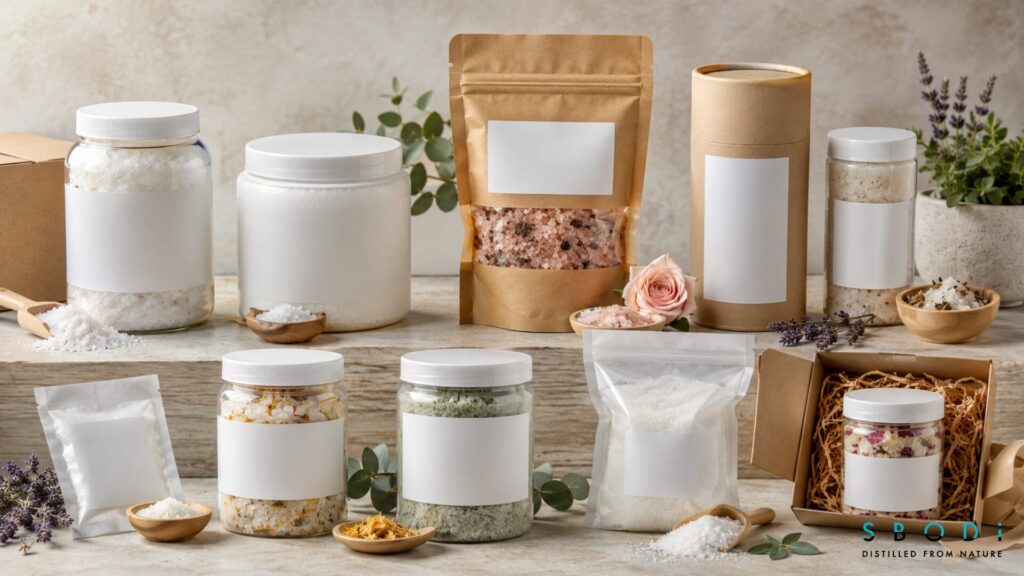
| Supplier | Best Fit | Program Type | Public MOQ or Entry Signal | Related Product Potential |
|---|---|---|---|---|
| SBODI | Coordinated wellness and bath product collections | Wholesale and private label | Quote-based | Bath bombs, shower steamers, candles, soaps, body care |
| Midwest Sea Salt Company | Startups through growing brands | Private label and bulk formulation | Private label projects typically start around $2,000 | Broad bath and body range |
| PrivateLabelBathSalts.com | Specialized bath soak brands | Stock and custom contract manufacturing | Approximately 300 to 500 units, depending on project | Foot soaks, bath bombs, shower tablets |
| Bulk Apothecary | Small tests and ready-to-label launches | Ready-to-label and turnkey private label | Small ready-to-label purchases; turnkey runs from 2,500 units | Bath bombs, scrubs, lotions, candles |
| RainShadow Labs | Spa, skincare, and body care brands | Stock, semi-custom, and custom | Bath salt-specific quote required | Skincare, body washes, scrubs, oils |
| NourishUs Naturals | White label testing and scalable customization | White label and private label | $75 white label minimum; private label generally seven pails | Bath soaks, skincare, haircare, body care |
| SaltWorks | High-volume salt brands and national distribution | Bulk supply, co-packing, and private label | Custom large-volume quote | Multiple salt types and grain sizes |
| Botanx | Custom product development | Contract manufacturing and private label | Commonly 1,000 to 5,000 pieces | Bath, body, spa, cosmetics, home fragrance |
Minimums and services can change. Request current written information directly from each supplier before budgeting a launch.
How to Choose a Bath Salts Supplier
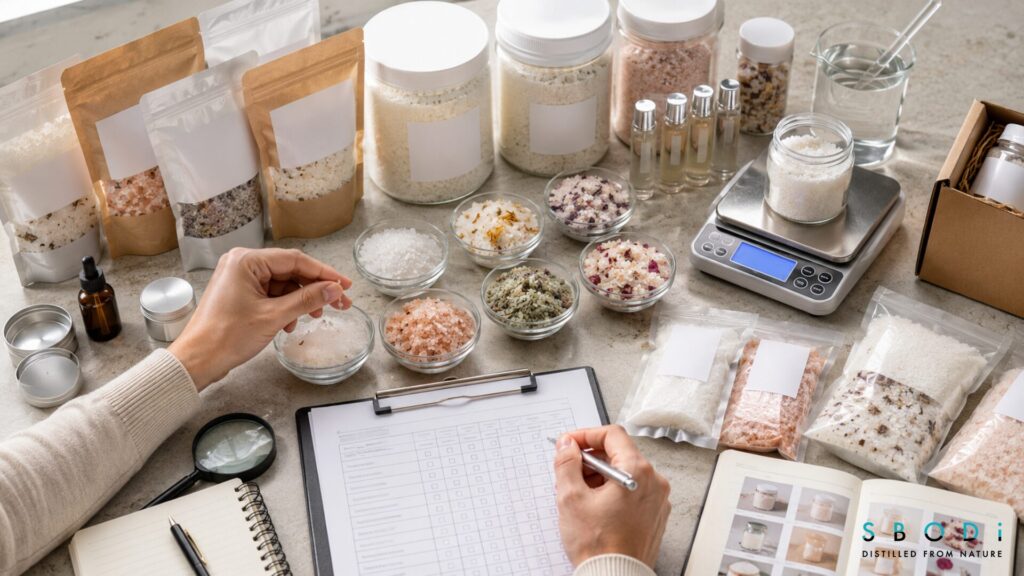
The best supplier is the one that fits the product brief, order volume, sales channel, budget, and operational requirements.
Define the Required Program
Decide whether the business needs:
- Finished wholesale products
- Ready-to-label bath salts
- A stock formula with custom branding
- A modified private label formula
- Fully custom contract manufacturing
- Bulk bath salts for in-house filling
A ready-to-label program may be enough for initial market testing. A national retail launch will usually require stronger customization, documentation, forecasting, and production capacity.
Request and Evaluate Samples
A product should not be approved from photographs alone. Test samples for:
- Scent accuracy and strength
- Crystal size and texture
- Dissolution
- Color transfer
- Botanical residue
- Clumping
- Packaging leakage
- Fill consistency
- Appearance after shipping
- Compatibility with the intended container
Evaluate samples immediately and again after several weeks of storage.
Review Ingredient Information
Request the complete ingredient declaration before developing labels or marketing copy.
Ask whether the formula contains:
- Fragrance oils
- Essential oils
- Color additives
- Botanicals
- Carrier oils
- Preservatives
- Anti-caking ingredients
- Milk, nut, or other ingredients relevant to customer disclosures
Terms such as natural bath salts or organic bath salts should not be used unless the brand has adequate documentation supporting the claim.
Examine Quality Documentation
Depending on the product and sales channel, useful documents may include:
- Ingredient specifications
- Certificates of analysis
- Batch records
- Safety data sheets
- Finished-product specifications
- Stability information
- Microbiological testing
- Packaging compatibility records
- Allergen or fragrance documentation
- Lot-code and traceability procedures
Not every product requires the same testing plan. The brand should determine what evidence is appropriate for its formula, packaging, claims, and distribution channel.
Verify Production Capacity
A low introductory MOQ has limited value if the supplier cannot support future reorders.
Ask about:
- Normal monthly capacity
- Peak-season limitations
- Production scheduling
- Ingredient lead times
- Packaging lead times
- Reorder priorities
- Emergency production policies
- Maximum order capacity
- Multi-SKU production
The answers should align with the brand’s sales forecast and planned wholesale accounts.
Bath Salt Product Categories to Consider
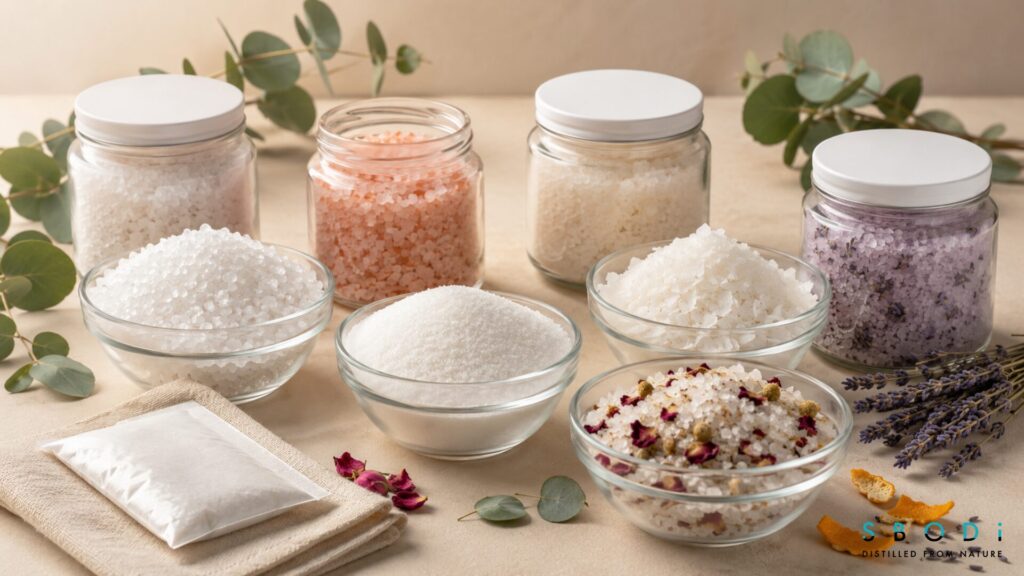
Epsom Salt Bath Products
Epsom salt is widely recognized and can support straightforward everyday bath soak positioning. It can be sold unscented or blended with fragrance, essential oils, colors, and other salts.
Avoid turning familiar consumer perceptions into unsupported medical claims.
Mineral Bath Salts
Mineral bath salts can use Dead Sea salt, sea salt, Himalayan salt, magnesium flakes, or blended mineral bases.
Grain size affects appearance, dissolution, fragrance absorption, packaging, and the customer experience.
Scented Bath Salts
Scented bath salts allow brands to create variety without completely changing the base product.
A focused initial range may include:
- Lavender
- Eucalyptus
- Rose
- Citrus
- Vanilla
- Coconut
- Herbal
- Unscented
Four well-planned products are usually easier to manage than twelve similar fragrances.
Botanical Bath Soaks
Botanical bath soaks can create a premium visual appearance, but loose flowers and herbs introduce additional considerations.
Evaluate drainage, residue, discoloration, moisture sensitivity, and customer instructions. A sachet or bath tea bag may be more practical than placing loose botanicals directly in the blend.
Single-Use Bath Salts
Sachets and small pouches work well for sampling, subscription boxes, hotel amenities, gift sets, and travel-oriented collections.
The packaging cost per ounce may be higher, but the lower retail price can make the product easier for first-time customers to try.
Custom Bath Salts
Custom bath salts may use a signature scent, proprietary salt ratio, distinctive botanical profile, custom color, or exclusive packaging.
Ask whether formula exclusivity is included in the contract and whether the brand owns the formula or only has permission to purchase it.
Essential Manufacturing Considerations
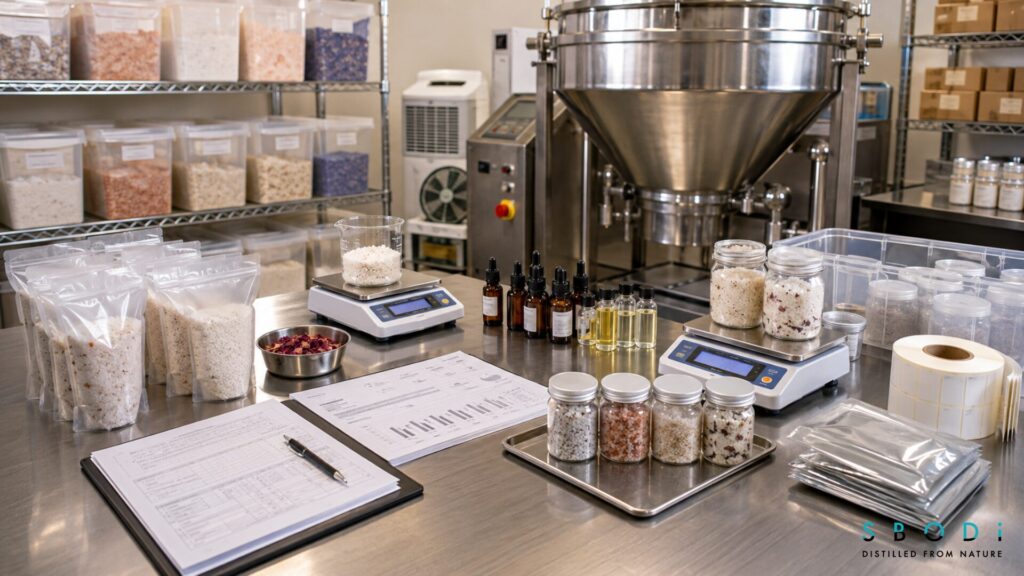
Formula Consistency
The scent, color, salt ratio, fill weight, and appearance should remain consistent between batches.
Request written finished-product specifications rather than relying only on an approved sample.
Moisture Control
Salts can absorb moisture from the environment. Poor moisture control can cause clumping, fragrance changes, label damage, or packaging problems.
Manufacturers should have appropriate storage and handling procedures for raw materials, work-in-process blends, packaging, and finished goods.
Fragrance Distribution
Fragrance should be distributed consistently throughout the batch. Uneven mixing may produce containers with noticeably different scent levels.
Ask how mixing time, batch size, fragrance addition, and in-process checks are controlled.
Fill Weight and Packaging Compatibility
Confirm whether pricing is based on product weight, container volume, or both.
The manufacturer should verify that the selected container, closure, seal, and label are suitable for the salt blend and expected distribution conditions.
Batch Coding and Traceability
Each production batch should be identifiable. Lot coding supports inventory control, complaint investigation, product testing, and targeted corrective action.
Ask how the manufacturer connects finished products with raw material lots, production dates, packaging components, and shipping records.
Packaging Options for Private Label Bath Salts
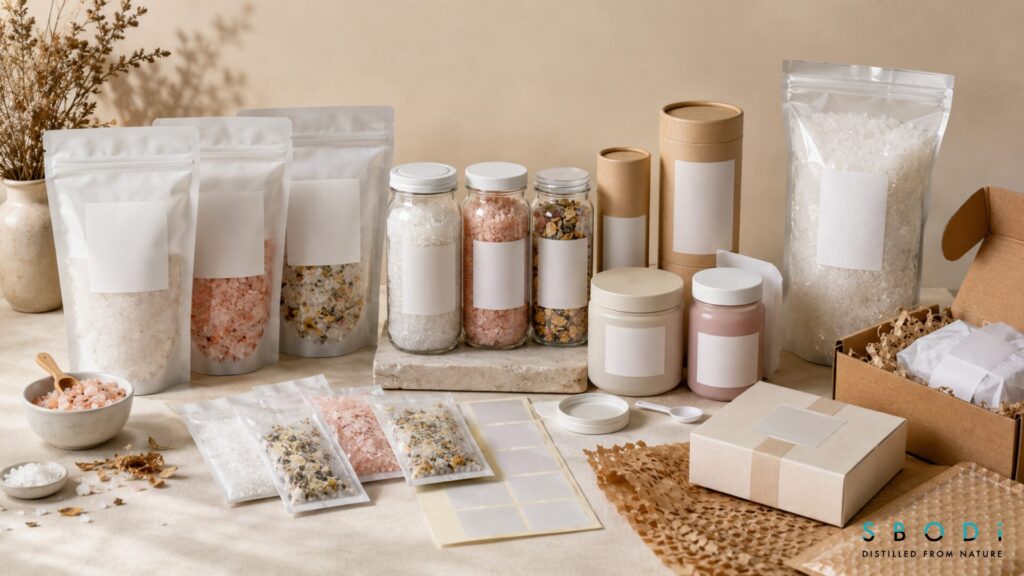
Stand-Up Pouches
Pouches are lightweight and generally economical to ship. They can support refill products, ecommerce orders, and value-focused retail collections.
Check seal strength, moisture resistance, zipper performance, print minimums, and label adhesion.
Plastic Jars
Plastic jars are lighter and less fragile than glass. They work well for spas, ecommerce, and everyday retail.
Confirm plastic type, closure quality, induction sealing options, and compatibility with fragrance ingredients.
Glass Jars
Glass can create a premium presentation, but it increases shipping weight and breakage risk.
Calculate protective packaging, replacement rates, parcel surcharges, and retail handling before choosing glass.
Tubes and Canisters
Paperboard or composite tubes can create a differentiated shelf appearance. However, liners and moisture barriers must be appropriate for the formula.
Sachets
Sachets work well for samples and single baths. Accurate filling, seal integrity, instructions, and net quantity declarations remain important even for small packages.
Gift Boxes
Gift packaging can combine bath salts with wholesale bath bombs, private label candles, handmade soap bars, shower steamers, or body care products.
The outer presentation should protect the products while maintaining a consistent scent and visual story.
Step-by-Step Supplier Selection Process
Step 1: Write a Product Brief
Define the customer, salt type, scent, size, packaging, target retail price, initial quantity, claims, sales channel, and launch date.
Step 2: Shortlist Suppliers by Business Model
Do not send the same request to every company. Select suppliers whose public capabilities match the required volume and customization level.
Step 3: Request Comparable Quotes
Send each supplier the same project specifications. Ask for separate costs for formula, packaging, labels, setup, testing, freight, storage, and fulfillment.
Step 4: Order Samples
Compare samples using a written scorecard. Include product performance, scent, packaging, communication, documentation, and estimated margin.
Step 5: Review Documents and Agreements
Clarify formula ownership, confidentiality, exclusivity, rejected goods, production tolerances, payment terms, cancellations, intellectual property, and responsibility for compliant artwork.
Step 6: Approve a Production Sample
Review the exact formula, container, closure, label, and fill weight expected in the production run.
Step 7: Begin With a Focused Collection
A practical opening collection may use three core scents and one unscented option. This limits inventory fragmentation while providing useful customer choice.
Step 8: Measure Actual Sales
Track sell-through by scent, packaging format, channel, customer acquisition source, and bundle.
Use real demand data to plan reorders and future products.
MOQ, Pricing, and Landed Cost
MOQ is only one component of the financial decision.
A low product minimum can still produce a high total investment when the project requires printed pouches, label setup, design work, cartons, freight, or testing.
Calculate landed cost using:
Product cost + packaging + labels + setup fees + testing + inbound freight + duties, when applicable + storage + fulfillment preparation + expected damage or waste
Also determine whether the MOQ applies:
- Per formula
- Per scent
- Per size
- Per package
- Per label design
- Per production batch
- Per purchase order
- By project value rather than units
A supplier quoting 300 units per scent may require a larger investment than a supplier offering a $2,000 project minimum across several compatible products.
Estimate margin using realistic wholesale and direct-to-consumer pricing. Include marketplace fees, retailer discounts, shipping subsidies, promotions, returns, and damaged inventory.
Labeling, Claims, and Regulatory Responsibilities
Bath salts marketed for cleansing, beautifying, or altering appearance may be regulated as cosmetics. Product classification depends partly on intended use, including claims made on labels, websites, advertisements, and other promotional materials. Claims that a product treats disease or affects body structure or function can cause it to be regulated as a drug.
FDA cosmetic labeling guidance addresses matters such as product identity, net quantity, ingredient declarations, business information, warnings when applicable, and label placement.
The Modernization of Cosmetics Regulation Act introduced additional requirements involving areas such as facility registration, cosmetic product listing, safety substantiation, adverse event reporting, and recordkeeping. Applicability and exemptions should be assessed for the specific business and product.
Brands should avoid unsupported statements such as:
- Treats muscle pain
- Reduces inflammation
- Heals skin conditions
- Detoxifies the body
- Prevents illness
- Provides medical therapy
- Cures insomnia
Safer cosmetic and sensory descriptions may include:
- Lavender-scented bath soak
- Mineral bath salt blend
- Spa-inspired bathing experience
- Botanical fragrance profile
- Skin-conditioning bath ingredients
- Designed for an at-home self-care ritual
A U.S. manufacturing address does not automatically support an unqualified “Made in USA” claim. FTC guidance states that an unqualified claim generally requires the product to be all or virtually all made in the United States, including significant processing and ingredients or components.
Obtain qualified regulatory and legal review for the finished formula, label, claims, website copy, and intended distribution channels.
Building a Complete Bath and Body Collection
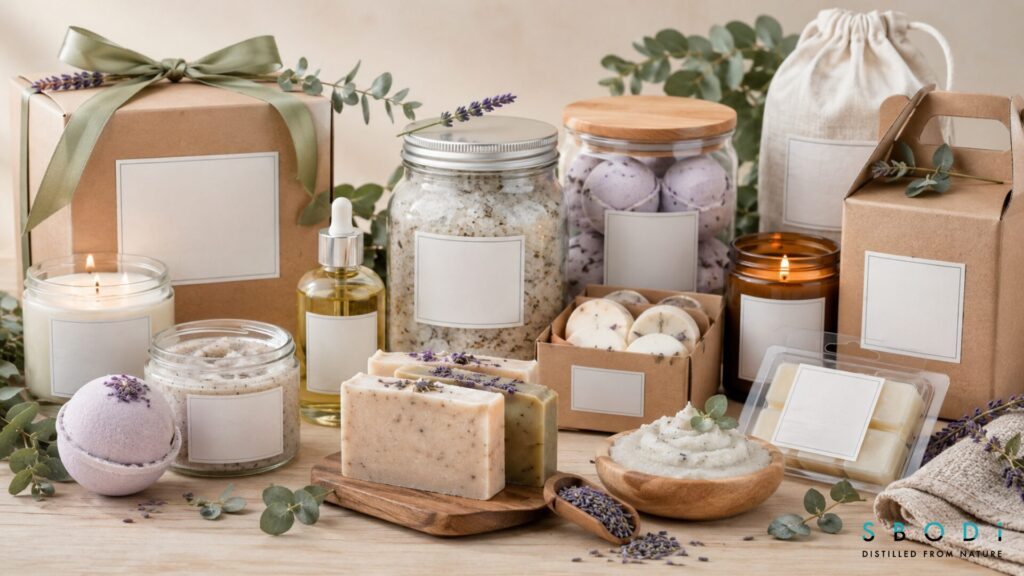
Bath salts can serve as the foundation of a broader product line.
A coordinated collection may include:
- Private label bath salts
- Wholesale bath bombs
- Private label bath bombs
- Wholesale shower steamers
- Private label shower steamers
- Handmade soap bars
- Private label candles
- Wax melts
- Body oils
- Scrubs
- Gift boxes
Use a shared fragrance system across the collection. For example, a lavender bath salt can coordinate with a lavender shower steamer, candle, soap, and bath bomb.
However, avoid launching every possible product at once. Begin with a clear hero product and a small number of complementary items.
Common Supplier Selection Mistakes
Choosing Only by Unit Price
The lowest price may exclude labels, freight, testing, seals, cartons, or customer-ready packaging.
Skipping Samples
Ingredient lists and photographs cannot demonstrate scent quality, clumping, dissolution, leakage, or packaging durability.
Ignoring MOQ by SKU
A quoted minimum may apply separately to every scent, size, or label design.
Approving Labels Too Early
Do not print a large label quantity before confirming the final formula, ingredient declaration, container dimensions, claims, and regulatory information.
Using Unsupported Claims
Copying therapeutic language from competitors does not make the claims compliant.
Failing to Clarify Formula Ownership
A custom development fee does not always transfer formula ownership or exclusivity.
Overlaunching
Too many scents and package sizes divide inventory, increase photography and label costs, and make forecasting difficult.
Neglecting Reorder Planning
Ask about reorder minimums and lead times before the first production run, not when inventory is almost depleted.
Best Practices for a Successful Product Launch
Start with a documented product brief and a focused customer profile.
Evaluate at least two or three qualified suppliers where practical. Use the same request for quotation so that pricing and services can be compared accurately.
Keep records of:
- Approved formulas
- Ingredient declarations
- Packaging specifications
- Label versions
- Batch codes
- Test results
- Purchase orders
- Shipping records
- Customer complaints
- Corrective actions
Complete photography, product descriptions, FAQs, wholesale materials, and fulfillment preparation before inventory arrives.
Finally, monitor actual sell-through rather than relying only on total orders. A product may generate sales but still create weak margins because of shipping, marketplace fees, discounting, or excessive packaging costs.
Future Trends in Private Label Bath Salts
More Transparent Supplier Documentation
As cosmetic oversight develops, brands are likely to place greater value on traceability, safety substantiation, ingredient records, complaint handling, and documented quality procedures. This is a reasonable inference from the compliance responsibilities established through MoCRA.
Focused Stock Programs
Ready-to-label and semi-custom programs can help brands test products without immediately funding full custom development. Suppliers are likely to continue separating low-entry stock programs from higher-volume custom manufacturing.
Refill and Lightweight Packaging
Pouches and refill bags may receive greater attention because they can reduce shipping weight and packaging cost. Environmental language must still be accurate and adequately supported.
Fragrance-Free and Minimal Products
Unscented, lightly scented, and visually minimal bath salts can serve customers who do not want elaborate fragrances, colors, or botanicals.
Cross-Category Fragrance Collections
Bath salts will increasingly be planned with bath bombs, shower steamers, candles, soaps, and body care rather than treated as isolated products.
Better Ecommerce Preparation
Brands selling through marketplaces and direct-to-consumer websites will expect clearer lot identification, scannable packaging, case labeling, photography-ready samples, and fulfillment support.
Learn More About Wholesale Bath Salts
Supplier selection becomes easier when buyers first understand the broader bath salt category, including the differences between wholesale purchasing, ready-to-label products, private label production, and fully custom manufacturing.
The SBODi wholesale bath salts guide for wellness brands explains the main product types, sourcing models, packaging options, manufacturing considerations, and supplier-evaluation criteria involved in developing a bath salt collection.
Businesses preparing to launch products under their own branding can also review the SBODi guide to private label bath salts in the USA. It provides additional context on formula selection, customization, packaging development, minimum order quantities, and brand planning.
Before finalizing a formula or product label, buyers should also review the FDA’s cosmetic labeling requirements. Bath salts marketed for cosmetic purposes may need appropriate product identity, net quantity, ingredient, business, and warning information.
These resources can help a business determine whether it needs finished wholesale inventory, bulk bath salts for in-house packaging, ready-to-label products, private label branding, or a custom contract manufacturing program.
How SBODi Supports Bath Product Planning
SBODi operates within the wholesale and private label bath and body sector. Its product range connects bath salts with bath bombs, shower steamers, soaps, candles, wax melts, and body care products.
From a product-planning perspective, this allows brands to consider how bath salts may fit within a consistent scent collection, gift set, spa assortment, or ecommerce catalog.
Businesses researching SBODi should use the same evaluation process recommended for every supplier. Request samples, clarify minimums, review ingredients, assess packaging, confirm documentation, calculate landed cost, and obtain all important production terms in writing.
Frequently Asked Questions