
Wholesale bath salts remain relevant because they combine a familiar bathing format with flexible fragrance, ingredient, packaging, and pricing options. They can be positioned as everyday bath products, spa-inspired soaks, gift items, private label collections, or coordinated additions to a wider bath and body range.
Their continued popularity also reflects a broader interest in personal care and at-home wellness routines. Retailers, spas, ecommerce businesses, subscription-box companies, and private label brands can adapt bath salts to different audiences without changing the fundamental product concept.
This guide explains why bath salts continue to perform in self-care markets, which product categories buyers should understand, how they compare with bath bombs and shower steamers, and what businesses should review before sourcing, packaging, or launching them.
Table of Contents
- What Are Wholesale Bath Salts?
- Why Wholesale Bath Salts Remain Popular
- The Role of Bath Salts in the Wellness Market
- Benefits for Retailers and Private Label Brands
- Common Bath Salt Product Categories
- Bath Salts vs Bath Bombs and Shower Steamers
- How to Build a Bath Salt Product Range
- Buying Considerations
- Manufacturing Considerations
- Packaging Considerations
- Labeling and Claims
- Common Mistakes
- Best Practices
- Future Trends
- Learn More About Wholesale Bath Salts
- How SBODi Supports Product Planning
- Frequently Asked Questions
- Conclusion
What Are Wholesale Bath Salts?
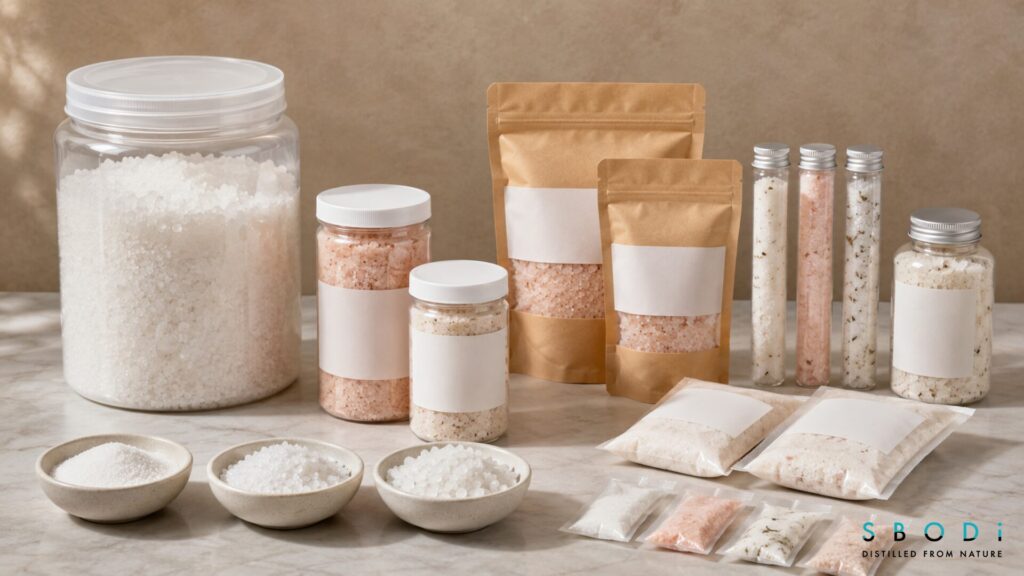
Wholesale bath salts are dry bath preparations purchased in larger quantities for resale, repackaging, private labeling, hospitality use, spa services, or inclusion in gift collections.
Depending on the supplier and program, buyers may purchase:
- Finished retail-ready containers
- Bulk bath salt blends
- Ready-to-label products
- Private label bath salts
- Custom formulations
- Individually packaged sachets
- Gift sets and coordinated bath collections
The U.S. Food and Drug Administration includes bath oils, tablets, and salts within its cosmetic product categories for bath preparations. However, the regulatory treatment of a particular product also depends on its ingredients, intended use, labeling, and marketing claims.
Common Bath Salt Ingredients
A bath salt formula may include one or more salt bases, fragrances, essential oils, colorants, botanical materials, powdered ingredients, or skin-conditioning components.
Frequently used salt bases include:
- Magnesium sulfate, commonly called Epsom salt
- Sea salt
- Mineral salt blends
- Sodium chloride
- Dead Sea salt
- Fine, medium, or coarse salt crystals
Not every product contains the same materials or provides the same bathing experience. Crystal size, fragrance level, added oils, solubility, color dispersion, and botanical content can all affect product performance.
Wholesale, Private Label, and Custom Bath Salts
These sourcing models are related but not identical.
Wholesale bath salts are generally finished or bulk products sold at business-to-business pricing.
Ready-to-label bath salts are existing formulas supplied in containers that can receive a buyer’s approved branding.
Private label bath salts are manufactured or packaged for sale under another company’s brand name.
Custom bath salts may involve a new scent, ingredient combination, color system, crystal size, package, fill weight, or exclusive formula.
The more customization a project requires, the more likely it is to involve higher minimum order quantities, additional development work, longer lead times, and separate packaging requirements.
Why Wholesale Bath Salts Remain Popular in Self-Care Markets
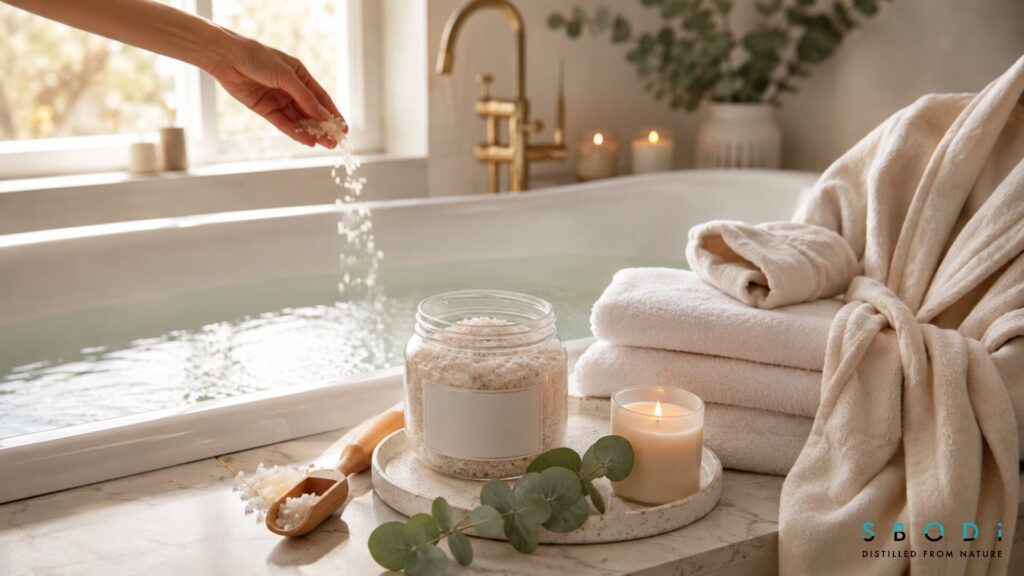
Bath salts have not depended on a single short-term trend. Their popularity comes from several practical characteristics that allow the format to remain familiar while supporting new fragrances, visual styles, ingredients, and brand concepts.
1. Bath Salts Fit an Established Personal Care Routine
A bath soak is easy for many consumers to understand. The product is measured or poured into bath water, allowed to disperse, and used as part of a bathing routine.
This familiarity reduces the amount of customer education required compared with highly specialized personal care formats. Brands still need clear directions, but they do not have to introduce an entirely unfamiliar product category.
2. The Format Supports Sensory Product Development
Fragrance, color, texture, crystal size, and packaging can create noticeably different product experiences.
For example, the same product category can support:
- Lavender-inspired evening collections
- Citrus or botanical daytime collections
- Unscented minimalist products
- Seasonal fragrance releases
- Spa-inspired mineral salt blends
- Floral gift collections
- Premium bath rituals
- Travel-size bath soak sachets
This flexibility helps brands create distinct collections without moving too far away from a recognizable product concept.
Essential oils and fragrance materials must still be evaluated carefully. Some essential oils may cause skin irritation or allergic reactions, particularly when used incorrectly or at unsuitable concentrations. Product developers should review ingredient safety, intended use, directions, warnings, and finished-formula compatibility.
3. Bath Salts Can Serve Several Price Levels
Bulk bath salt can be divided into economical sachets, standard pouches, glass jars, plastic jars, tubes, gift boxes, or larger refill formats.
The formula is only one part of the final price. Container material, closure, decoration, label finish, outer carton, shipping protection, fill weight, and order quantity can significantly influence the landed cost.
This allows businesses to create entry-level, standard, and premium versions of a related product.
4. They Work Well in Gift-Oriented Collections
Bath salts are commonly combined with related bath and body products, including:
- Bath bombs
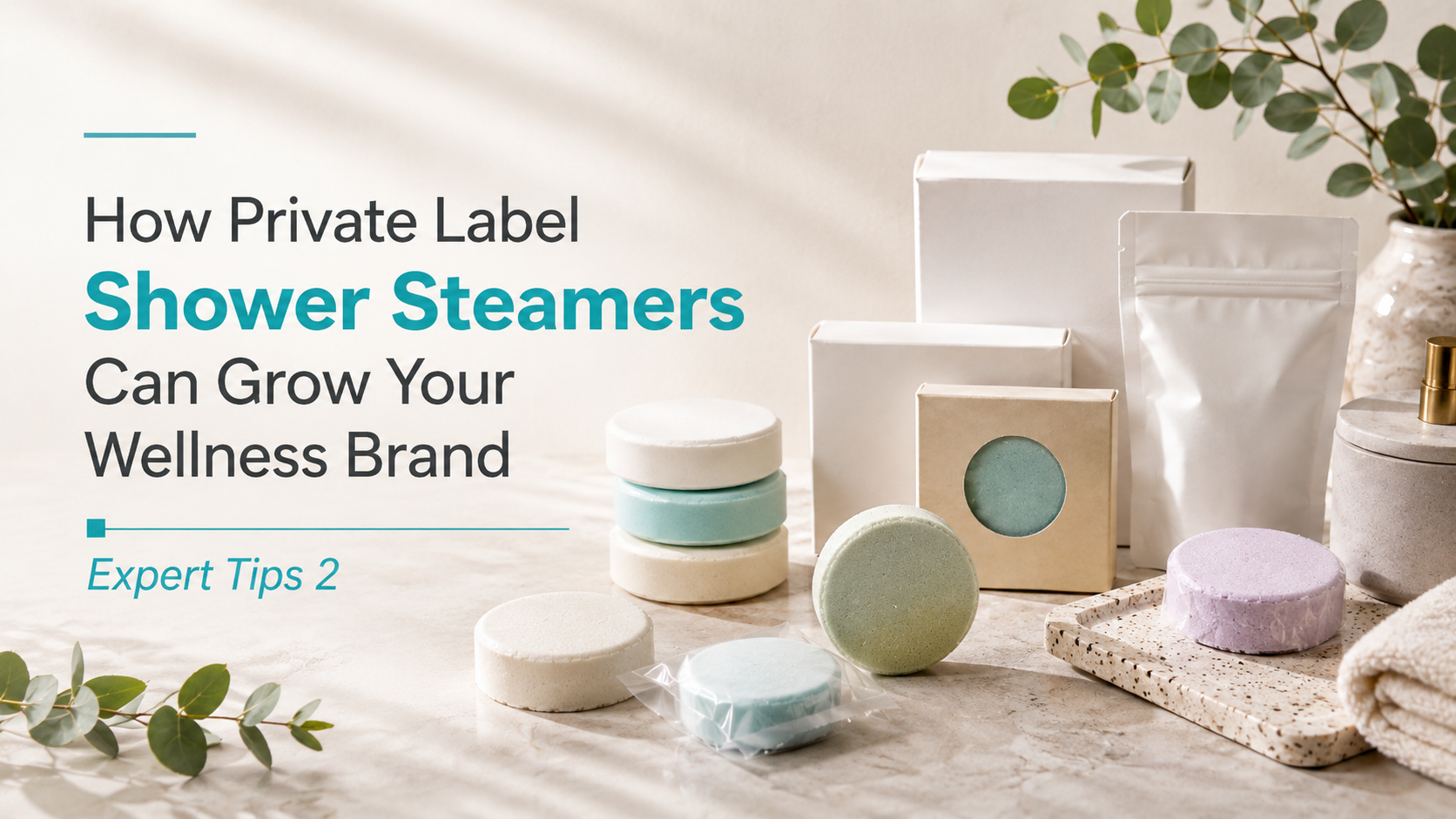
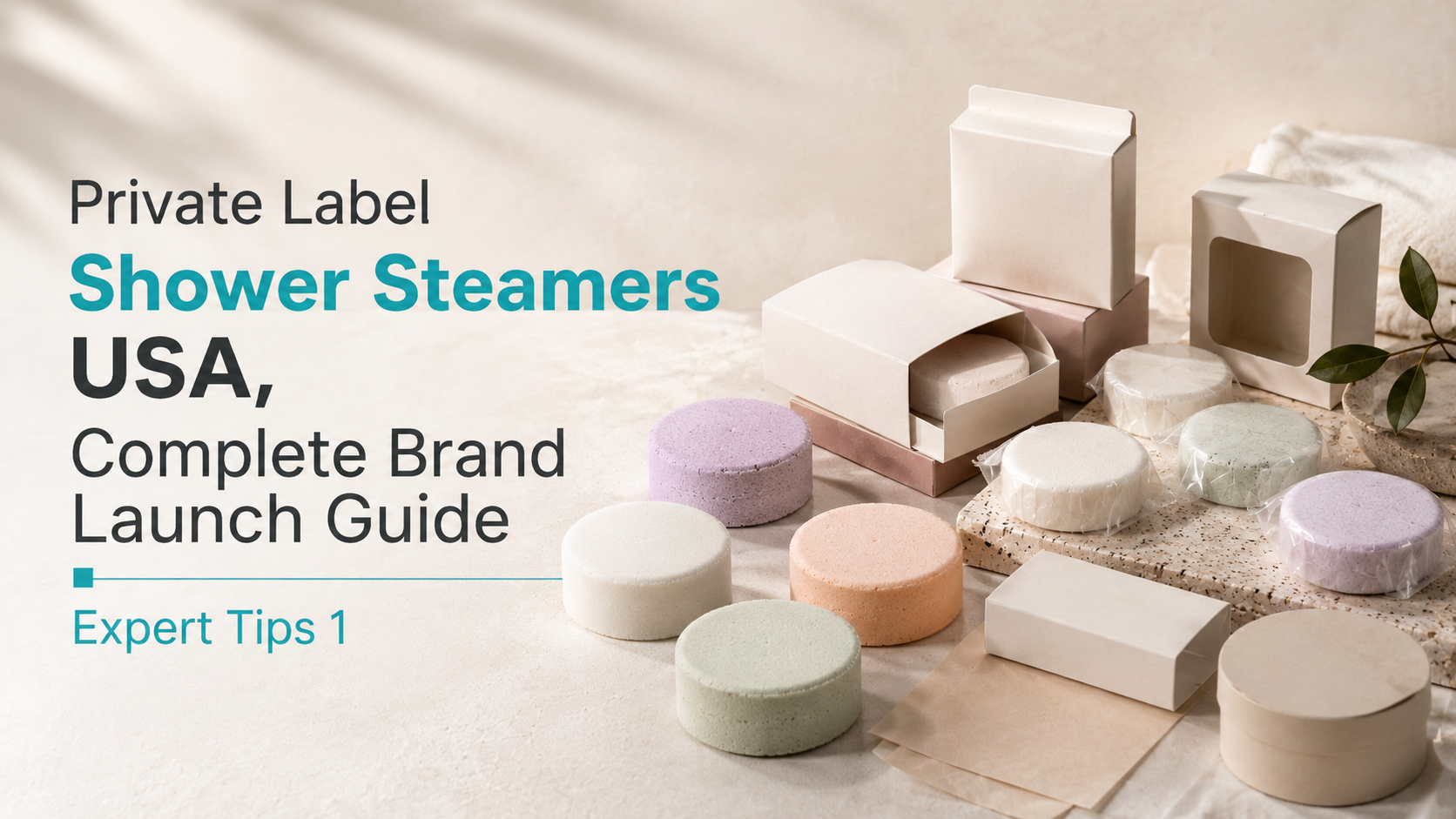
- Shower steamers
- Candles
- Wax melts
- Handmade soap bars
- Body scrubs
- Body oils
- Bath accessories
A coordinated collection can be organized around fragrance, color, season, audience, or use occasion. This makes bath salts relevant to holiday gifts, spa packages, subscription boxes, wedding favors, hotel amenities, and boutique gift sets.
5. Buyers Can Offer Multiple Sizes
Bath salt packaging can support single-use, trial, standard, and larger multi-use sizes.
A smaller size can help customers evaluate a fragrance before purchasing a larger container. A larger pouch or jar may appeal to repeat customers, spas, or buyers seeking better value per use.
The correct size structure depends on the audience, average order value, shipping economics, and expected frequency of use.
6. Bath Salts Are Compatible With Different Sales Channels
Wholesale bath salts can be positioned for:
- Ecommerce stores
- Gift shops
- Spas and salons
- Wellness boutiques
- Hotels and hospitality businesses
- Subscription boxes
- Market stalls
- Corporate gift programs
- Private label brands
- Bath and body retailers
Each channel creates different requirements. A spa may prioritize larger formats and operational usability, while an ecommerce brand may focus on shipping durability, label visibility, photography, and unboxing presentation.
7. The Product Can Be Visually Simple or Highly Decorative
A minimalist bath salt may use a clear jar, neutral label, and uniform crystals. A decorative collection may include layered colors, dried botanicals, textured salts, metallic closures, or gift packaging.
This range allows bath salt products to fit natural, luxury, spa, botanical, colorful, seasonal, or minimalist brand identities.
Decorative materials should not be added solely for appearance. Buyers must also consider solubility, drainage, cleanup, ingredient safety, container filling, weight consistency, and the actual customer experience.
The Role of Bath Salts in the Wellness Market
Personal care products sit within a much larger wellness economy that includes beauty, spas, wellness tourism, physical activity, healthy eating, and other consumer sectors.
The Global Wellness Institute reported that the global wellness economy reached approximately $6.8 trillion in 2024 and forecast that it could reach $9.8 trillion by 2029. It also identifies personal care and beauty as a major wellness-economy sector that includes cosmetics, toiletries, skincare, and other personal care products.
These figures do not mean that every bath salt product will succeed. They show that personal care and wellness-related spending operate within a substantial market where consumers encounter many competing products.
Bath salts remain relevant because they connect several established interests:
- At-home personal care
- Fragrance-led experiences
- Bath rituals
- Gifting
- Spa-inspired merchandising
- Botanical product positioning
- Private label product development
- Coordinated bath and body collections
The opportunity is therefore not based only on selling salt crystals. It comes from presenting a clear product purpose, audience, sensory identity, package, and use occasion.
Benefits of Wholesale Bath Salts for Retailers and Private Label Brands
Flexible Collection Planning
A brand can begin with a small number of carefully selected scents and later introduce seasonal or audience-specific variations.
This approach may be more manageable than launching a large collection immediately. It gives the business time to compare sales, feedback, repeat purchases, packaging performance, and fragrance preferences.
Compatibility With Related Categories
Bath salts can support cross-merchandising with wholesale bath bombs, shower steamers, candles, soaps, and body care products.
A lavender bath salt, for example, may be paired with a matching candle and soap bar. A citrus bath soak may sit beside an energizing shower steamer or coordinating body product.
Related products should share a clear connection. Adding unrelated items only to increase the number of SKUs can weaken the collection.
Private Label Brand Development
Private label bath salts allow a business to sell products under its own name while working with an external manufacturer or supplier.
The level of control depends on the program. Some buyers select only the label, while others choose the scent, formula, package, size, carton, and supporting products.
Potential for Repeat Purchases
Unlike permanent bath accessories, bath salts are consumed during use. Customers who like the fragrance, packaging, and experience may return for another container.
Repeat purchasing is not automatic. It depends on product quality, customer satisfaction, price, availability, clear usage directions, and effective brand positioning.
Manageable Product Testing
Trial sizes, sample containers, and limited initial assortments allow businesses to evaluate a product concept before committing to a much larger range.
Samples should be reviewed for more than fragrance. Buyers should examine:
- Salt texture
- Fragrance consistency
- Dissolution
- Color transfer
- Oil distribution
- Container compatibility
- Clumping
- Botanical residue
- Label condition
- Shipping durability
Common Wholesale Bath Salt Product Categories
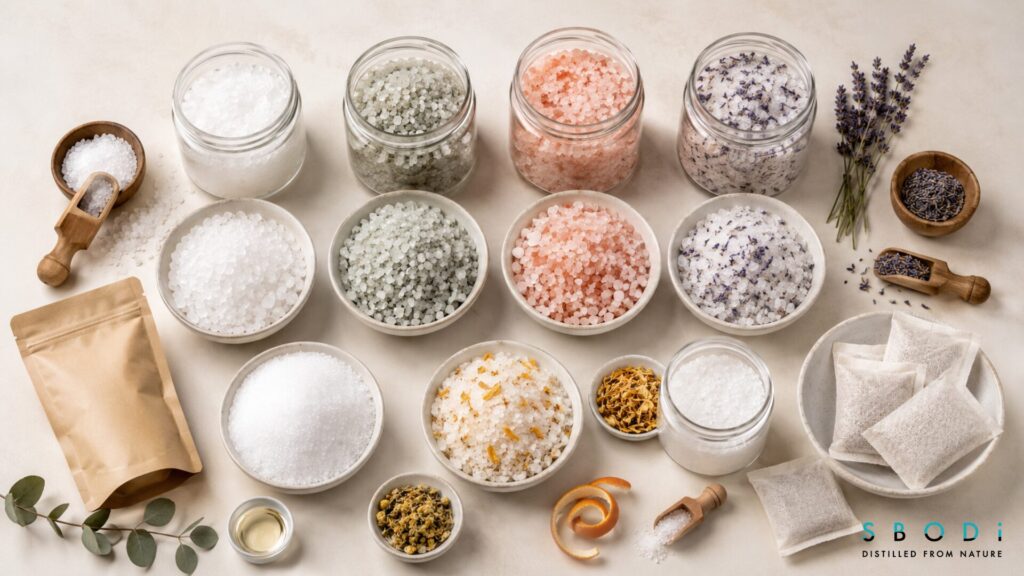
Epsom Salt Bath Products
Epsom salt products generally use magnesium sulfate as the principal salt base. They may be sold unscented or combined with fragrance, essential oils, color, or other cosmetic ingredients.
Brands should avoid turning traditional consumer associations into unsubstantiated medical claims. Marketing language should accurately reflect the formula, intended cosmetic use, and available supporting evidence.
Mineral Bath Salts
Mineral bath salts may use sea salt, Dead Sea salt, or blended mineral salts. The source, particle size, mineral composition, color, and purity can vary.
Buyers should request accurate ingredient specifications rather than relying only on broad terms such as “mineral-rich” or “natural.”
Scented Bath Salts
Scented bath salts focus on fragrance as a major part of the customer experience. Common fragrance families include floral, citrus, herbal, woody, fresh, sweet, and seasonal profiles.
A scent should be reviewed in the finished formula and packaging. Fragrance performance in a sample bottle does not always predict how it will behave when mixed with salts, oils, colorants, or botanical materials.
Aromatherapy-Inspired Bath Salts
Aromatherapy bath salts are generally positioned around scent and atmosphere. They may use essential oils, fragrance oils, or combinations of aromatic ingredients.
Brands should use cautious, accurate language. An appealing aroma can support a sensory bathing experience, but cosmetic marketing should not imply disease treatment or guaranteed physiological results. FDA explains that claims to treat or prevent disease, or to affect the structure or function of the body, can cause a product to be regulated as a drug.
Botanical Bath Salts
These products may contain dried petals, herbs, powders, or botanical extracts.
Visible botanical pieces can strengthen a natural or handcrafted presentation, but they may also create production and consumer-use concerns. Brands should assess drainage, residue, microbial risk, discoloration, allergen potential, fill consistency, and package appearance over time.
Unscented Bath Salts
Unscented products can suit minimalist ranges and customers who prefer products without added fragrance.
“Unscented” and “fragrance-free” should not be used interchangeably without checking the formula. An unscented product may still contain ingredients that mask odors, while fragrance-free generally communicates that fragrance materials have not been added for scent.
Single-Use Bath Salt Sachets
Sachets can support samples, travel collections, hotel amenities, event favors, and subscription boxes.
The package must provide an appropriate moisture barrier and remain sealed throughout storage and shipping. Single-use positioning should also match the actual fill weight and directions.
Private Label Bath Soaks
The phrase “bath soak” can describe a broader blend that may contain salts, powders, oils, botanicals, or other bathing ingredients.
Buyers should evaluate the actual ingredient declaration and product specifications rather than assuming that every bath soak has the same composition.
Bath Salts vs Bath Bombs, Shower Steamers, and Bath Soaks
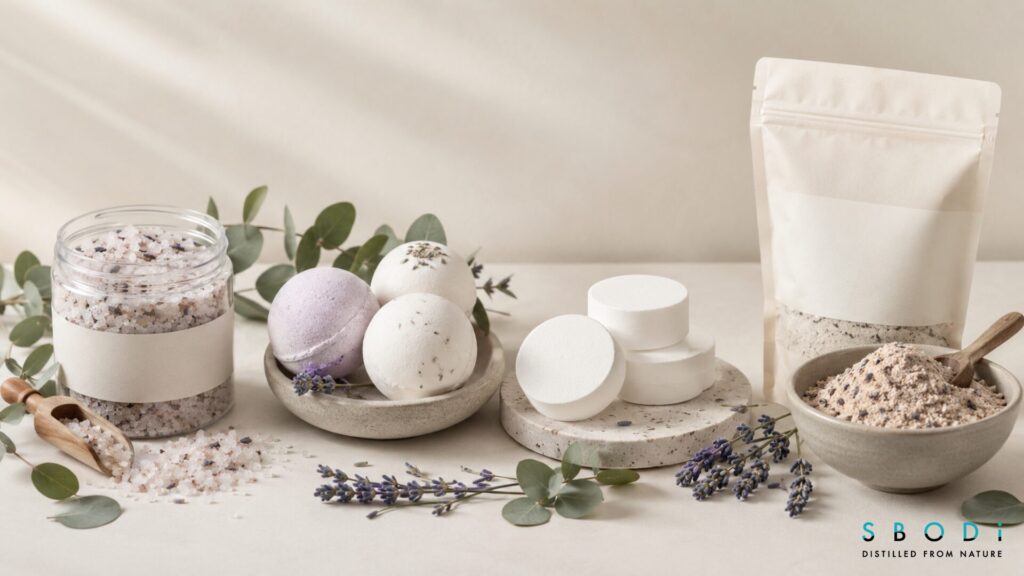
| Product Type | Typical Format | Primary Use Environment | Important Buying Considerations |
|---|---|---|---|
| Bath salts | Loose crystals or granular blend | Bathtub | Solubility, fragrance, clumping, moisture barrier and dosage |
| Bath bombs | Compressed effervescent unit | Bathtub | Fragility, fizz performance, wrapping, color and shipping protection |
| Shower steamers | Compressed aromatic tablet | Shower floor or designated shower area | Humidity resistance, placement directions, fragrance release and packaging |
| Bath soak | Loose blend of salts, powders, oils or botanicals | Bathtub | Formula composition, residue, dispersion, directions and package compatibility |
| Shower melts | Water-activated shower product | Shower | Dissolution rate, scent intensity, humidity and safe placement |
Bath salts and bath bombs both serve bath-focused markets, but they provide different product experiences.
Bath bombs are individually portioned and visually distinctive. However, they can be vulnerable to cracking, crumbling, humidity, and premature activation.
Bath salts are loose and adjustable, allowing the customer to measure an amount. They can still absorb moisture, clump, leak fragrance oils, or damage labels if the package is not suitable.
Shower steamers expand the product range to customers who do not regularly use a bathtub. They should be developed and labeled specifically for shower use rather than presented as interchangeable with bath bombs.
How to Build a Wholesale Bath Salt Product Range
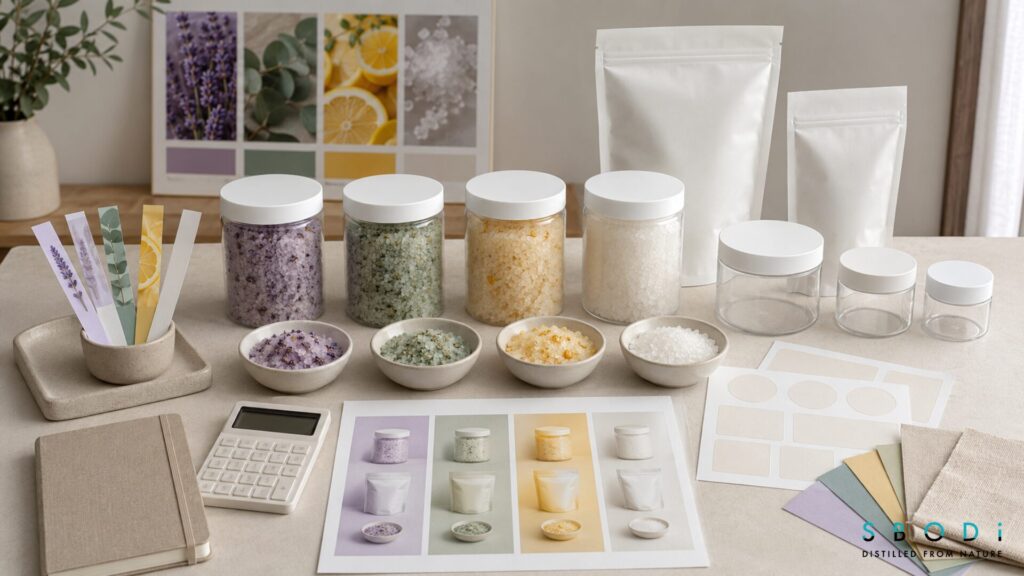
Step 1: Define the Target Customer
Identify who is expected to buy and use the product.
Possible audiences include:
- Spa customers
- Boutique shoppers
- Gift buyers
- Hotel guests
- Ecommerce customers
- Fragrance enthusiasts
- Minimalist personal care buyers
- Subscription-box members
- Private label retailers
A product for hotel amenities may require different packaging and economics from a premium glass-jar product sold online.
Step 2: Choose the Intended Use Occasion
Clarify when and why the customer would use the product.
Examples include:
- Everyday bathing
- Evening bath routines
- Weekend self-care
- Seasonal gifting
- Travel
- Spa service add-ons
- Event favors
- Coordinated fragrance rituals
Use-occasion planning helps determine the scent, size, package, directions, product name, and related items.
Step 3: Select the Product Format
Choose whether the collection requires finished wholesale inventory, bulk bath salts, ready-to-label products, private label packaging, or custom manufacturing.
A ready-to-label program may support a faster launch. A custom project may provide more differentiation but usually requires additional development, documentation, testing, packaging coordination, and investment.
Step 4: Create a Focused Fragrance Structure
Start with a manageable fragrance architecture.
A balanced initial range might include:
- One floral scent
- One fresh or herbal scent
- One citrus scent
- One unscented option
The exact structure should reflect the target customer rather than a generic formula.
Step 5: Determine Sizes and Price Points
Select sizes based on use frequency, shipping cost, package availability, retail price, and margin requirements.
A simple structure may include:
- Trial sachet
- Standard jar or pouch
- Larger refill pouch
Avoid creating multiple sizes unless each one serves a clear role.
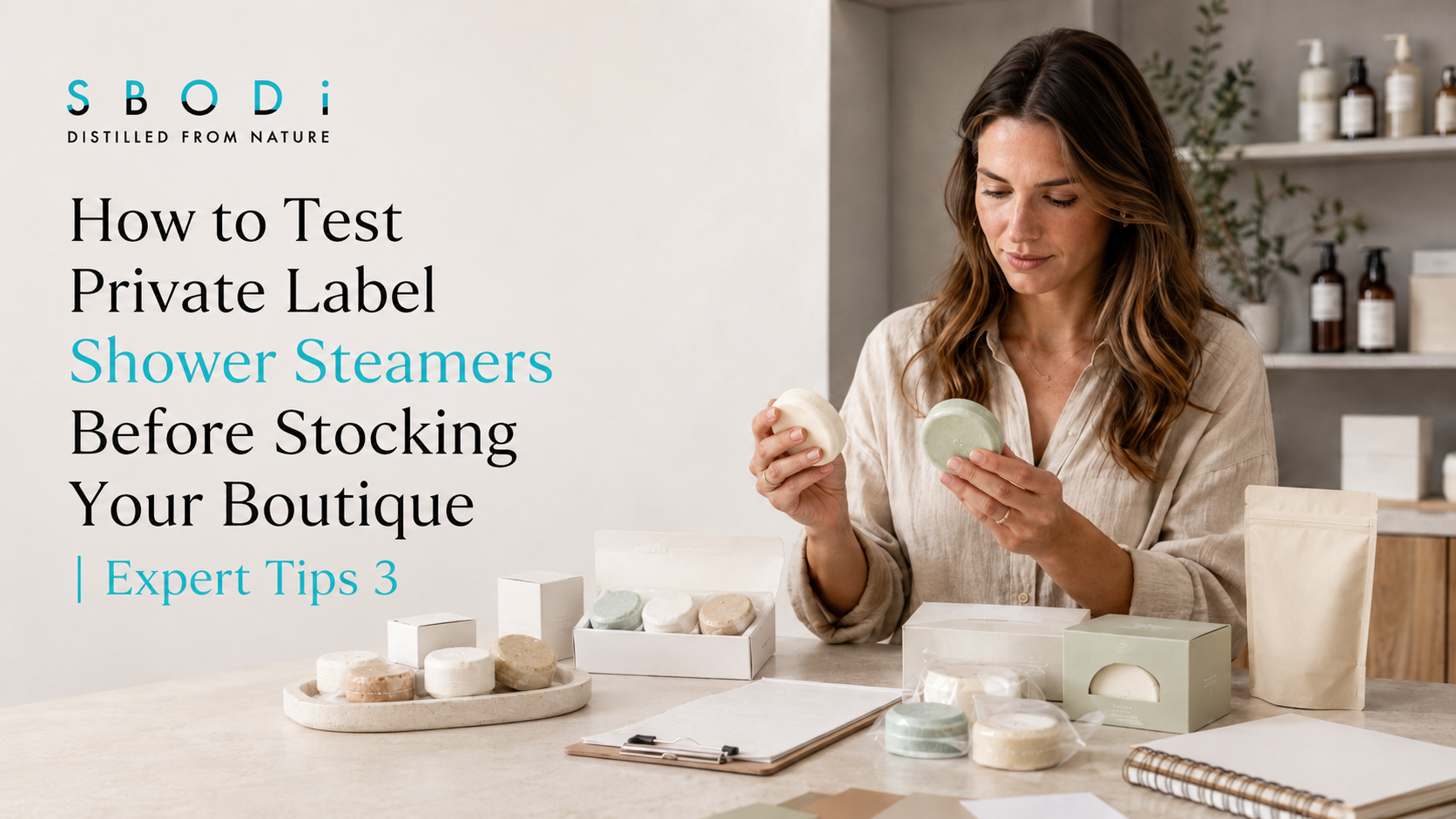
Step 6: Request and Evaluate Samples
Evaluate samples under realistic conditions.
Use the product according to the proposed directions, store it in different environments, inspect it over time, and review the package after handling and transport.
Record observations rather than relying on memory.
Step 7: Calculate the Landed Cost
The unit price is not the complete cost.
Include:
- Product cost
- Container
- Closure
- Label
- Outer carton
- Freight
- Duties when applicable
- Warehousing
- Assembly
- Inspection
- Damaged-unit allowance
- Fulfillment materials
- Payment fees
- Sampling and development costs
This calculation helps determine whether the intended retail price and margin are realistic.
Step 8: Review Labels and Claims
Confirm the ingredient declaration, product identity, net quantity, business information, directions, warnings, and claims before printing.
A final formula change may require a label update. Packaging should not be ordered in large quantities until the approved formula and required label content are aligned.
Buying Considerations for Wholesale Bath Salts
Supplier Capabilities
Ask whether the supplier provides:
- Finished wholesale products
- Bulk bath salt
- Ready-to-label inventory
- Private label services
- Custom formulation
- Packaging procurement
- Label application
- Batch coding
- Product testing
- Documentation
- Related bath and body categories
A supplier that offers many services is not automatically the best choice. The selected capabilities must match the business’s actual project.
Minimum Order Quantities
Minimum order quantities may be based on:
- Product
- Formula
- Scent
- Package type
- Label version
- Production batch
- Total project value
- Number of units per SKU
Request the MOQ in writing. Buyers should also ask whether packaging components have separate minimums.
Lead Times
Lead time may include formula approval, sample production, ingredient ordering, container procurement, label printing, filling, quality review, and freight preparation.
A quoted production time may begin only after the deposit, artwork, formula, and packaging have been approved.
Documentation
Depending on the product and supplier, useful documents may include:
- Ingredient list
- Product specifications
- Safety data sheets where applicable
- Certificates of analysis
- Batch records
- Testing summaries
- Allergen information
- Packaging specifications
- Lot coding information
- Shelf-life support
- Manufacturing agreements
Documents should be relevant to the actual product being purchased, not merely generic company materials.
Supplier Communication
A suitable bath salts supplier should answer technical and commercial questions clearly.
Important terms, including minimums, tolerances, ownership of formulas, packaging responsibility, freight, lead time, artwork approval, testing, and rejected-product procedures, should be documented.
Important Bath Salt Manufacturing Considerations

Ingredient Specifications
Salt sources can vary in crystal size, appearance, moisture level, composition, and handling characteristics.
Manufacturers should establish specifications for materials that influence finished-product consistency.
Blending Uniformity
Fragrance, color, oils, and powdered ingredients should be distributed consistently throughout the batch.
Poor blending can cause one container to receive more fragrance, color, or botanical content than another.
Moisture Control
Bath salts can attract environmental moisture. This may cause clumping, texture changes, package expansion, label damage, or reduced visual quality.
Manufacturing, storage, and packaging environments should account for humidity and package barrier performance.
Fragrance and Essential Oil Levels
More fragrance does not automatically create a better product.
The level must be suitable for the formula, intended use, applicable safety guidance, package, and customer instructions. Essential oils should not be treated as automatically safe simply because they are plant-derived.
Botanical Materials
Dried flowers and herbs may affect appearance, drainage, weight consistency, and product stability.
The manufacturer should assess whether botanical materials remain suitable throughout the expected product life.
Color Performance
Colorants should be suitable for the intended cosmetic application and used at an appropriate level.
Buyers should evaluate how the product colors the bath water, whether residue remains, and whether the formula may stain surfaces, textiles, packaging, or skin.
Fill-Weight Control
Each package should meet the declared net quantity and applicable tolerances.
A coarse salt may settle differently from a fine salt. Fill processes must account for density, particle size, vibration, and package shape.
Batch Identification and Traceability
Lot or batch identification allows manufacturers and responsible businesses to connect finished units with production records, ingredients, dates, and quality information.
Traceability becomes particularly important when investigating complaints, damaged inventory, packaging failures, or possible adverse events.
Safety Substantiation
Companies marketing cosmetics in the United States are responsible for ensuring product safety under labeled or customary conditions of use.
MoCRA also requires the responsible person to maintain records supporting adequate safety substantiation. Certain facility registration and product listing requirements may apply, although qualifying exemptions exist for some small businesses.
Packaging Considerations for Bath Salts

Moisture Barrier
Moisture protection is one of the most important bath salt packaging considerations.
A package that looks attractive but allows humidity to enter may lead to clumping or product deterioration.
Container Options
Common options include:
- Stand-up pouches
- Glass jars
- Plastic jars
- Aluminum containers
- Paperboard tubes with suitable internal barriers
- Single-use sachets
- Refill pouches
- Gift boxes containing sealed primary packages
The correct package depends on the formula, weight, target price, shipping method, brand identity, and storage environment.
Closure Performance
Closures should remain secure during filling, storage, transportation, and customer use.
For jars, businesses should review thread compatibility, liners, seals, leakage, and ease of opening. For pouches, they should review heat seals, zipper performance, puncture resistance, and resealability.
Label Compatibility
Salt dust, oils, fragrance, humidity, curved containers, and handling can affect label adhesion and appearance.
Label stock, adhesive, finish, and application method should be tested on the final container.
Ecommerce Shipping
Glass jars can communicate a premium presentation but may require more protective packaging and increase shipping weight.
Pouches may reduce weight but must resist punctures, seal failures, and compression. Packaging decisions should consider the full fulfillment process rather than the shelf appearance alone.
Environmental Packaging Claims
Businesses increasingly consider packaging reduction, reuse, refill systems, recycled content, and recyclability.
However, environmental claims must be specific and substantiated. FTC guidance explains that marketers should qualify recyclable claims when suitable recycling access is limited and should avoid broad environmental-benefit statements that cannot be supported. EPA’s materials-management hierarchy also prioritizes source reduction and reuse before disposal.
Labeling, Safety, and Claims Responsibilities
Bath salt labeling requirements depend on the product, market, intended use, ingredients, and claims.
For cosmetic bath preparations sold in the United States, businesses commonly need to review:
- Product identity
- Net quantity of contents
- Ingredient declaration
- Business name and address
- Required warnings
- Directions for use
- Label prominence and placement
- Legibility
- Adverse-event contact information where required
- Claims made on the package, website, advertisements, and social media
FDA provides detailed cosmetic labeling guidance and explains that cosmetic labels must not be false or misleading.
Avoid Unsubstantiated Medical Claims
Claims can change how a product is regulated.
Statements that a bath salt treats a disease, relieves a medical condition, changes body function, or produces a drug-like result may cause the product to be considered a drug rather than only a cosmetic.
Safer cosmetic positioning generally focuses on:
- Fragrance
- Bathing experience
- Cleansing
- Skin feel when properly supported
- Product texture
- Appearance
- Personal care routines
- Spa-inspired presentation
- Sensory product characteristics
Terms such as “natural,” “organic,” “clean,” “non-toxic,” “eco-friendly,” and “chemical-free” should not be used casually. Each statement must accurately describe the product and comply with relevant advertising, labeling, certification, and consumer-protection requirements.
Common Bath Salt Product Planning Mistakes
Launching Too Many Scents
A large initial fragrance range can divide purchasing volume, increase label quantities, complicate inventory, and make sales data harder to interpret.
A focused assortment usually provides clearer information about customer preferences.
Selecting Packaging Before Finalizing the Formula
A container may be incompatible with the finished product because of oils, fragrance, salt size, fill density, humidity, or closure limitations.
The formula and packaging should be tested together.
Comparing Only Unit Prices
A lower product price may be offset by freight, packaging, assembly, breakage, labels, storage, or higher minimums.
Compare landed costs under equivalent assumptions.
Using Decorative Botanicals Without Testing
Flowers and herbs can look attractive in product photography but create residue, drainage, stability, and consistency concerns.
Visual presentation should not take priority over safe, practical use.
Making Unsupported Wellness Claims
Consumer familiarity with Epsom salts, essential oils, or mineral baths does not provide automatic support for medical or physiological claims.
The brand remains responsible for the statements it makes.
Ignoring Humidity
Bath salts may perform differently in a humid warehouse, bathroom, delivery vehicle, or unconditioned storage area.
Packaging and stability reviews should reflect realistic conditions.
Copying Competitors
A competitor’s formula, claims, packaging, or directions may be unsuitable, inaccurate, or legally risky.
Each business should review its own product evidence and responsibilities.
Best Practices for a Stronger Bath Salt Range
Start With a Clear Product Brief
The brief should define:
- Target customer
- Use occasion
- Salt base
- Desired scent
- Ingredient restrictions
- Color direction
- Package type
- Fill weight
- Target cost
- Intended retail price
- Sales channel
- Claims limitations
- Related products
Use a Consistent Fragrance Architecture
Related bath salts, bath bombs, shower steamers, candles, and soap bars can share recognizable fragrance families.
The formulas do not need to smell identical, but they should make sense together.
Keep Directions Specific
Directions should tell customers how much to use, where to place the product, and any important precautions.
Avoid vague instructions that make it difficult to understand the intended quantity or use environment.
Test the Entire Product System
Review the formula, container, seal, label, carton, shipping materials, website description, and customer instructions together.
A product can pass formula review and still fail because of packaging or fulfillment problems.
Track Feedback by SKU and Batch
Customer service records should identify the fragrance, package size, order date, and batch where possible.
This supports better investigation and product improvement.
Review the Range Regularly
Evaluate:
- Sales by scent
- Repeat purchase rate
- Damage rate
- Return reasons
- Customer questions
- Packaging complaints
- Margin
- Inventory age
- Seasonal performance
- Cross-selling patterns
Products should remain in the range because they serve a commercial and customer purpose, not simply because they were part of the original launch.
Future Trends in Wholesale Bath Salts
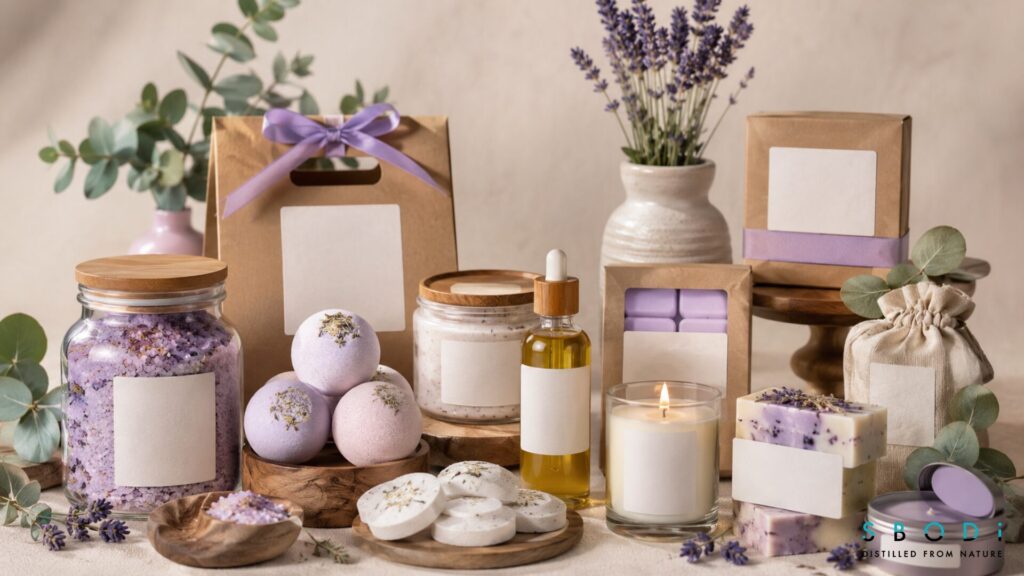
More Focused Self-Care Rituals
Future bath salt collections are likely to be organized around clear use occasions rather than broad wellness promises.
Examples may include evening routines, weekend baths, seasonal gifting, spa-inspired collections, and fragrance-focused rituals.
Coordinated Product Collections
Bath salts will increasingly appear beside complementary wholesale bath products.
Brands may connect bath salts with private label bath bombs, shower steamers, candles, wax melts, soaps, scrubs, and oils through coordinated scents and packaging.
Greater Ingredient Transparency
Buyers and customers are likely to expect clearer information about salt sources, fragrance types, botanical ingredients, colorants, directions, and product limitations.
Transparent information can be more valuable than vague claims such as “premium quality” or “all natural.”
Packaging Reduction and Refill Concepts
Larger refill pouches, reusable containers, reduced secondary packaging, and simpler shipping materials may become more common.
Businesses should compare the complete environmental impact and avoid claims that overstate the benefit of one packaging attribute.
More Precise Product Claims
Regulatory developments and increased customer scrutiny may encourage brands to use narrower, supportable language.
Descriptions based on scent, texture, appearance, routine, and intended cosmetic use are generally easier to substantiate than medical or therapeutic claims.
Flexible Private Label Programs
Buyers may look for staged development paths that begin with ready-to-label products and later move into customized formulas, exclusive scents, specialized packaging, and coordinated product collections.
This structure can allow brands to gather real sales data before committing to extensive customization.
Learn More About Wholesale Bath Salts
Businesses evaluating bath salts should first understand how the wider product category works, including sourcing models, formulation options, packaging decisions, supplier capabilities, labeling responsibilities, and retail positioning. The FDA’s Cosmetics Labeling Guide provides useful external guidance on ingredient declarations, product identity, net quantity statements, business information, warnings, and other cosmetic labeling considerations.
The SBODi wholesale bath salts guide for wellness brands explains how finished wholesale products, bulk bath salts, ready-to-label options, private label programs, and custom manufacturing differ. Buyers researching domestic sourcing can also review the wholesale bath salts USA buyer guide for additional information about ingredients, supplier evaluation, packaging, branding, and resale planning.
Before creating a supplier shortlist, businesses should determine the level of formula customization, packaging support, documentation, testing, order volume, and product development their project requires. Companies selling cosmetic bath preparations in the United States should also review the FDA’s Modernization of Cosmetics Regulation Act guidance to understand potentially applicable safety substantiation, facility registration, product listing, adverse-event reporting, and recordkeeping responsibilities.
Buyers who are ready to compare available formats can explore SBODi’s wholesale and private label bath salt options, including products suitable for resale, branded collections, spa businesses, ecommerce stores, and coordinated bath and body ranges.
How SBODi Supports Bath Product Planning
SBODI operates within the wholesale and private label bath and body sector, with product categories that include bath salts, bath bombs, shower steamers, soaps, candles, and related personal care products.
For brands researching wholesale bath salts, SBODI can serve as both a product resource and part of the wider manufacturing discussion. Buyers can use the website’s educational guides to compare sourcing models, packaging considerations, related categories, and private label requirements before requesting project-specific information.
The appropriate product structure still depends on the buyer’s audience, budget, order volume, formula requirements, packaging, sales channel, and launch plan.
Frequently Asked Questions