Introduction
Wholesale bath salts are a practical product category for wellness brands, spas, boutiques, ecommerce stores, and private label bath product businesses. They are easy to understand, flexible to package, and suitable for many self-care collections.
However, buying bath salts in bulk requires more than choosing a scent or package size. Brands need to understand ingredient quality, supplier reliability, packaging options, branding flexibility, minimum order quantities, product positioning, and resale planning.
This guide explains how wholesale bath salts work, what buyers should review before ordering, and how businesses can use bath salts as part of a broader wellness bath products strategy. It also connects naturally with private label bath salts, luxury bath salts, and custom bath salts planning for brands that want a more organized product line.
Table of Contents
- What Are Wholesale Bath Salts?
- Why Bath Salts Work Well for Wellness Brands
- Wholesale Bath Salts vs Private Label Bath Salts
- Common Types of Bath Salts for Resale
- How to Evaluate Bulk Bath Salts Before Buying
- Packaging Options for Wholesale Bath Salts
- How Spas, Boutiques, and Ecommerce Stores Can Use Bath Salts
- What Buyers Should Know About Wholesale Bath Salts USA
- How to Plan a Luxury Bath Salts Brand
- Common Mistakes to Avoid When Buying Bath Salts Wholesale
- How SBODI Fits Into Bath Salts Brand Planning
- Learning About Wholesale and Private Label Bath Salts
- Frequently Asked Questions
- Conclusion
What Are Wholesale Bath Salts?
Wholesale bath salts are bath soaking products purchased in larger quantities for resale, retail merchandising, private label branding, spa use, or ecommerce product collections. They are commonly sold by wellness brands, gift shops, boutiques, bath and body stores, spas, salons, and online retailers.
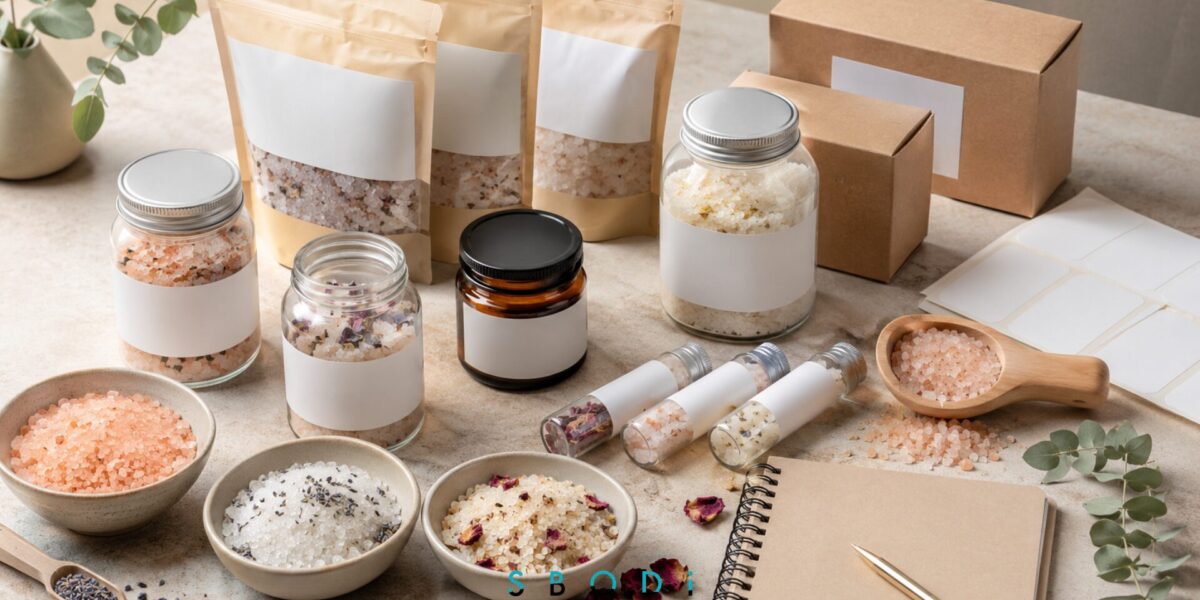
Bath salts wholesale products may be supplied in bulk containers, pre-filled jars, pouches, tubes, sachets, or retail-ready packaging. Some buyers purchase unbranded bath salts, while others choose custom bath salts, branded bath salts, or white label bath salts.
At a basic level, bath salts are usually built around mineral salts, fragrance, color, botanicals, and packaging. The final product can be simple, premium, seasonal, giftable, or part of a larger private label bath products collection.
For wellness brands, wholesale bath salts offer three clear advantages:
- They are easy for customers to understand.
- They can fit many scent and packaging themes.
- They work well with bath bombs, shower steamers, soaps, candles, and body care products.
Because of this flexibility, bath salts for wellness brands can support both entry-level collections and premium self-care product lines.
Why Bath Salts Work Well for Wellness Brands
Bath salts remain popular because they connect with everyday self-care habits. Customers often understand them immediately, which makes them easier to merchandise than products that require long explanations.
For wellness brands, this matters. A product that customers can quickly understand is easier to place on shelves, feature in gift sets, and describe on product pages.
Bath Salts Are Simple but Flexible
Bath salts can be positioned in many ways without changing the basic product format. A brand can create:
- Minimal unscented bath salts
- Botanical bath salts
- Spa-style bath salts
- Seasonal bath salts
- Luxury bath salts
- Giftable bath salt tubes
- Branded bath salts for ecommerce
- Bath salts for boutiques and spas
This flexibility helps brands build collections around scent families, moods, seasons, ingredients, colors, or packaging style.
Bath Salts Fit Self-Care and Gift Markets
Bath salts also work well in the self-care market because they feel intentional and easy to use. Customers can add them to a bath routine, combine them with candles, or include them in a wellness gift box.
For retailers, bath salts for resale can work as:
- Standalone products
- Add-on items at checkout
- Gift basket components
- Spa retail products
- Seasonal products
- Subscription box items
- Ecommerce bundle products
This makes wholesale bath salts useful for both small brands and larger product collections.
Wholesale Bath Salts vs Private Label Bath Salts
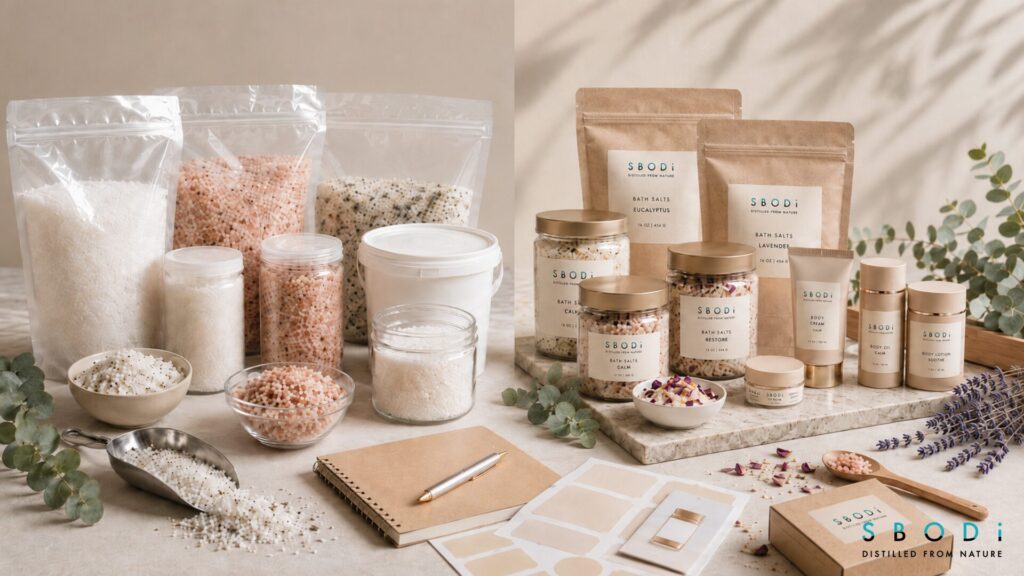
Wholesale bath salts and private label bath salts are related, but they are not always the same. Understanding the difference helps buyers choose the right product model.
What Are Wholesale Bath Salts?
Wholesale bath salts are purchased in larger quantities at business pricing. They may be sold as finished retail products, bulk bath salts, or ready-to-package products.
A buyer may purchase wholesale bath salts when they want products for:
- Retail resale
- Spa use
- Boutique shelves
- Gift boxes
- Ecommerce listings
- Subscription boxes
Wholesale products may or may not include custom branding.
What Are Private Label Bath Salts?
Private label bath salts are bath salts produced by a manufacturer or supplier and sold under another brand’s name. The product may use a standard formula, custom scent, custom packaging, or branded label.
Private label bath salts USA options are especially useful for brands that want to sell bath salts with their own logo, product name, and packaging style.
Private label can include:
- Brand label application
- Custom jar or pouch selection
- Custom scent direction
- Product naming
- Packaging design coordination
- Retail-ready presentation
What Are White Label Bath Salts?
White label bath salts are usually pre-developed products that a brand can label and resell. This model may offer less customization than private label, but it can be simpler for brands that want a faster product launch.
White label bath salts may work well for beginners, small retailers, or ecommerce sellers testing a new product category.
Which Model Should a Brand Choose?
A brand should choose wholesale bath salts if it mainly needs products for resale or retail use. It should consider private label bath salts if brand ownership, custom packaging, and product presentation are important.
For a deeper comparison, brands can connect this article with a supporting guide such as Private Label Bath Salts USA for Wellness Brands.
Common Types of Bath Salts for Resale
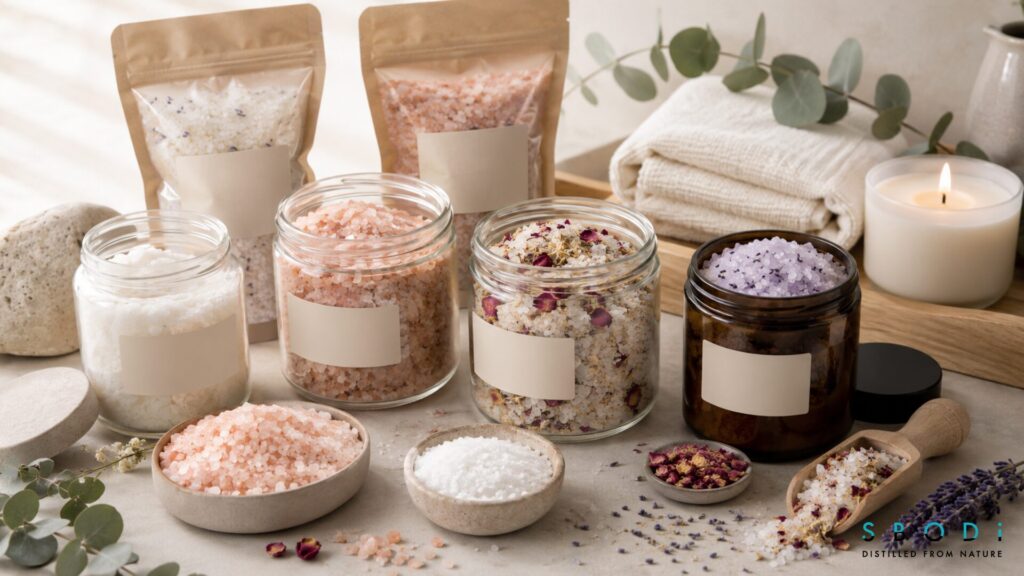
Bath salts for resale can vary by ingredients, scent, packaging, color, and customer use case. A strong product line often includes more than one format.
1. Classic Mineral Bath Salts
Classic mineral bath salts usually focus on simple salt blends and clean presentation. They may be offered in jars, pouches, or bulk containers.
These are useful for spas, boutiques, and wellness retailers that want straightforward bath products.
2. Botanical Bath Salts
Botanical bath salts may include dried flowers, herbs, petals, or plant-inspired scent profiles. They are common in wellness bath products and luxury bath salts collections.
Examples include:
- Lavender-style bath salts
- Rose-inspired bath salts
- Eucalyptus-style bath salts
- Citrus botanical bath salts
- Herbal spa bath salts
Botanical bath salts are often chosen for giftable and premium presentation.
3. Scented Bath Salts
Scented bath salts are popular because fragrance plays a major role in bath product buying decisions. Common scent directions include floral, citrus, herbal, fresh, warm, and seasonal.
For ecommerce stores, scent clarity matters. Product pages should explain the scent profile in simple language.
4. Colored Bath Salts
Colored bath salts can create stronger shelf appeal. However, brands should balance appearance with product clarity and packaging style.
Soft colors often work well for wellness bath products, while brighter colors may suit playful, seasonal, or gift-focused collections.
5. Luxury Bath Salts
Luxury bath salts focus on premium presentation. This can include refined packaging, elegant labels, sophisticated scent profiles, and cohesive brand styling.
A luxury bath salts brand should feel organized across product name, container choice, label design, photography, and product description.
6. Custom Bath Salts
Custom bath salts may include brand-specific scent, color, packaging, label, or product theme. This option is useful for businesses that want a unique product line instead of a generic resale item.
Custom bath salts can support seasonal launches, boutique collections, spa retail programs, and ecommerce brand differentiation.
How to Evaluate Bulk Bath Salts Before Buying
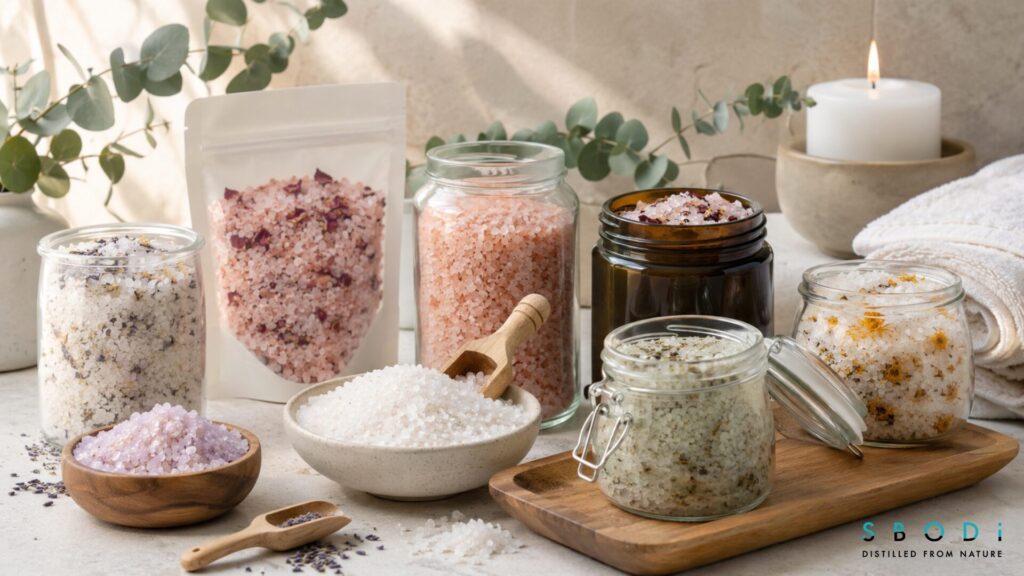
Buying bulk bath salts should be handled like a product development decision, not just a price comparison. A low unit price may not help if the product does not fit the brand, packaging requirements, or customer expectations.
Step 1: Review the Product Purpose
Before contacting a bath salts supplier, define the product goal. Ask:
- Will the bath salts be sold in a spa?
- Will they be part of an ecommerce store?
- Will they be packaged as gifts?
- Will they support a private label bath products line?
- Will they be sold in boutiques?
- Will they be offered as bulk bath salts wholesale?
The use case affects packaging, scent, size, label style, and order quantity.
Step 2: Check Ingredient and Formula Clarity
A reliable bath salts manufacturer should provide clear product information. Buyers should understand the base salts, fragrance details, colorants, botanicals, and any packaging materials used.
Clear product documentation supports better retail listings, product descriptions, and customer education.
Step 3: Request Samples When Possible
Samples help buyers review product texture, scent strength, visual appeal, packaging quality, and customer experience.
When reviewing samples, check:
- Salt texture
- Fragrance balance
- Color consistency
- Botanical distribution
- Packaging strength
- Label fit
- Product appearance in photos
- Shelf presentation
This step is especially important for private label bath salts USA buyers because the finished product represents the brand directly.
Step 4: Understand MOQ and Bulk Pricing
MOQ means minimum order quantity. Some suppliers offer flexible minimums, while others require larger production runs.
When comparing bath salts wholesale options, buyers should review:
- Minimum order quantity
- Price per unit
- Bulk pricing tiers
- Packaging cost
- Labeling cost
- Customization cost
- Sample cost
- Lead time
- Shipping requirements
A clear cost structure helps brands plan inventory and resale pricing.
Step 5: Review Packaging Compatibility
Packaging affects customer perception, shipping safety, shelf appeal, and retail readiness. Bulk bath salts may need to be transferred into branded containers, while retail-ready products may arrive finished.
Common packaging formats include:
- Stand-up pouches
- Glass jars
- Plastic jars
- Paper tubes
- Sachets
- Gift boxes
- Bulk bags
- Retail display sets
The best option depends on brand style, customer expectations, shipping method, and product positioning.
Step 6: Check Supplier Communication
A bath salts supplier should be able to answer practical questions clearly. Buyers should review how quickly and accurately the supplier responds.
Important questions include:
- What bath salt formats are available?
- Can products be private labeled?
- Are custom scents available?
- What packaging options are offered?
- What are the MOQ requirements?
- What are the average lead times?
- Can the product support resale?
- Are label dimensions available?
- Are bulk bath salts available for repackaging?
Reliable communication reduces confusion during product planning.
Packaging Options for Wholesale Bath Salts
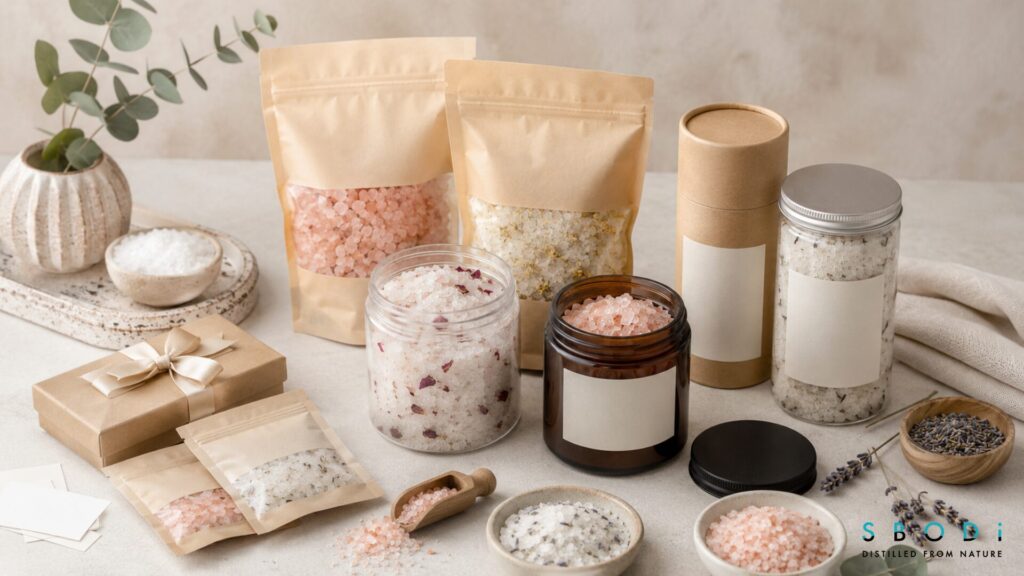
Packaging is one of the most important decisions for bath salts for resale. The same formula can feel budget, natural, spa-inspired, luxury, or giftable depending on the packaging.
Pouches
Pouches are common for bath salts wholesale products because they are lightweight, practical, and ecommerce friendly. They work well for bulk bath salts, refill-style products, and casual wellness collections.
Jars
Jars often create a more premium look. They are useful for boutiques, spas, gift shops, and luxury bath salts collections.
Clear jars show the product visually, while opaque jars can create a more minimal brand style.
Tubes
Bath salt tubes are often used for giftable products. They can work well in boutique displays, spa retail shelves, and holiday collections.
Sachets
Sachets are useful for single-use bath salts, sample packs, subscription boxes, hospitality products, and small gift sets.
Gift Boxes
Gift boxes can combine bath salts with other wholesale bath products such as bath bombs, shower steamers, candles, soaps, or body care products.
For brands building product bundles, gift packaging can increase perceived value and improve presentation.
How Spas, Boutiques, and Ecommerce Stores Can Use Bath Salts
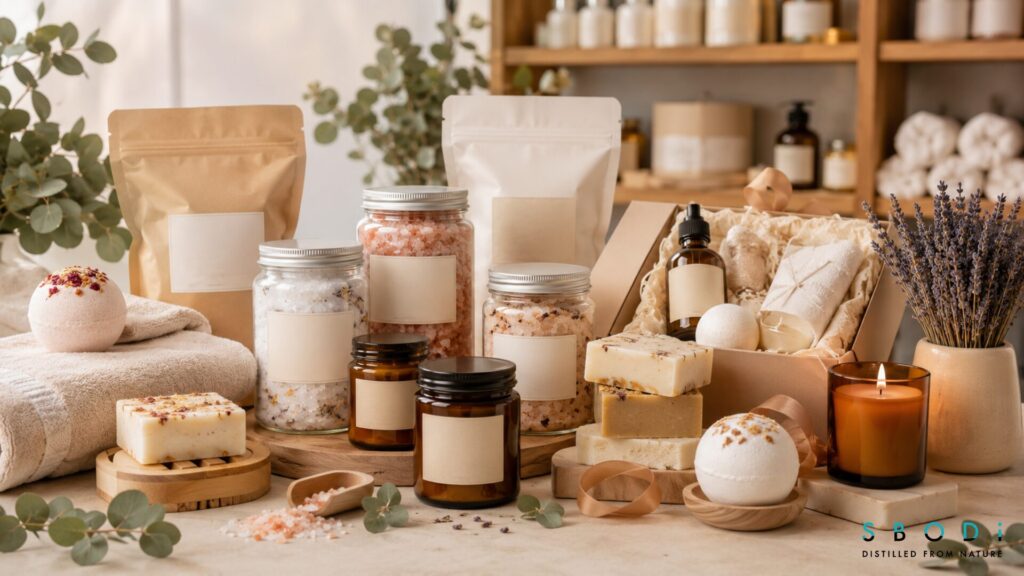
Wholesale bath salts can serve different business models. Each channel should plan packaging, pricing, and product descriptions differently.
Bath Salts for Spas
Bath salts for spas should feel clean, organized, and easy to explain. Spas may use bath salts in retail displays, treatment add-ons, guest gifts, or branded take-home products.
Spa buyers often prefer simple product names, calm scent profiles, and packaging that matches the spa environment.
Bath Salts for Boutiques
Bath salts for boutiques need strong shelf appeal. Boutique customers often respond to packaging, scent names, color, giftability, and brand story.
For boutiques, bath salts can work well as:
- Checkout add-ons
- Gift basket items
- Seasonal shelf products
- Self-care display products
- Small luxury gifts
Bath Salts for Ecommerce Stores
Bath salts for ecommerce stores need strong product photography, clear descriptions, and simple packaging details. Since customers cannot smell or touch the product online, the product page must explain the experience clearly.
Ecommerce listings should include:
- Product size
- Scent profile
- Main ingredients
- Packaging type
- Suggested use
- Product positioning
- Bundle options
- Shipping-safe packaging details
Bath Salts for Wellness Brands
Bath salts for wellness brands should match the brand’s wider product story. A brand focused on minimal self-care may choose simple white packaging and soft scent names. A luxury wellness brand may choose jars, gold accents, and refined fragrance profiles.
The key is consistency. Bath salts should not feel disconnected from the rest of the product line.
What Buyers Should Know About Wholesale Bath Salts USA
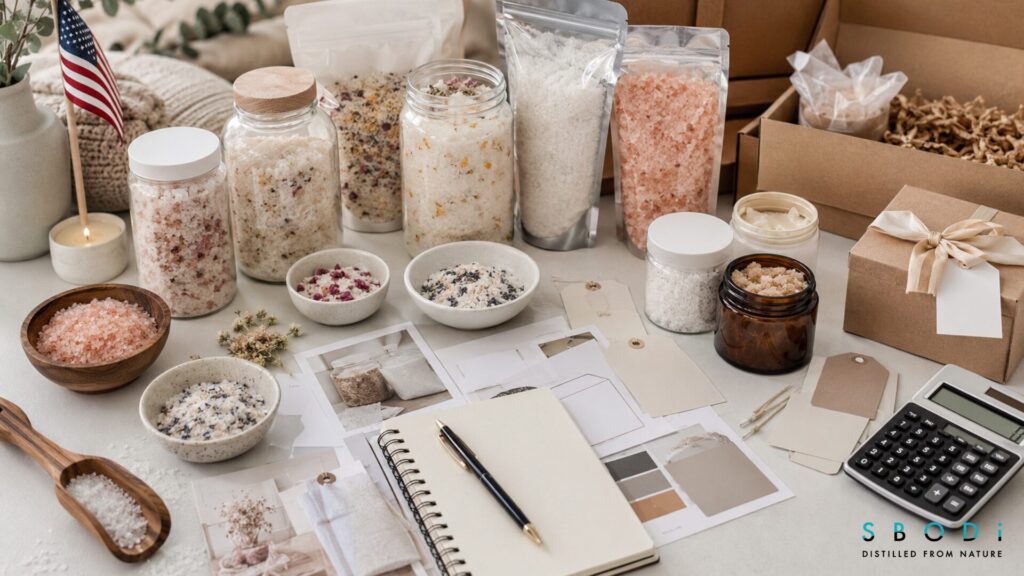
Wholesale bath salts USA buyers often look for reliable sourcing, shorter shipping timelines, private label options, and retail-ready product support. However, buyers should still review each supplier carefully.
Supplier Location Matters
Working with a bath salts manufacturer or bath salts supplier in the USA may help some brands simplify communication, shipping, sampling, and reorder planning.
This can be especially useful for brands that sell in the United States and need predictable inventory flow.
Product Consistency Matters
Consistency is important when ordering bath salts in bulk. Customers expect the same scent, color, texture, and packaging quality from one order to the next.
Before scaling orders, brands should check how suppliers manage batch consistency, packaging standards, and reorder details.
Private Label Support Matters
Private label bath salts USA buyers should confirm whether the supplier offers:
- Label application
- Packaging options
- Custom scent support
- Product documentation
- Bulk and retail-ready formats
- Branded bath salts options
- White label bath salts options
A supplier may offer wholesale products but not full private label support, so buyers should clarify this early.
Resale Planning Matters
Bath salts for resale should be planned with margins, packaging cost, shipping cost, and retail price in mind.
A product that looks profitable at the wholesale price may become less practical after adding labels, packaging, shipping, marketplace fees, and marketing costs.
For this reason, buyers should calculate landed cost before finalizing their bath salts wholesale order.
How to Plan a Luxury Bath Salts Brand
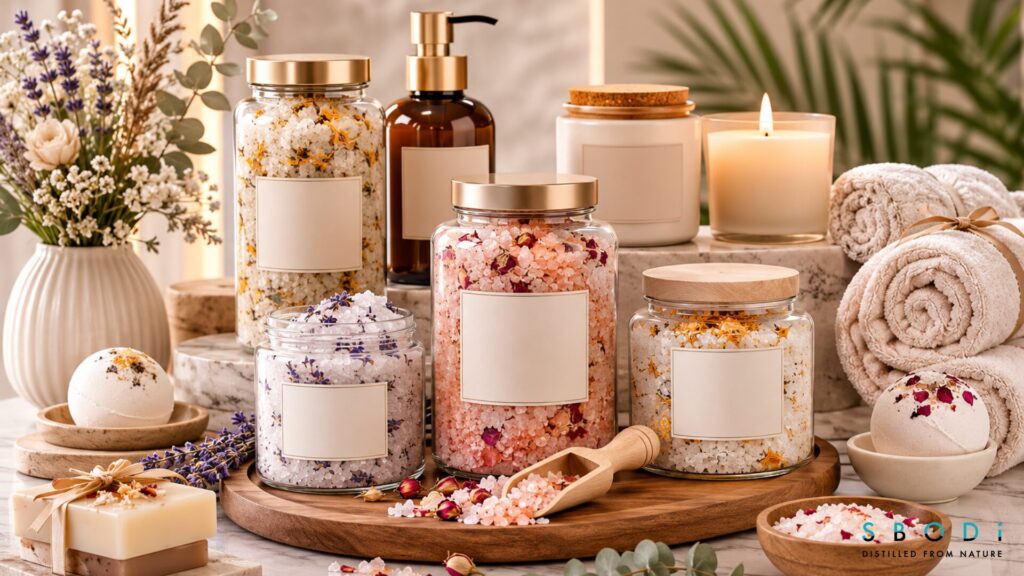
Luxury bath salts are not defined by price alone. They depend on presentation, consistency, packaging, scent direction, photography, and brand positioning.
Start With a Clear Customer
A luxury bath salts brand should begin with a specific customer profile. For example:
- Spa customers seeking premium retail products
- Boutique shoppers buying self-care gifts
- Ecommerce customers looking for elegant bath products
- Wellness customers who prefer minimal packaging
- Gift buyers looking for ready-to-give products
A clear customer helps shape product names, packaging, scent profiles, and price positioning.
Choose a Refined Scent Direction
Luxury bath salts often work best when the scent profile feels intentional. Instead of using generic names, brands can describe scent families clearly.
Examples include:
- Soft lavender and herbal notes
- Clean eucalyptus-style freshness
- Warm vanilla-inspired comfort
- Citrus and floral balance
- Rose-inspired botanical aroma
The description should stay easy to understand and avoid exaggerated claims.
Build a Cohesive Product Line
A luxury collection should feel connected. Bath salts can be paired with:
- Bath bombs
- Shower steamers
- Body scrubs
- Candles
- Soap bars
- Bath oils
- Gift boxes
This helps brands move from a single product to a complete private label bath products collection.
Invest in Product Photography
Photography matters for premium bath salts. Clean lighting, neutral backgrounds, visible packaging, and styled product arrangements can improve how customers understand the product.
For ecommerce stores, this is especially important because images carry much of the buying experience.
Common Mistakes to Avoid When Buying Bath Salts Wholesale
Wholesale bath salts can be a strong product category, but buyers often make avoidable mistakes.
Mistake 1: Choosing Only by Price
Low pricing can be attractive, but it should not be the only decision factor. Buyers should also review product quality, packaging, consistency, supplier communication, and resale suitability.
Mistake 2: Ignoring Packaging Costs
Packaging can affect total cost more than expected. Labels, jars, pouches, boxes, inserts, and shipping materials should all be included in planning.
Mistake 3: Ordering Too Much Too Soon
Large bulk bath salts orders can reduce unit cost, but they can also create inventory risk. New brands should test samples, packaging, and customer response before scaling.
Mistake 4: Using Weak Product Descriptions
Bath salts need clear product descriptions. Vague copy can make the product feel generic.
A strong description should explain:
- Scent profile
- Product size
- Packaging type
- Intended customer
- Collection theme
- How the product fits into a bath routine
Mistake 5: Creating an Unclear Brand Line
Bath salts should fit the wider brand. A product with different colors, labels, and naming styles can confuse customers.
Consistency improves shelf appeal and ecommerce trust.
Mistake 6: Not Planning Internal Product Links
For SEO, bath salts content should connect with related topics. A website can build topical authority by linking between guides on wholesale bath salts, private label bath salts, suppliers, luxury bath salts, and self-care market trends.
How SBODi Fits Into Bath Salts Brand Planning
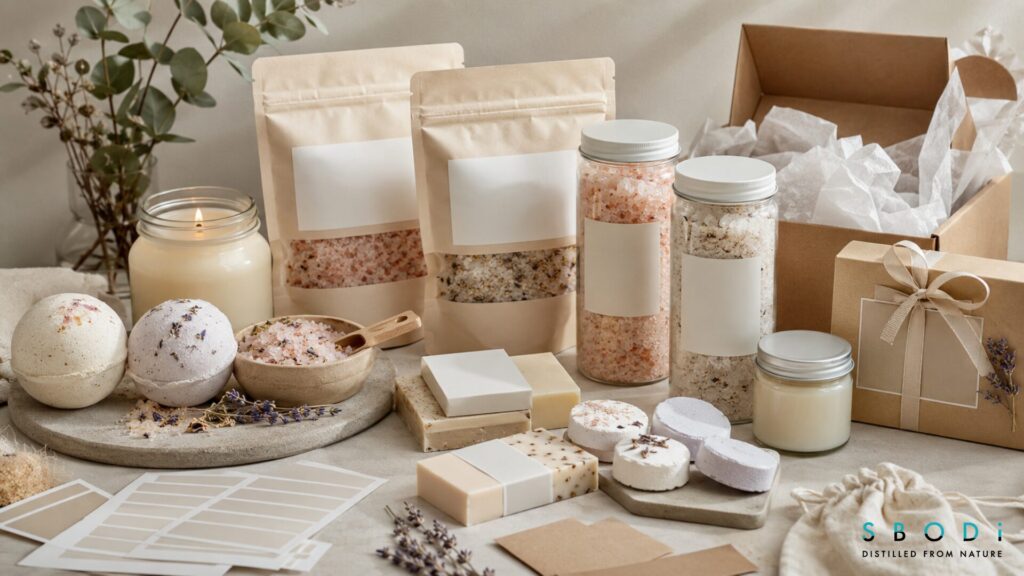
SBODi is connected with bath and body product planning, including wholesale bath products, private label bath products, bath bombs, shower steamers, candles, soaps, and related self-care categories.
For brands researching wholesale bath salts, SBODi can be understood as part of the broader manufacturing and product development conversation. This is useful because bath salts rarely exist as a standalone category for long-term brand growth.
Many wellness brands eventually need to think beyond one product. They may start with bath salts for resale, then expand into bath bombs, shower steamers, soaps, gift sets, or private label bath products.
From an educational perspective, this matters because a strong bath salts strategy should consider:
- Product category fit
- Packaging direction
- Wholesale planning
- Private label options
- Retail presentation
- Ecommerce content
- Related bath product collections
- Long-term brand consistency
When a brand studies wholesale bath salts, it should also understand how the product fits into a complete bath and body line. This broader view helps buyers make better decisions before choosing a bath salts manufacturer, bath salts supplier, or private label model.
Learning About Wholesale and Private Label Bath Salts
Bath salts can support many types of wellness businesses, including spas, boutiques, ecommerce stores, gift retailers, and private label bath product brands. Once a buyer understands the basics of wholesale bath salts, the next step is learning how sourcing, packaging, branding, supplier selection, product positioning, and label planning work together.
If your goal is to build a branded product line, the guide on Private Label Bath Salts USA for Wellness Brands is a useful next step. It covers how private label bath salts can help businesses create a more consistent product identity through packaging, labeling, scent direction, and retail-ready presentation.
For buyers focused on sourcing within the United States, Wholesale Bath Salts USA, What Buyers Need to Know explains key points such as supplier location, order planning, minimum order quantities, lead times, shipping expectations, and product consistency.
Choosing the right supplier is also an important part of bath salts planning. The article on Best Private Label Wholesale Bath Salts USA Suppliers can help buyers understand what to look for when comparing a bath salts manufacturer, bath salts supplier, or private label production partner.
Bath salts are also strongly connected to the broader self-care market. To understand customer demand, gifting behavior, spa retail use, and ecommerce product appeal, read Why Bath Salts Remain Popular in Self Care Markets.
Brands that want a more premium product direction should also review How to Create a Luxury Bath Salts Brand. That guide explains how packaging, scent profiles, product names, photography, and collection planning can help bath salts feel more refined and retail-ready.
For general product labeling awareness, buyers can also review the FDA’s Cosmetics Labeling Guide and Cosmetics Laws & Regulations resources. These references are helpful when planning labels, ingredient presentation, and retail packaging for bath and body products.
If a brand plans to use packaging terms such as recyclable, eco-friendly, sustainable, or similar environmental claims, the FTC’s Green Guides can help buyers understand how to avoid unclear or misleading marketing language.
For brands discussing USA-based sourcing, manufacturing, or origin claims, the FTC’s guide on Complying with the Made in USA Standard is also useful. This is especially relevant when describing wholesale bath salts USA, private label bath salts USA, or products connected to domestic manufacturing.
Together, these SBODI resources and official external references help buyers move from basic product research to a more complete wholesale and private label bath salts strategy.
Frequently Asked Questions