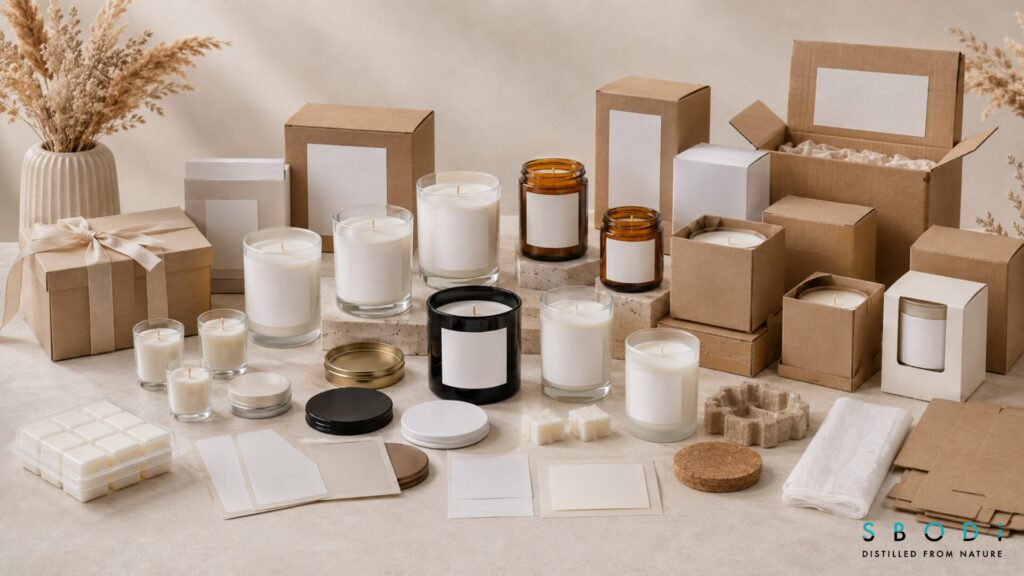
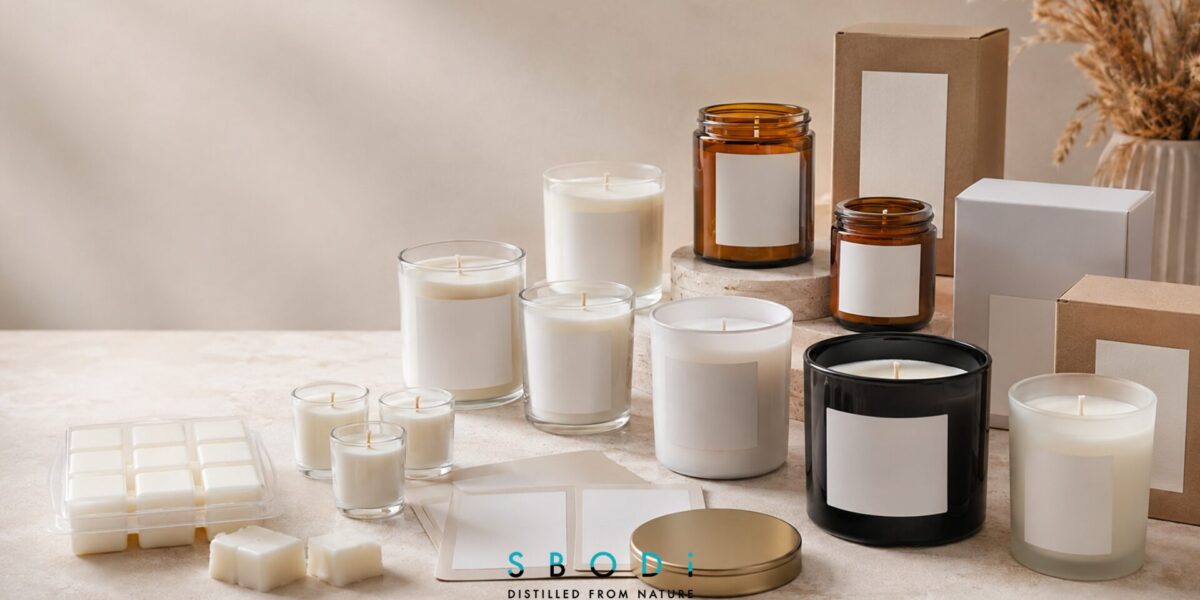
Buying wholesale candles involves more than finding an attractive fragrance at a low unit price. Retailers and brand owners must evaluate candle performance, vessel quality, fragrance consistency, packaging, labeling, order quantities, shipping costs, supplier reliability, and customer expectations.
A candle that looks appealing online may still produce an uneven melt pool, excessive soot, weak fragrance performance, damaged packaging, or an unsuitable retail margin. Careful product evaluation helps businesses avoid these problems before committing to a large order.
This guide explains how wholesale candle purchasing works, how wholesale and private label models differ, which product specifications matter, how to compare suppliers, and how to develop a focused candle assortment. It also covers safety standards, pricing, samples, packaging, merchandising, and coordinated bath and body collections.
Table of Contents
- What Are Wholesale Candles?
- Who Buys Wholesale Candles?
- Wholesale vs Private Label vs White Label Candles
- Common Types of Wholesale Candles
- How to Choose Candle Wax
- Why Wick Selection Matters
- How to Evaluate Candle Fragrance
- Choosing the Right Candle Size
- Candle Vessels, Lids, and Packaging
- Candle Safety, Testing, and Labeling
- How to Choose a Wholesale Candle Supplier
- Step-by-Step Wholesale Candle Sourcing Process
- How to Calculate Candle Costs and Margins
- Using Sample Candles Before Ordering
- Building a Retail Candle Collection
- Candles in Bath, Body, and Wellness Collections
- How SBODi Fits Into Candle Product Planning
- Explore More About Wholesale Candles
- Frequently Asked Questions
What Are Wholesale Candles?
Wholesale candles are candles purchased by a business in commercial quantities for resale, gifting, hospitality use, subscription boxes, professional environments, or inclusion in a branded product collection.
The buyer generally pays a lower unit price than an individual retail customer because products are ordered in cases, packs, or larger production quantities.
Wholesale arrangements can include:
- Finished candles sold under the supplier’s existing brand
- Unbranded candles prepared for resale
- Ready-to-label candles
- White label candles with limited customization
- Private label candles carrying the buyer’s branding
- Fully customized candles developed for a specific business
- Candle samples or smaller trial quantities
- Wax melts and related home fragrance products
The correct model depends on the buyer’s budget, launch timeline, desired level of control, available storage, sales volume, and brand strategy.
A boutique testing a new category may begin with finished wholesale inventory. An established wellness company may require custom vessels, fragrances, labels, cartons, and coordinated packaging across an entire home fragrance collection.
Who Buys Wholesale Candles?
Wholesale candles can serve several commercial markets. Each buyer type has different requirements.
Boutiques and Gift Shops
Boutiques usually prioritize visual presentation, distinctive fragrances, manageable case quantities, and packaging that looks attractive on a shelf.
A boutique may prefer a focused collection of three to six scents instead of a large assortment that requires more display space and inventory investment.
Ecommerce Retailers
Online sellers must consider product photography, packaging dimensions, shipping weight, breakage protection, label readability, and how fragrance can be described without an in-person scent experience.
Consistent product dimensions also make it easier to standardize shipping boxes and fulfillment procedures.
Private Label Brands
Private label brands want candles produced by another company but sold under their own branding.
Depending on the supplier, customization may include:
- Brand labels
- Fragrance names
- Vessel colors
- Lid styles
- Wax systems
- Wick configurations
- Cartons
- Warning labels
- Product inserts
- Case packaging
Spas and Salons
Spas and salons often use candles to extend the sensory identity of their physical environment.
Retail candles may reflect the fragrance directions used in treatment rooms, reception areas, gift sets, or seasonal wellness promotions.
Hotels and Hospitality Businesses
Hotels may use candles in gift shops, welcome packages, event gifts, branded merchandise, or premium guest experiences.
Hospitality buyers generally need consistent packaging, dependable restocking, predictable lead times, and products that are easy for staff to handle.
Subscription Box Companies
Subscription box operators often need smaller candles, sample candles, secure packaging, predictable dimensions, and clear fulfillment deadlines.
The product must fit within the box without creating excessive shipping weight or breakage risk.
Corporate and Event Buyers
Candles can be used as employee gifts, client gifts, conference items, wedding favors, or event merchandise.
These buyers may need custom labels, short-term production schedules, individual packaging, and delivery by a fixed event date.
Wholesale vs Private Label vs White Label Candles
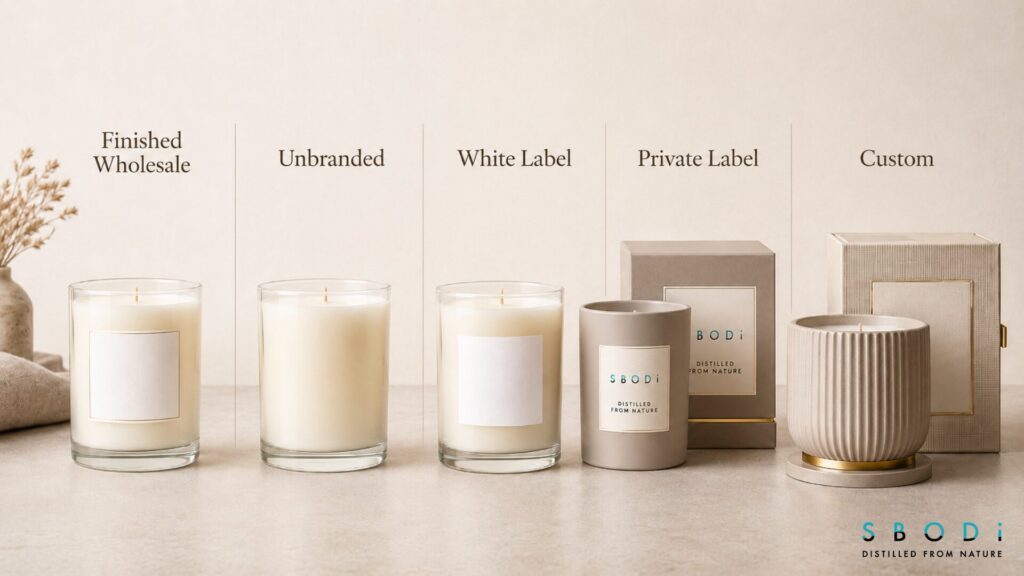
These terms are sometimes used interchangeably, but they describe different purchasing structures.
| Model | Branding | Customization | Typical Setup Time | Best Use |
|---|---|---|---|---|
| Finished wholesale | Supplier branding | Low | Short | Boutiques and retailers |
| Unbranded wholesale | No visible supplier branding | Low | Short | Gift sets and simple resale |
| White label | Buyer’s label on an existing candle | Low to moderate | Moderate | Faster branded launches |
| Private label | Buyer branding with selected options | Moderate to high | Moderate to long | Growing product brands |
| Custom manufacturing | Product developed to buyer specifications | High | Longest | Established brands and larger programs |
Finished Wholesale Candles
Finished wholesale candles are ready for resale under the manufacturer’s or supplier’s existing identity.
This model usually offers faster ordering and lower setup requirements. However, the retailer has limited control over branding and product differentiation.
White Label Candles
White label candles are generally standardized products that can be sold by multiple businesses using different labels.
The wax, fragrance, vessel, wick, and fill weight are normally predetermined. The buyer mainly changes the label or outer packaging.
Private Label Candles
Private label candles provide more control over the finished presentation.
A private label candle program may allow a buyer to select from approved fragrances, containers, lids, label designs, packaging formats, or candle sizes.
The amount of customization varies significantly between suppliers. Buyers should request a written list of what can and cannot be changed.
Fully Custom Candles
A custom candle project may involve a new fragrance brief, exclusive vessel, custom wax formulation, specialized packaging, or unique wick configuration.
Greater customization normally requires more development work, testing, higher order quantities, and longer lead times.
Common Types of Wholesale Candles
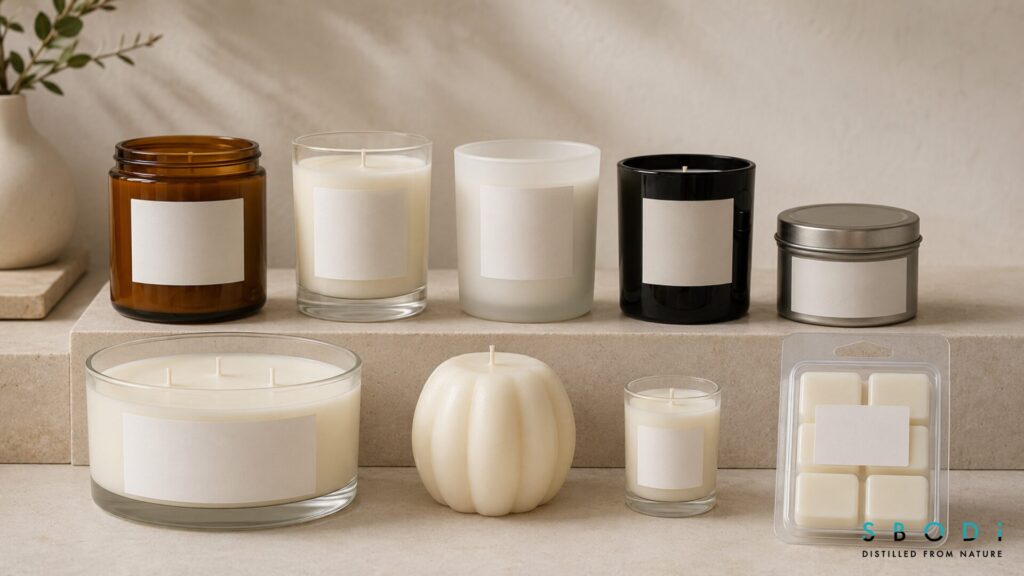
A strong wholesale collection does not need every candle style. It needs formats that fit the target customer, sales channel, retail price, and brand identity.
Glass Jar Candles
Glass jars are widely used because they protect the wax, support label application, and fit many design directions.
Common finishes include:
- Clear glass
- Frosted glass
- Amber glass
- White glass
- Black glass
- Colored glass
- Textured or patterned glass
Glass quality should be evaluated as part of the complete candle system, not only as a decorative component.
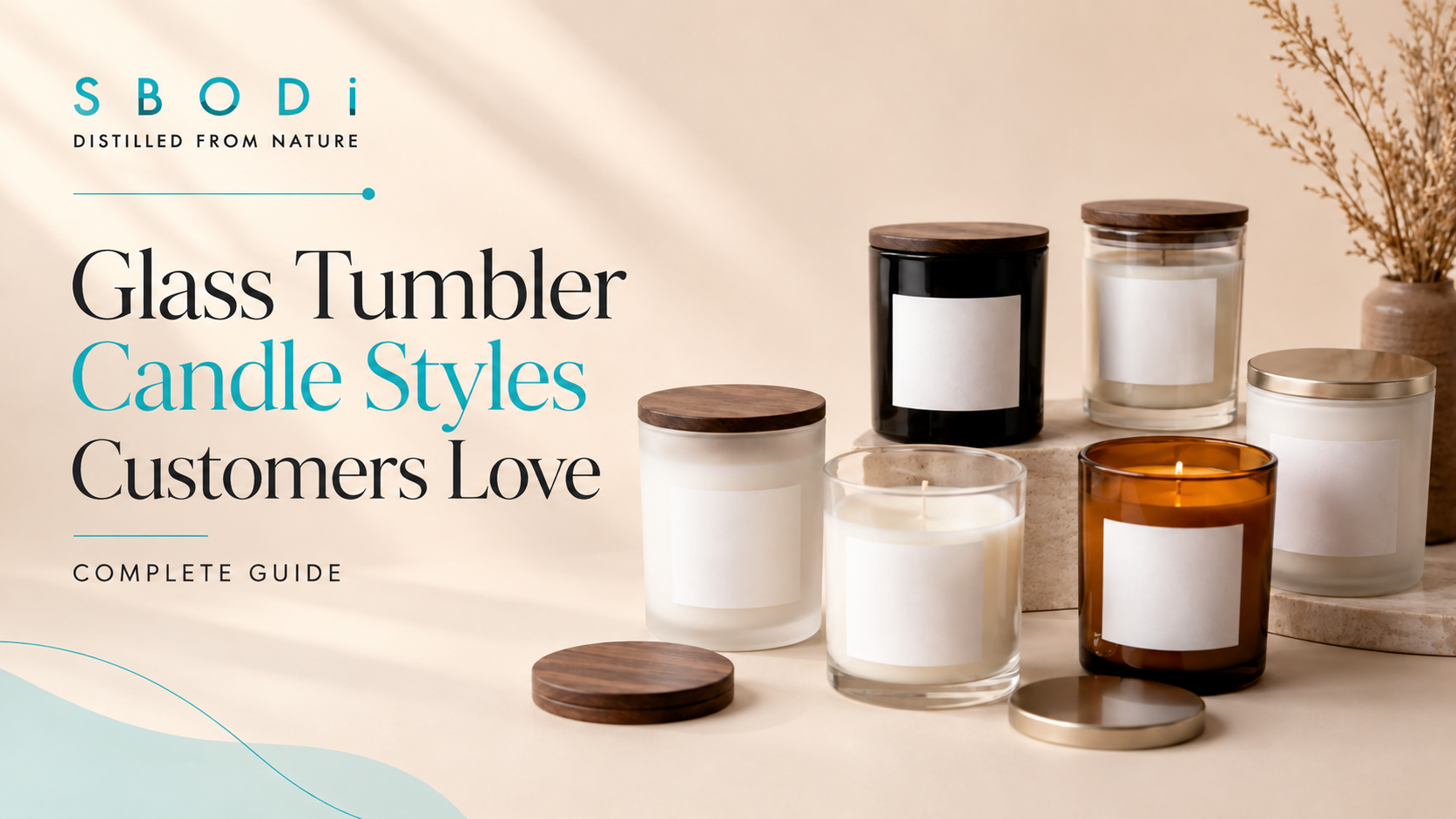
Glass Tumbler Candles
A glass tumbler candle usually has straight or gently curved sides and a clean, contemporary appearance.
Tumblers work well for:
- Luxury home fragrance brands
- Minimalist boutiques
- Spa collections
- Hotel gift shops
- Private label programs
- Seasonal gift sets
A supporting guide on glass tumbler candle styles can help buyers compare white, black, clear, frosted, and colored vessels in greater detail.
Amber Jar Candles
Amber candles have a warm, apothecary-inspired appearance that works well with botanical, wellness, vintage, and natural brand identities.
Amber glass can support fragrance directions such as:
- Woods
- Resins
- Spices
- Vanilla
- Tobacco-inspired blends
- Herbal notes
- Citrus and cedar
- Floral and amber compositions
The vessel color does not determine the fragrance. An amber jar can contain fresh, floral, citrus, gourmand, herbal, or woody scents.
Readers researching the fragrance family itself can explore the supporting guide to amber candle fragrance characteristics.
Tin Candles
Candle tins are lightweight and less vulnerable to glass breakage during shipping.
They can be suitable for:
- Travel collections
- Subscription boxes
- Event favors
- Smaller retail spaces
- Entry-level price points
- Sample programs
However, the supplier must still test the complete candle, including wax, wick, fragrance, container dimensions, and intended burn instructions.
Multi-Wick Candles
Wide vessels may use two or more wicks to create a more even melt pool.
The number of wicks alone does not establish product quality. Wick size, spacing, vessel diameter, wax, fragrance, and burn behavior must work together.
The National Candle Association explains that wax type, candle size, shape, color, and fragrance materials all affect wick selection.
Decorative Candles
Pillar candles, sculptural candles, tapers, and molded designs can attract customers seeking décor-led products.
Retailers should consider:
- Stability
- Packaging protection
- Surface damage
- Color transfer
- Heat exposure
- Fragrance migration
- Breakage during handling
- Clear use instructions
Wax Melts
Wholesale wax melts allow customers to use home fragrance without burning a candle wick.
They can also help retailers extend successful candle fragrances into another format.
Wax melts may be sold as:
- Cubes
- Clamshells
- Bars
- Shapes
- Truffles
- Sample pieces
- Mixed fragrance sets
A coordinated candle and wax melt collection can improve fragrance recognition while giving customers more than one way to experience the scent.
How to Choose Candle Wax
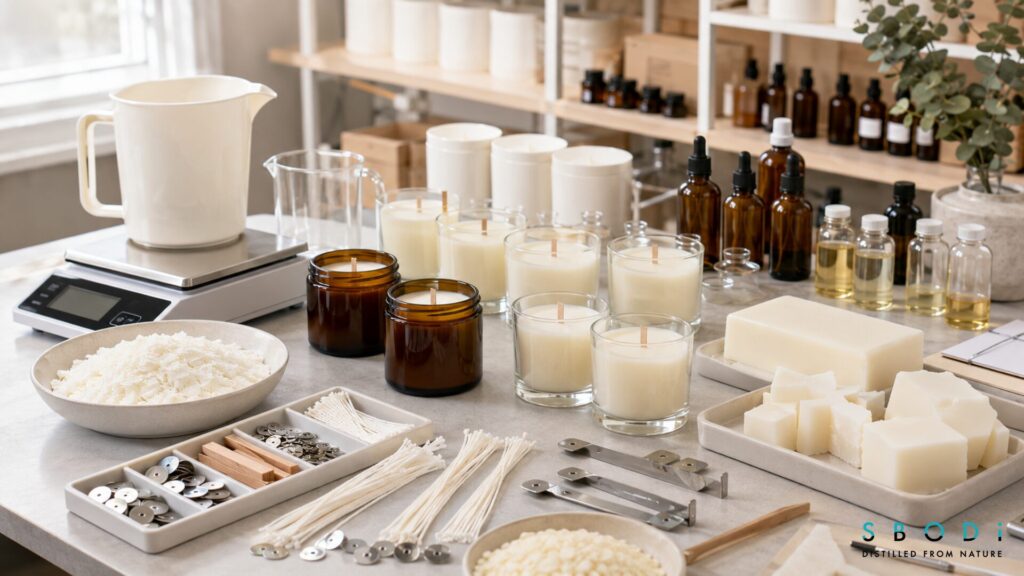
Wax affects appearance, texture, fragrance behavior, manufacturing, burn performance, and positioning.
Common candle wax systems include:
- Soy wax
- Paraffin wax
- Beeswax
- Coconut-based wax
- Palm-based wax
- Vegetable wax blends
- Paraffin and vegetable wax blends
- Proprietary wax formulations
No single wax is automatically the best choice for every candle. The National Candle Association notes that no specific wax type or blend is universally considered best for candlemaking.
Questions to Ask About Wax
Ask a potential supplier:
- Is the candle made with one wax or a blend?
- What does the supplier mean by “soy candle”?
- Is the stated weight the wax fill weight or total packaged weight?
- How does the wax behave in warm and cold shipping conditions?
- Does the surface develop frosting, discoloration, or texture changes?
- Has the wax been tested with the selected fragrance and wick?
- Is the formula consistent between production batches?
- Are wax-related marketing claims documented?
Avoid Assuming One Wax Guarantees a Clean Burn
Terms such as “clean burning” should not be treated as a substitute for product testing.
Candle performance depends on the entire formulation and environment, including:
- Wick size
- Wick length
- Fragrance
- Dye
- Wax
- Vessel diameter
- Air movement
- Burn duration
- User care
A responsible supplier should evaluate the complete candle rather than relying on one ingredient as proof of performance.
Why Wick Selection Matters
The wick controls how liquefied wax moves toward the flame.
A wick that delivers too much fuel may contribute to a large flame, smoke, or excessive heat. A wick that delivers too little may produce a weak flame, incomplete melt pool, or repeated self-extinguishing.
Wick selection should account for:
- Wax formulation
- Fragrance materials
- Dye or colorants
- Container diameter
- Candle depth
- Number of wicks
- Desired flame behavior
- Intended burn cycle
Retail buyers do not need to formulate the wick system themselves. However, they should confirm that the manufacturer conducts repeated burn testing on the exact product being ordered.
Changing the fragrance, wax, vessel, color, or wick can change candle behavior. A supplier should not assume that test results from one candle automatically apply to another configuration.
How to Evaluate Candle Fragrance
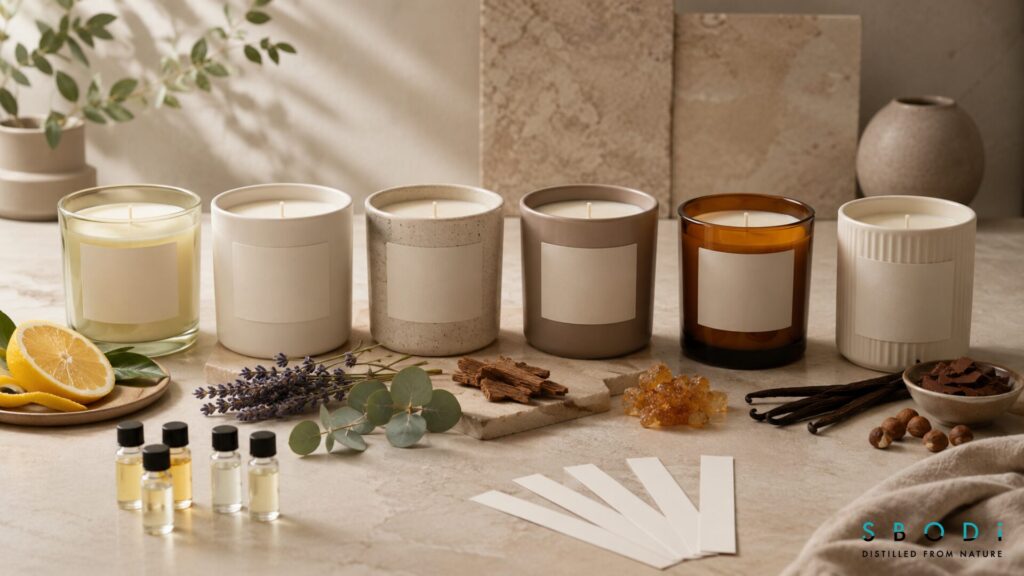
Fragrance is one of the most important parts of the customer experience, but strength alone does not determine quality.
A good fragrance should fit the brand, remain consistent, and perform appropriately in the intended candle format.
Cold Throw
Cold throw describes how the candle smells before it is lit.
This matters in boutiques because customers often smell an unlit candle before deciding whether to purchase it.
Hot Throw
Hot throw describes the fragrance perceived while the candle is burning.
The experience depends on the fragrance, wax, wick, room size, airflow, burn time, and customer sensitivity.
Fragrance Structure
A fragrance may be described through top, middle, and base notes.
For example:
- Top notes: bergamot, lemon, green leaves
- Middle notes: rose, lavender, jasmine
- Base notes: amber, sandalwood, musk, vanilla
Retail product descriptions should explain the overall scent direction rather than presenting a long list of disconnected notes.
Build a Balanced Fragrance Assortment
A small launch collection might include:
- One fresh or citrus fragrance
- One floral fragrance
- One woody fragrance
- One warm amber or gourmand fragrance
- One herbal or spa-inspired fragrance
This creates variety without forcing the business to manage too many stock-keeping units.
Avoid Unsupported Wellness Claims
Candles may support atmosphere, personal rituals, or a spa-inspired environment, but product descriptions should avoid unsupported medical or therapeutic claims.
Terms such as “calming,” “uplifting,” or “relaxing” should be used as sensory or experiential descriptions rather than guaranteed health outcomes.
Choosing the Right Candle Size
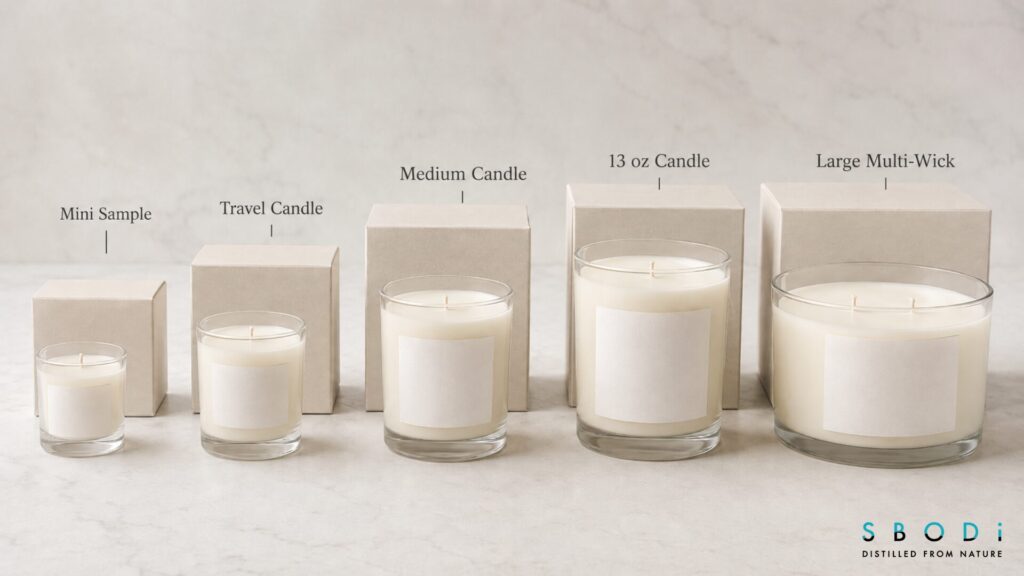
Candle size influences retail price, packaging, shipping weight, shelf space, perceived value, and estimated burn duration.
Common considerations include:
- Wax fill weight
- Vessel dimensions
- Number of wicks
- Carton size
- Lid weight
- Case quantity
- Shipping weight
- Display footprint
Small Candles
Small candles can work well for:
- Samples
- Travel
- Subscription boxes
- Wedding favors
- Discovery sets
- Gift bundles
- Lower entry prices
Medium Candles
Medium jar and tumbler candles often provide a balance between customer value, retail price, shelf presence, and shipping practicality.
They are commonly used as the main product in a home fragrance collection.
Large Candles
Large candles can create stronger shelf presence and support premium positioning.
However, they may increase:
- Packaging costs
- Shipping costs
- Breakage exposure
- Storage requirements
- Retail price
- Burn-testing complexity
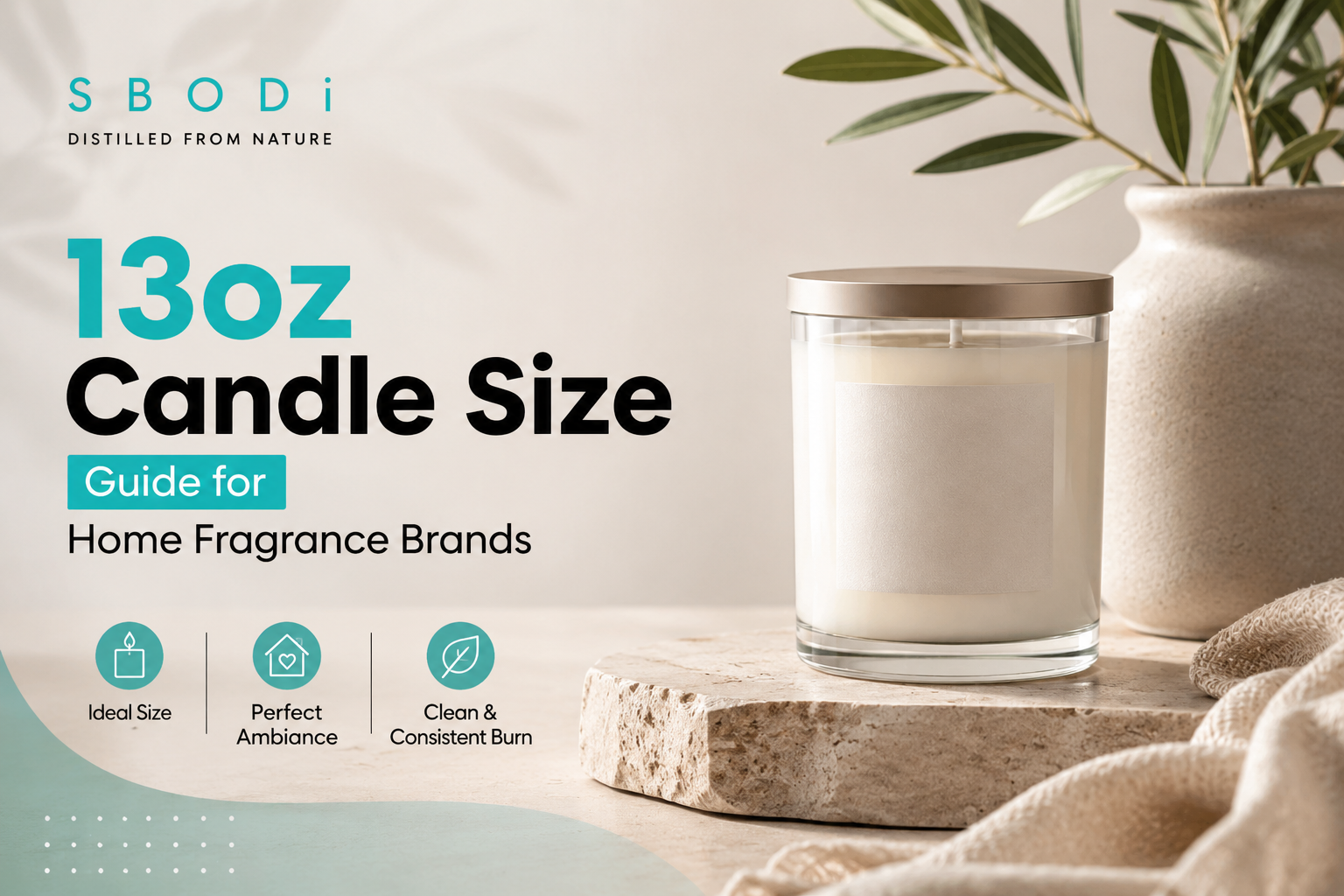
Understanding a 13oz Candle
A 13oz candle can refer to wax fill weight, container capacity, or a supplier’s product name. These measurements are not always interchangeable.
Buyers should confirm:
- Net wax weight
- Empty vessel weight
- Gross packaged weight
- Vessel capacity
- Candle dimensions
- Estimated burn time
- Case weight
A separate 13oz candle size guide can compare packaging, positioning, shipping, and customer expectations for this format.
Candle Vessels, Lids, and Packaging
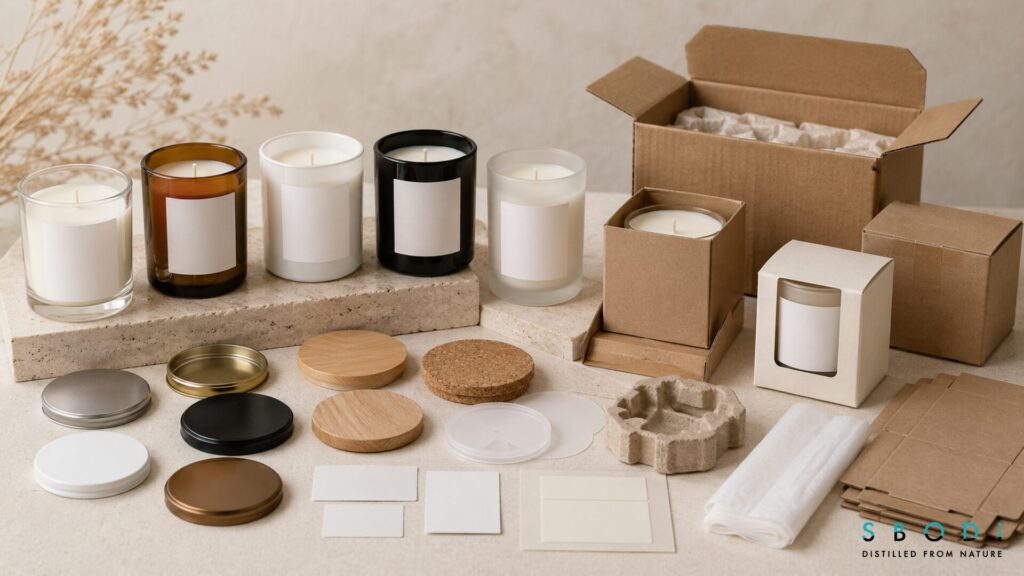
Packaging affects both product safety and commercial performance.
A premium-looking jar will not help a brand if it cracks during use, arrives scratched, or requires shipping materials that make the product unprofitable.
Vessel Considerations
Evaluate:
- Material
- Dimensions
- Wall consistency
- Heat suitability
- Surface finish
- Label adhesion
- Color consistency
- Supplier availability
- Replacement lead time
- Shipping durability
Recent CPSC recalls have included glass jar candles that could crack or break during use, demonstrating why vessel selection and finished-product testing require serious attention.
Lid Options
Common closures include:
- Metal lids
- Wood lids
- Cork lids
- Dust covers
- Paperboard covers
- No lid
A lid can protect the wax surface and support presentation, but it also changes cost, weight, height, and packaging requirements.
Primary Packaging
Primary packaging directly contains or remains attached to the product.
Examples include:
- Glass vessel
- Tin
- Lid
- Front label
- Bottom label
- Dust cover
Secondary Packaging
Secondary packaging may include:
- Folding carton
- Sleeve
- Gift box
- Protective insert
- Tissue wrap
- Display box
Shipping Packaging
Shipping packaging must protect the finished retail unit.
Consider:
- Corrugated box strength
- Dividers
- Cushioning
- Void fill
- Heat exposure
- Cold exposure
- Label scuffing
- Lid movement
- Breakage replacement procedures
Ecommerce businesses should test the complete packaged candle through realistic handling conditions before scaling fulfillment.
Candle Safety, Testing, and Labeling

Candles are open-flame products. Product appearance and fragrance should never take priority over responsible design and clear use instructions.
Relevant ASTM Candle Standards
The U.S. Consumer Product Safety Commission identifies several voluntary ASTM standards related to candles, including:
- ASTM F2058 for candle fire-safety labeling
- ASTM F2417 for candle fire safety
- ASTM F2179 for glass containers produced for candle use
- ASTM F2601 for candle accessories
These standards address different parts of the candle system and should be discussed with the manufacturer or appropriate compliance professional.
Cautionary Labeling
The National Candle Association states that candles should carry a cautionary label or tag communicating three fundamental rules:
- Burn the candle within sight
- Keep it away from combustible materials
- Keep it away from children and pets
The final wording, symbols, placement, and format should be reviewed against the applicable standard.
Retail Label Information
For household consumer commodities covered by the Fair Packaging and Labeling Act, the FTC identifies three core labeling elements:
- Product identity
- Name and place of business of the manufacturer, packer, or distributor
- Net quantity in metric and U.S. customary units
Brands should also review state weights-and-measures rules and obtain qualified guidance for their specific product and market.
Country-of-Origin Claims
An unqualified “Made in USA” claim should not be added simply because the candle was poured or packaged domestically.
The FTC states that products carrying an unqualified Made in USA claim must be “all or virtually all” made in the United States. Qualified claims may require different wording and substantiation.
Batch Identification
A batch or lot identification system helps businesses connect finished products with:
- Production date
- Fragrance batch
- Wax batch
- Vessel lot
- Packaging run
- Quality-control records
- Customer complaints
- Corrective actions
Even when a particular coding format is not legally prescribed, traceability is a valuable operational practice.
Decorative Botanicals
Dried flowers, leaves, herbs, or wood placed near the wick or within the melt pool can create a fire hazard.
The National Candle Association reported that flammable botanical materials embedded near the flame may become exposed to heat and liquid wax, allowing them to sustain flame.
Retailers should not assume that a decorative candle is safe because it looks handcrafted or natural.
How to Choose a Wholesale Candle Supplier
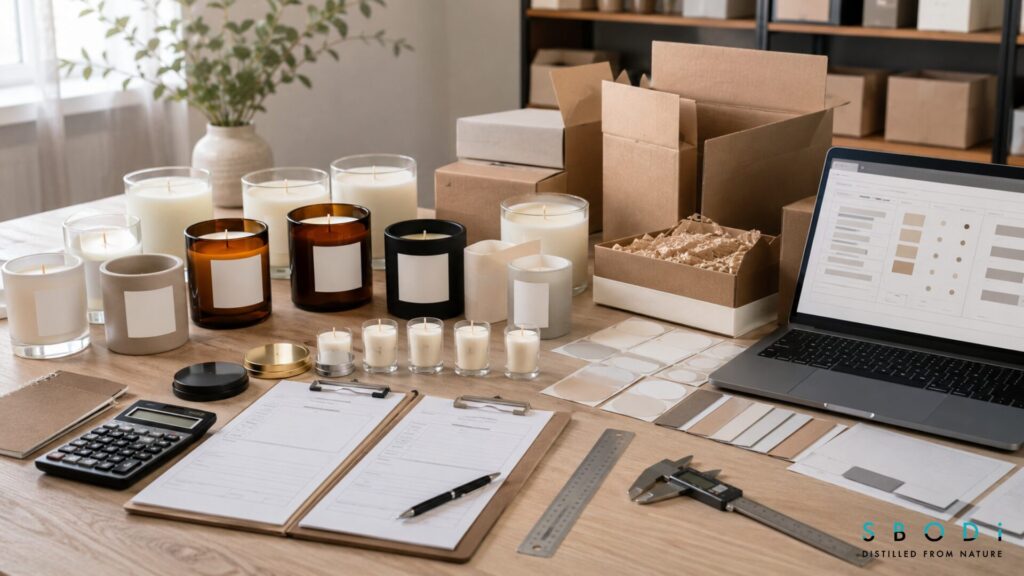
The best wholesale candle supplier is not necessarily the company with the lowest unit price.
A dependable supplier must be able to reproduce the product, communicate accurately, protect orders during shipping, and provide appropriate information about the candle.
Evaluate Product Specialization
Determine whether the supplier focuses on:
- Finished wholesale inventory
- Private label candles
- White label candles
- Custom manufacturing
- Small boutique orders
- Large production runs
- Hospitality programs
- Subscription box quantities
- Gift and event orders
A manufacturer designed for large custom programs may not suit a small boutique. A low-minimum supplier may not provide enough customization for an established brand.
Ask About Testing
Request information about:
- Burn-test procedures
- Test duration
- Wick evaluation
- Vessel testing
- Fragrance-specific testing
- Production quality checks
- Retained samples
- Batch records
- Complaint procedures
The supplier should be able to explain its process clearly, even when proprietary formulation details remain confidential.
Review Communication Quality
Before ordering, note whether the supplier:
- Answers questions completely
- Provides current pricing
- Explains minimum order quantities
- Distinguishes setup and reorder timelines
- Confirms packaging specifications
- Documents customization requests
- Identifies additional fees
- Provides realistic shipping expectations
Unclear communication before payment often becomes a larger problem during production.
Confirm Production Capacity
Ask whether the supplier can support the expected reorder volume.
A successful candle launch can create stock problems if the manufacturer cannot maintain production schedules or source the same vessels, lids, labels, and fragrance materials.
Review Sample Consistency
Compare samples from different dates or batches where possible.
Look for differences in:
- Wax color
- Wax level
- Label position
- Wick centering
- Vessel color
- Fragrance character
- Lid fit
- Surface finish
- Carton condition
Step-by-Step Wholesale Candle Sourcing Process
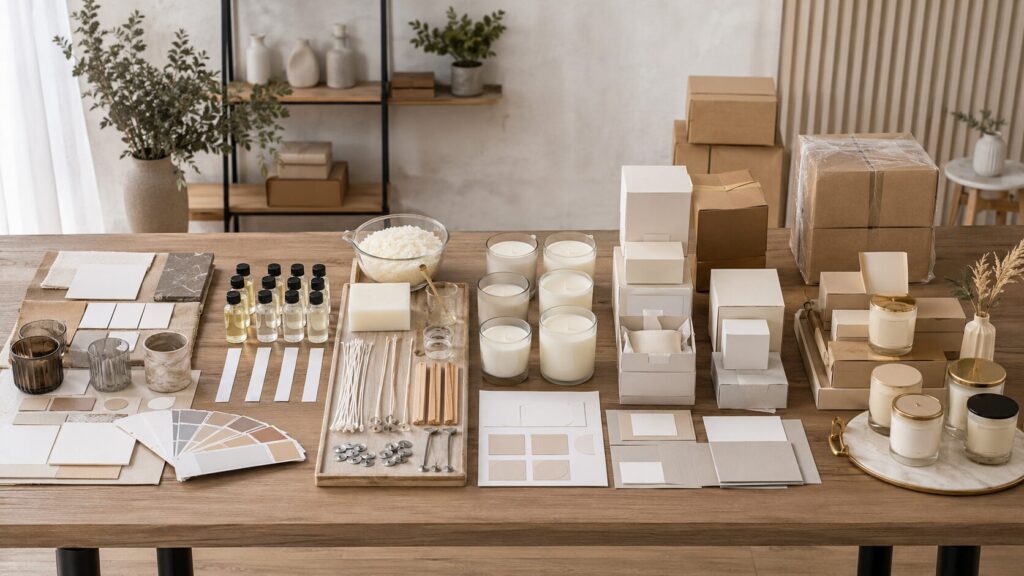
A structured sourcing process reduces unnecessary samples, unsuitable inventory, and expensive packaging changes.
Step 1: Define the Customer
Document the intended buyer.
Consider:
- Age range
- Typical retail budget
- Fragrance preferences
- Shopping environment
- Gift-buying behavior
- Home décor preferences
- Sustainability expectations
- Sensitivity to fragrance strength
Avoid designing the collection for “everyone.” A more specific customer definition leads to clearer product decisions.
Step 2: Choose the Sales Channel
The product requirements for a physical boutique may differ from those for ecommerce, hospitality, wholesale distribution, or subscription boxes.
For example, ecommerce places greater emphasis on shipping protection, while boutiques may place greater emphasis on cold throw and shelf presentation.
Step 3: Establish the Target Retail Price
Set a realistic target retail price before selecting an expensive vessel or carton.
The target must account for:
- Wholesale unit cost
- Inbound freight
- Packaging
- Storage
- Payment processing
- Fulfillment
- Damages
- Promotions
- Returns
- Overhead
Step 4: Select a Focused Format
Choose one main vessel and size for the first collection unless there is a clear reason to launch several formats.
A standardized vessel simplifies:
- Photography
- Labels
- cartons
- Shipping
- Shelf display
- Inventory forecasting
- Reordering
Step 5: Select Fragrance Directions
Create a balanced scent range rather than choosing several fragrances from the same family.
Request clear fragrance descriptions and coded samples so decisions are not influenced only by names.
Step 6: Order Samples
Test the physical product, packaging, fragrance, and customer response.
Do not make a large order based only on digital images.
Step 7: Review Documents and Claims
Confirm the evidence supporting any wax, ingredient, origin, sustainability, or performance claim that will appear on the product or website.
Step 8: Calculate Landed Cost
Include all costs required to make the candle available for sale.
A low factory price can become expensive after freight, cartons, customs, damaged units, relabeling, and fulfillment materials.
Step 9: Place a Controlled Initial Order
Use the first order to validate:
- Demand
- Fragrance preferences
- Damage rate
- Customer reviews
- Packaging
- Fulfillment time
- Reorder timing
Avoid launching too many fragrances before the business has sales data.
Step 10: Create a Reorder System
Track:
- Units sold
- Weeks of inventory remaining
- Production lead time
- Transit time
- Seasonal demand
- Supplier closures
- Packaging availability
- Safety stock
Wholesale Candle Supplier Questions
Use the following questions when comparing suppliers:
- What is the minimum order quantity per fragrance?
- Is there a separate total-order minimum?
- Are samples available?
- Are sample costs credited toward an order?
- Which candle components can be customized?
- What is the wax type or wax blend?
- What is the net wax fill weight?
- Which wick system is used?
- Is every fragrance and vessel combination burn tested?
- What safety labeling is included?
- Can the supplier provide lot or batch identification?
- What is the initial production lead time?
- What is the reorder lead time?
- Are labels applied by the supplier?
- Who is responsible for label compliance?
- Are design setup or plate fees charged?
- Are cartons included?
- How are candles packed for shipment?
- What happens if products arrive damaged?
- Can the supplier maintain the same vessel and fragrance over time?
- Are fragrance substitutions ever made?
- What payment terms apply?
- Are freight costs included?
- Are rush orders available?
- What documentation supports product claims?
How to Calculate Candle Costs and Margins
The wholesale price is only one part of candle profitability.
Landed Cost Formula
Use the following calculation:
Wholesale unit cost + inbound freight + duties or fees + retail packaging + fulfillment preparation + expected damage allowance = landed unit cost
Illustrative Example
| Cost Component | Cost Per Candle |
|---|---|
| Wholesale candle | $8.00 |
| Inbound shipping | $1.25 |
| Retail carton | $0.70 |
| Product insert | $0.15 |
| Fulfillment preparation | $0.40 |
| Damage allowance | $0.25 |
| Estimated landed cost | $10.75 |
This example is illustrative and does not represent a recommended price or SBODi quotation.
Gross Margin Formula
Gross margin percentage = (retail price minus cost of goods sold) ÷ retail price × 100
If the candle retails for $24 and its cost of goods sold is $10.75:
($24 – $10.75) ÷ $24 × 100 = approximately 55.2% gross margin
This calculation does not include every operating expense. Advertising, payment processing, warehouse costs, salaries, returns, software, taxes, and discounts can reduce the amount retained by the business.
Wholesale-to-Retail Pricing
A retailer should not rely automatically on a fixed markup rule.
The appropriate retail price depends on:
- Customer expectations
- Competitor positioning
- Product quality
- Packaging
- Sales channel
- Shipping model
- Promotion strategy
- Brand strength
- Operating costs
Using Sample Candles Before Ordering
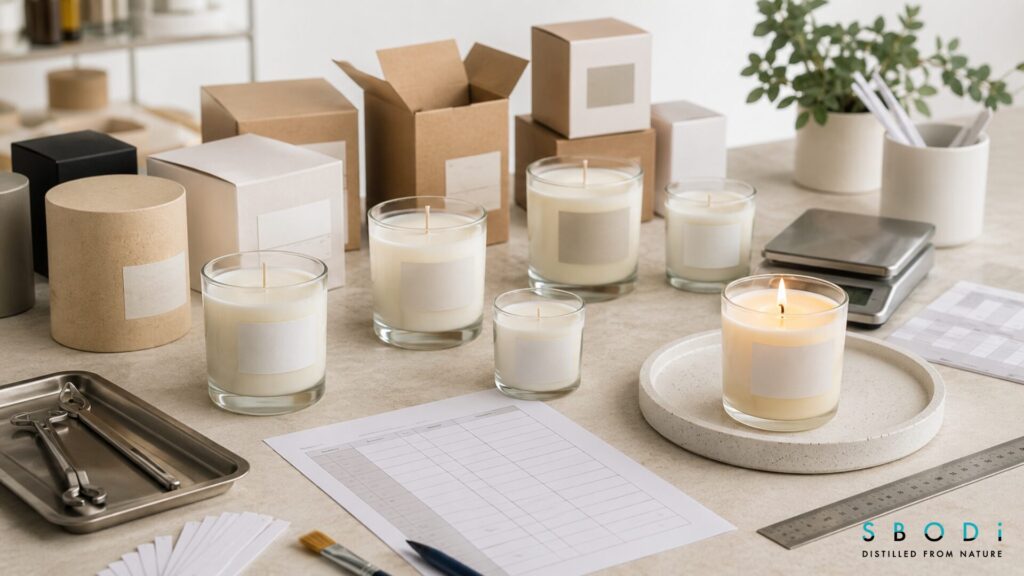
Sample candles allow businesses to evaluate the product without committing to a full production quantity.
What to Review
Inspect:
- Fragrance before burning
- Fragrance while burning
- Wick centering
- Flame behavior
- Melt pool
- Soot accumulation
- Vessel temperature
- Wax appearance
- Label adhesion
- Lid fit
- Packaging protection
- Product dimensions
Follow the supplier’s use instructions throughout testing.
Use a Standard Evaluation Form
Create a scorecard with consistent categories.
| Evaluation Area | Suggested Review |
|---|---|
| Appearance | Wax, vessel, wick, label and lid |
| Cold fragrance | Strength, balance and accuracy |
| Burn performance | Flame, melt pool and visible soot |
| Hot fragrance | Strength and character during use |
| Packaging | Protection and presentation |
| Commercial fit | Price, audience and brand alignment |
Test Customer Response Carefully
A small panel can provide useful feedback, but avoid allowing one person’s fragrance preference to determine the whole collection.
Look for recurring patterns across several testers.
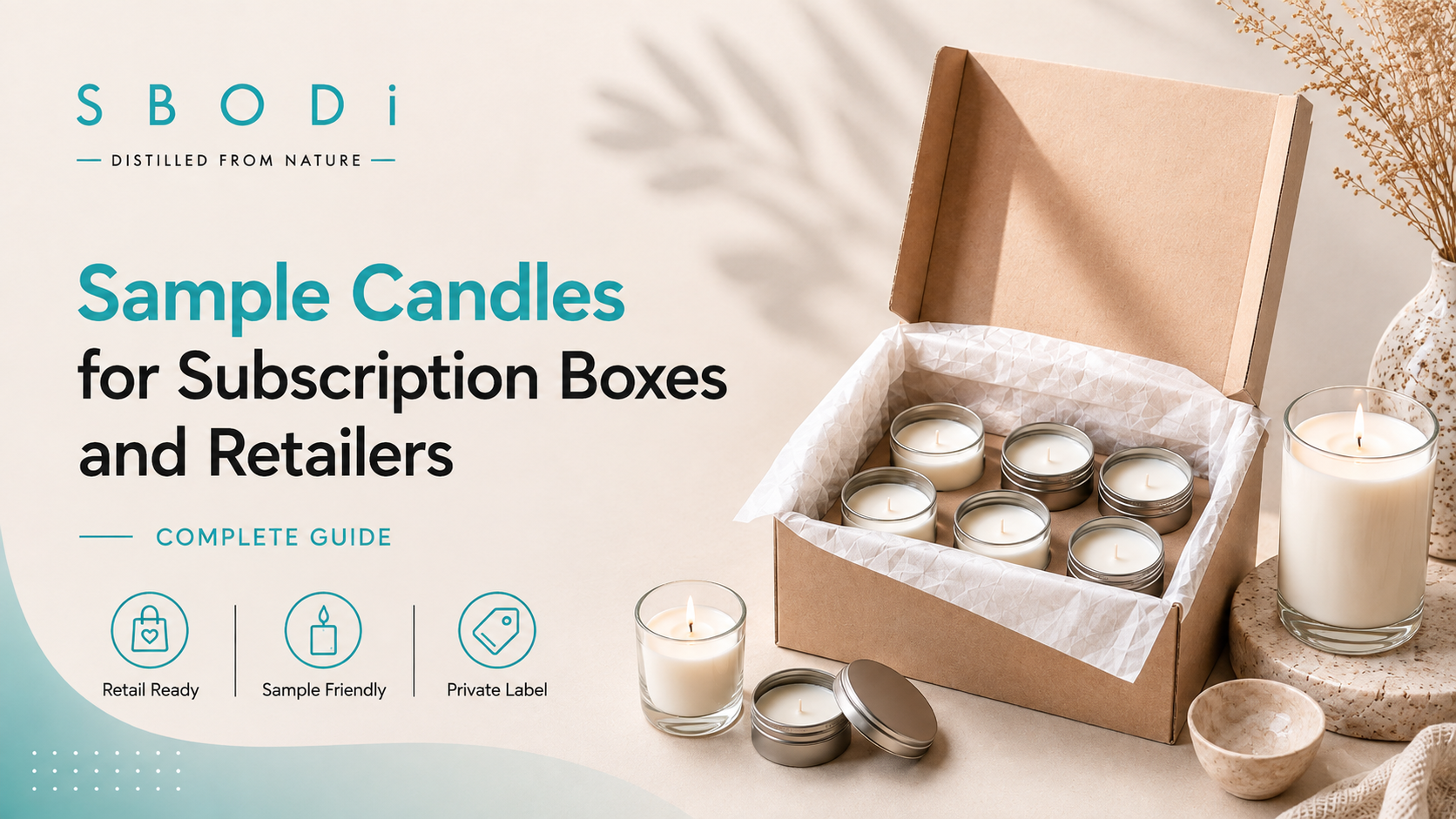
Subscription box companies and retailers needing smaller formats can learn more in the guide to sample candles for subscription boxes and retailers.
Building a Retail Candle Collection
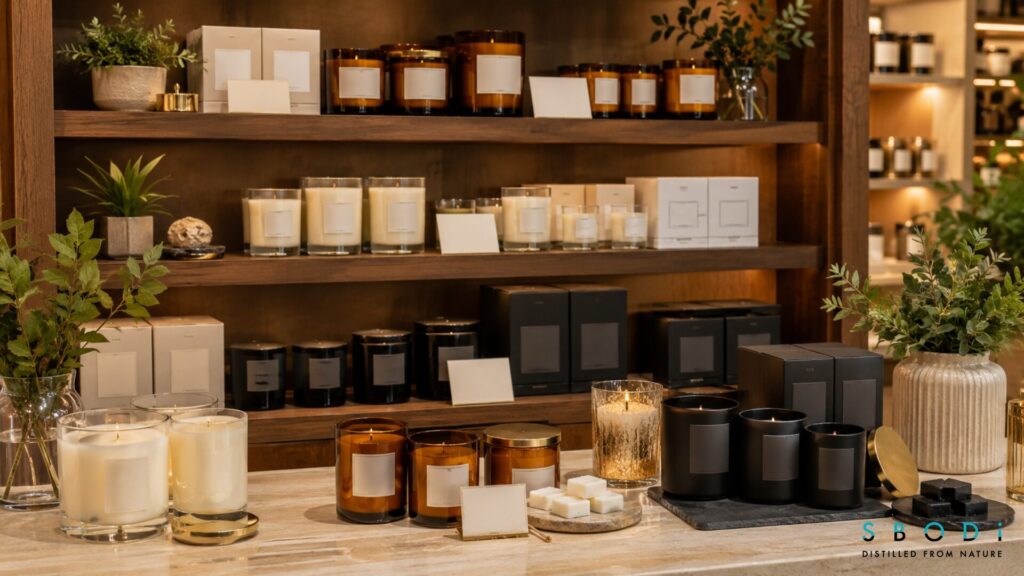
A focused collection is easier to explain, merchandise, photograph, stock, and reorder.
Start With Three to Six Fragrances
A practical opening assortment could include:
- Fresh citrus and herbs
- Soft floral
- Warm amber
- Wood and spice
- Clean linen or mineral
- Seasonal limited edition
The exact number should reflect the business’s budget and sales channel.
Create Clear Fragrance Differences
Customers should understand why each fragrance belongs in the collection.
Avoid launching several scents that all smell similar but carry different names.
Use a Consistent Visual System
Keep the following elements coordinated:
- Vessel shape
- Label dimensions
- Typography
- Lid finish
- Carton structure
- Product photography
- Fragrance naming
- Description length
Variation can come from label color, fragrance name, or subtle visual cues without making the collection feel disconnected.
Plan Core and Seasonal Products
Core fragrances remain available throughout the year.
Seasonal fragrances can create urgency, but they require careful forecasting because unsold inventory may be difficult to carry into the next season.
Merchandise by Fragrance Family
Retailers can group products by:
- Fresh
- Floral
- Herbal
- Woody
- Amber
- Gourmand
- Seasonal
This helps customers navigate the display without needing to smell every candle.
Candles in Bath, Body, and Wellness Collections
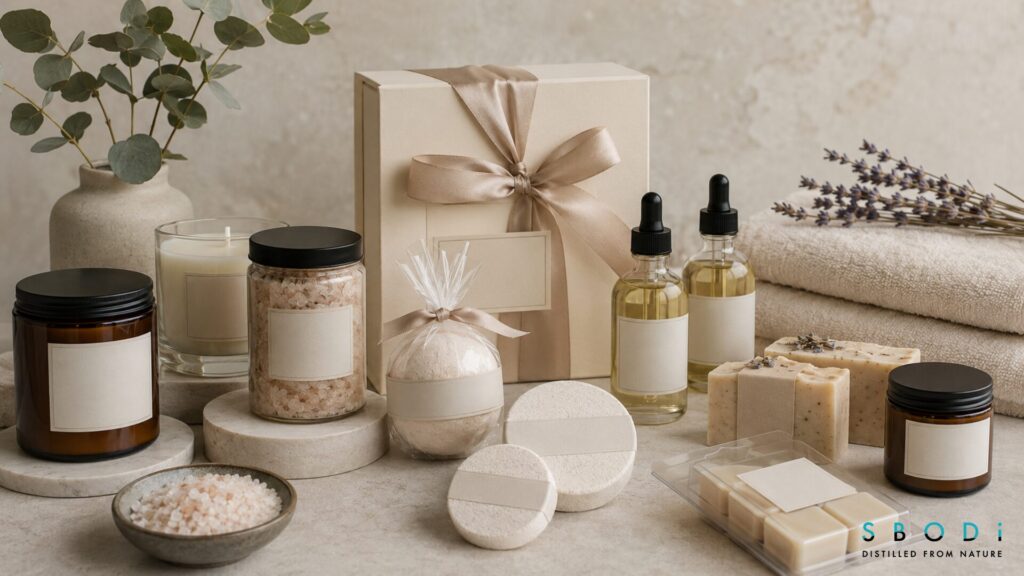
Candles often sit naturally beside bath and body products because the categories share fragrance, gifting, and self-care positioning.
A coordinated collection may combine candles with:
- Bath bombs
- Shower steamers
- Bath salts
- Handmade soap bars
- Body oils
- Wax melts
- Gift boxes
- Spa accessories
The products do not need identical formulas or fragrance strength. Instead, they should share a recognizable sensory direction and visual identity.
For example, a lavender-inspired collection might include:
- A lavender and herb candle
- A coordinating bath soak
- A shower steamer
- A soap bar
- A wax melt
- A gift-ready product set
Cross-category expansion should follow customer demand. Adding unrelated products merely to increase assortment size can weaken the brand and create unnecessary inventory.
How SBODi Fits Into Candle Product Planning
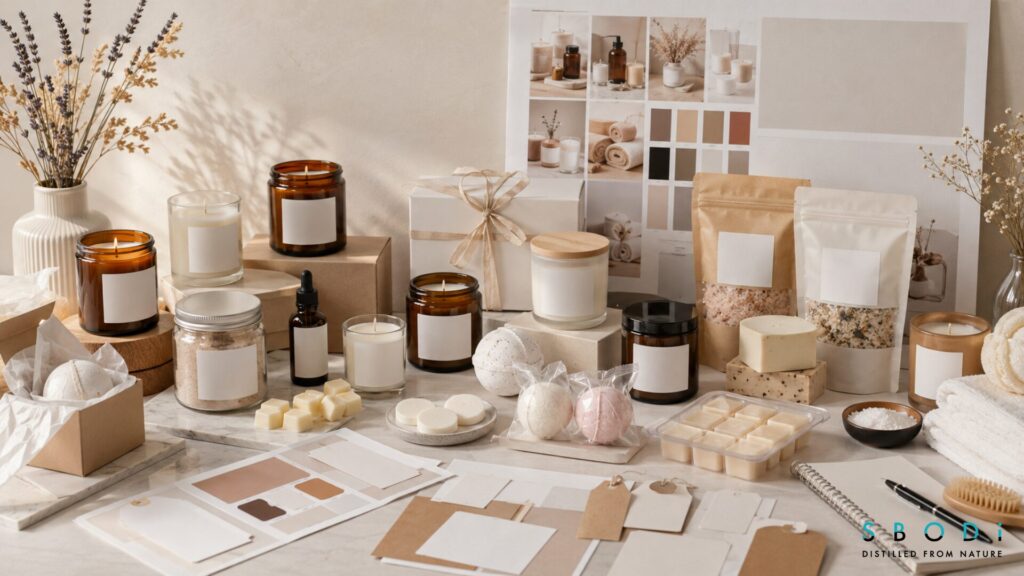
SBODi operates within the broader bath, body, home fragrance, and private label product space.
Its current online candle range includes private label candle options, amber jar candles, glass tumbler formats, and wax melt products. The broader product structure also connects candles with bath bombs, shower steamers, bath salts, soaps, and related self-care categories.
This category structure is relevant for retailers and private label brands that want to understand how home fragrance can fit within a coordinated collection.
Businesses researching SBODI or another supplier should still compare:
- Product specifications
- Samples
- Minimum order quantities
- Customization
- Packaging
- Testing
- Lead times
- Landed costs
- Reorder capacity
The purpose of supplier research is not simply to find the largest product catalog. It is to identify a production and purchasing model that fits the brand’s actual operational needs.
Explore More About Wholesale Candles
Retailers comparing suppliers can review the guide to the best wholesale candles in the US for information on minimum orders, fragrance options, packaging, and supplier reliability.
Businesses developing a branded collection should read the private label candles wholesale US guide and the guide to private label candles in the USA for customization, labeling, production timelines, costs, and premium positioning.
For candle safety and compliance, the U.S. Consumer Product Safety Commission provides guidance on candle standards, containers, warning labels, and accessories. The Federal Trade Commission also explains general packaging and labeling requirements.
Buyers researching fragrance and presentation can explore the amber candle fragrance profile, learn why amber candles remain popular, and compare glass tumbler candle styles.
The 13oz candle size guide explains fill weight, vessel capacity, packaging, and retail positioning. Retailers can also use sample candles for retailers to evaluate fragrance, packaging, and product suitability before ordering in larger quantities.
The National Candle Association provides additional information on candle safety labels and responsible use.
Frequently Asked Questions