Launching a candle collection requires more than choosing a fragrance and placing a label on a jar. Wax quality, wick selection, vessel safety, fragrance performance, packaging, testing, minimum orders, and supplier reliability all affect the finished product.
This private label candles wholesale US guide explains how candle programs work, which customization options are available, and how businesses can evaluate manufacturers before placing an order. For broader information about candle types, materials, packaging, testing, and supplier selection, review SBODi’s complete wholesale candles guide.
The guide is designed for boutiques, ecommerce stores, spas, wellness brands, hospitality businesses, gift retailers, and bath and body companies expanding into home fragrance.
Table of Contents
- What Are Private Label Candles?
- How Private Label Candle Programs Work
- Private Label vs White Label Candles
- Why Businesses Add Private Label Candles
- Candle Products to Consider
- Choosing Wax, Wicks, and Fragrances
- Manufacturing and Safety
- Packaging and Branding
- Choosing a Candle Supplier
- Step-by-Step Candle Buying Process
- Common Buying Mistakes
- Candle Trends
- SBODi Candle Resources
- Frequently Asked Questions
- Conclusion
What Are Private Label Candles?
Private label candles are manufactured by a third-party producer and sold under another company’s brand.
Depending on the supplier, businesses may customize:
- Candle fragrance
- Wax formulation
- Wick type
- Vessel style
- Label design
- Lid and carton
- Product size
- Gift packaging
Some manufacturers offer ready-to-label candles with limited customization. Others provide custom fragrance development, exclusive vessels, and fully branded packaging.
How Private Label Candles Wholesale US Programs Work
A typical private label process includes:
- Selecting candle sizes and vessels
- Reviewing wax and fragrance options
- Ordering product samples
- Testing fragrance and burn performance
- Designing labels and packaging
- Confirming minimum orders and pricing
- Approving the final sample
- Starting production
- Inspecting and shipping the order
The timeline depends on the level of customization. Stock fragrances and standard vessels usually require less development than custom scents, cartons, or exclusive packaging.
Private Label vs White Label Candles
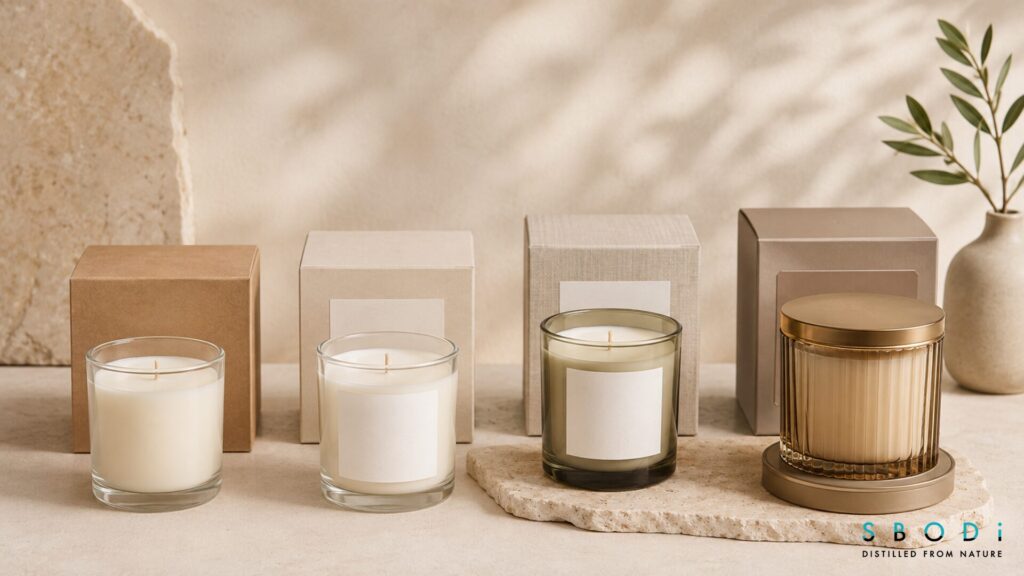
White label and private label candle programs are similar, but the level of customization may differ.
| Model | Branding | Customization | Best For |
|---|---|---|---|
| Wholesale candles | Supplier branding | Low | Retail resale |
| White label candles | Buyer branding | Low | Quick product launches |
| Private label candles | Buyer branding | Moderate | Branded collections |
| Custom manufacturing | Buyer branding | High | Established brands |
White label candles generally use an existing supplier product. Private label candles may allow changes to fragrance, wax, vessel, label, or packaging.
Because suppliers use these terms differently, buyers should request a written list of what is included.
Why Businesses Add Private Label Candles
Candles can complement bath, body, wellness, gifting, and home fragrance collections.
Key benefits include:
- Extending an existing product range
- Creating seasonal gift collections
- Supporting repeat purchases
- Offering coordinated fragrance families
- Adding products without owning manufacturing equipment
- Developing custom branding for retail or ecommerce
However, businesses should begin with a focused collection rather than launching too many fragrances or vessel styles at once.
Candle Products to Consider
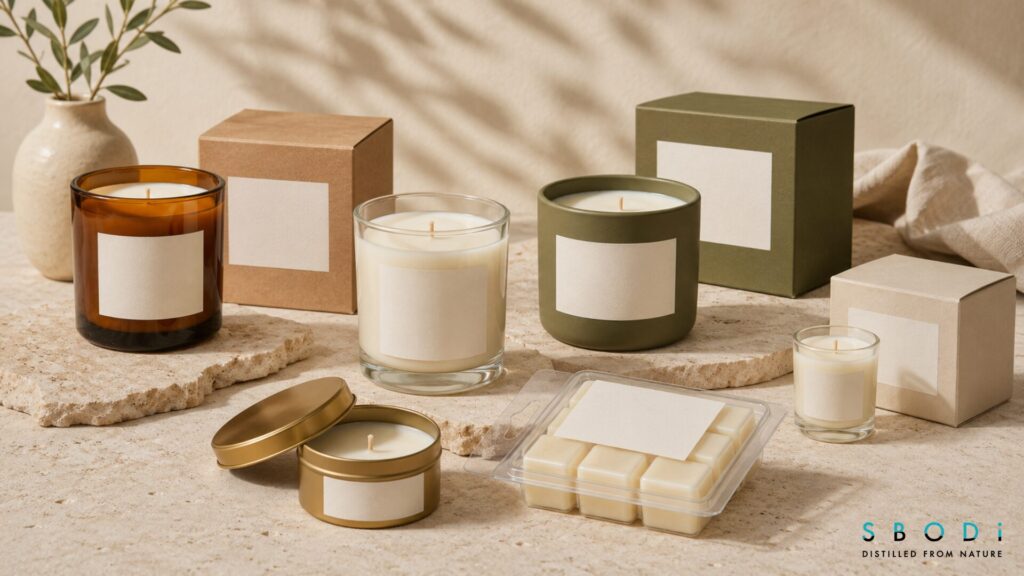
Scented Container Candles
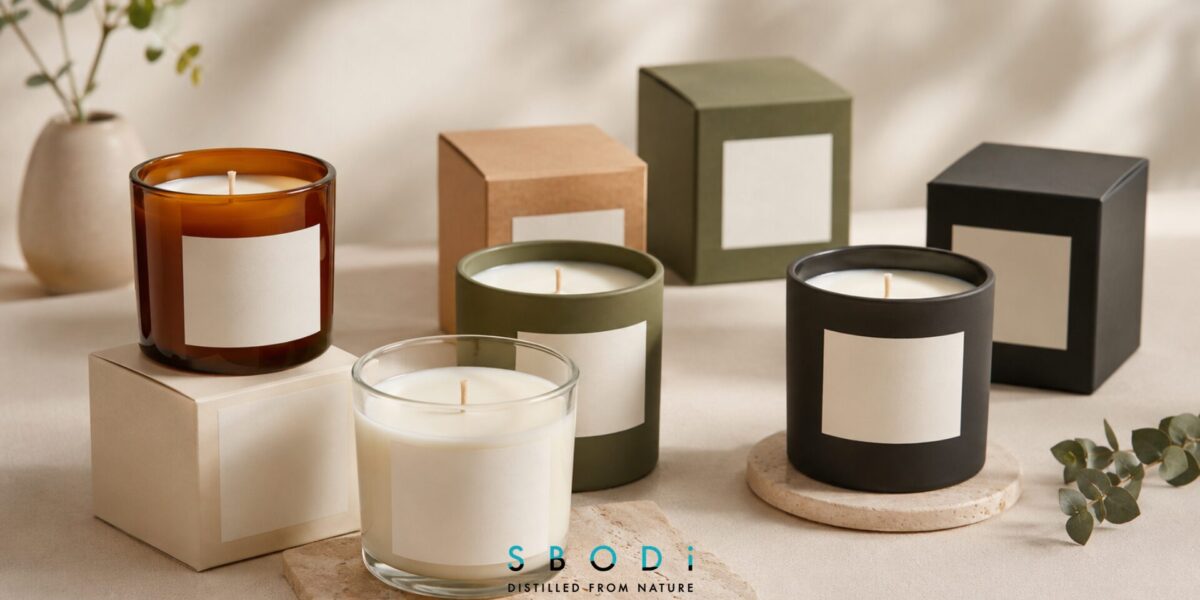
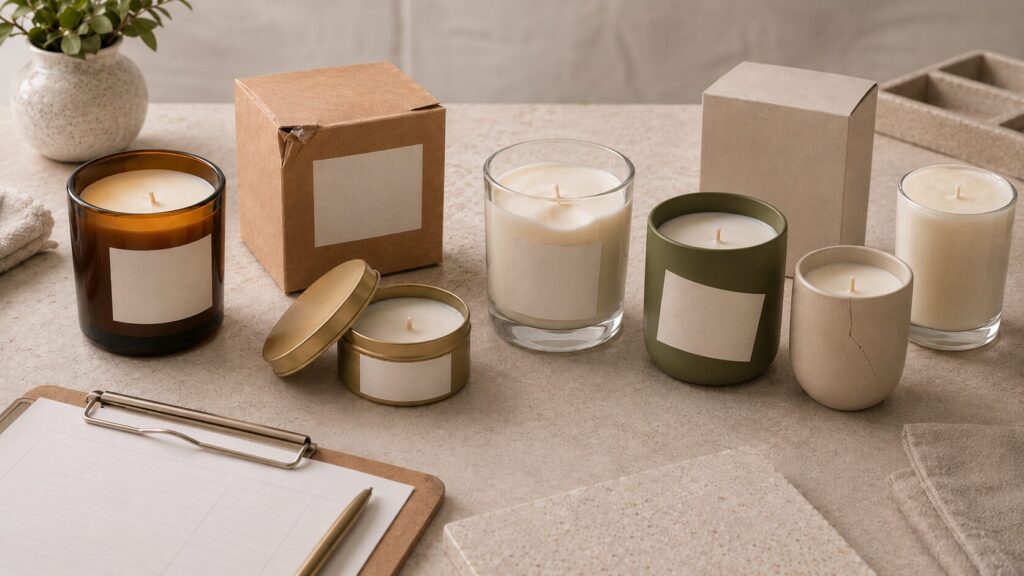
Container candles are commonly poured into glass jars, tumblers, tins, or ceramic vessels.
Popular formats include:
- Amber jar candles
- Glass tumbler candles
- Travel tins
- Single-wick candles
- Multi-wick candles
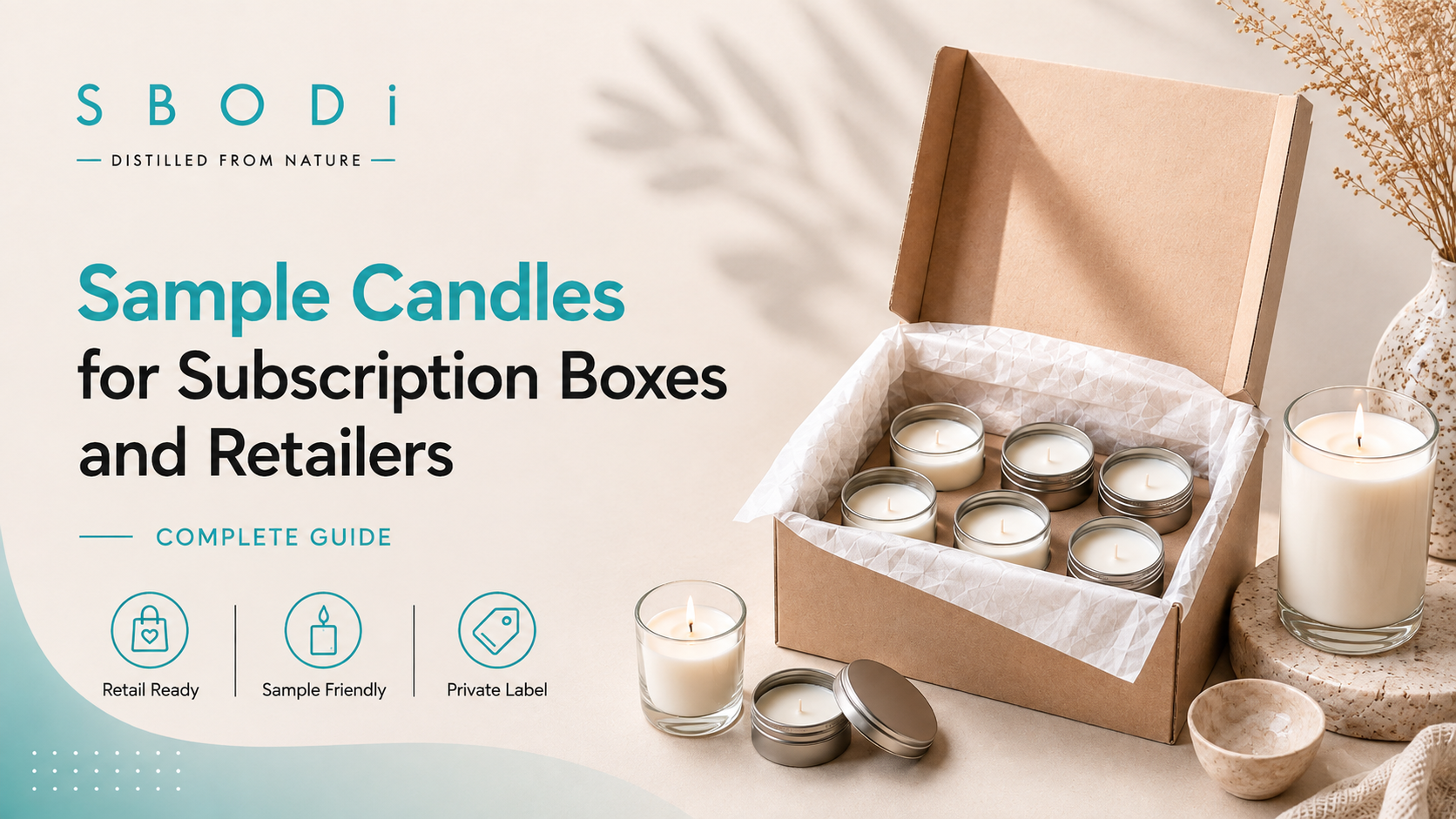
- Sample candles
- Luxury boxed candles
Spa and Wellness Candles
Spa candles often use neutral packaging and fragrance profiles such as lavender, eucalyptus, cedar, citrus, sandalwood, and amber.
Descriptions should focus on scent, atmosphere, and the customer experience. Avoid unsupported medical or therapeutic claims.
Wholesale Wax Melts
Wax melts allow brands to offer home fragrance without another candle format. They can be sold individually, in fragrance sets, or alongside matching candles.
Candle Fragrance Samples
Smaller sample candles help retailers and customers compare fragrances before purchasing full-size products. They can also be used in subscription boxes and discovery sets.
Choosing Wax, Wicks, and Fragrances
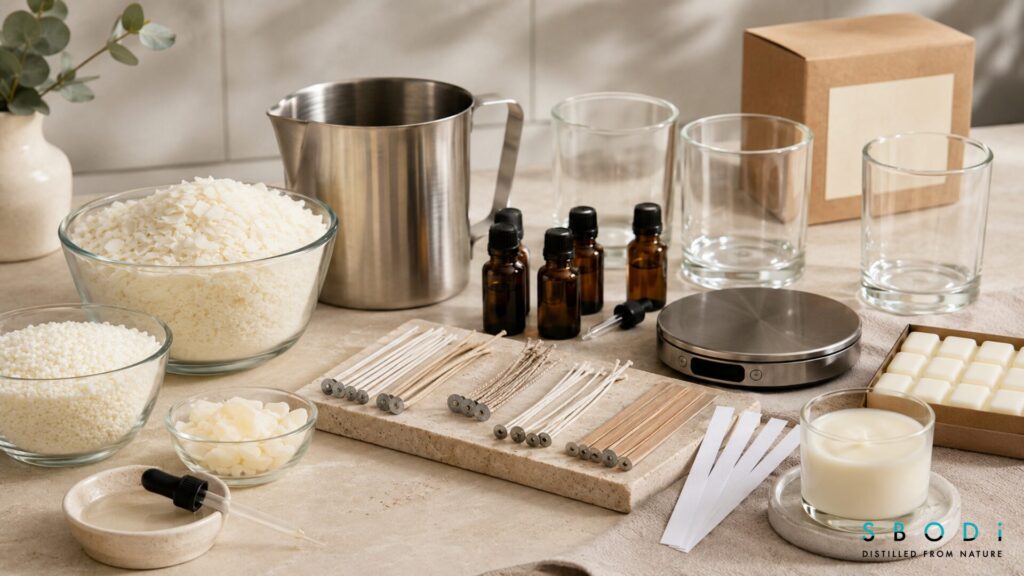
Candle Wax
Common candle wax options include soy, paraffin, beeswax, coconut blends, and mixed formulations.
Evaluate wax based on:
- Fragrance compatibility
- Vessel type
- Surface appearance
- Shipping conditions
- Burn performance
- Brand positioning
- Manufacturing consistency
Soy wax candles may suit plant-based product positioning, but wax type should not be the only buying factor.
Candle Wicks
Wick size and construction affect flame height, melt-pool development, soot, and burn consistency.
The manufacturer should test the actual combination of:
- Wax
- Wick
- Fragrance
- Vessel
- Dye
- Candle diameter
Changing one component may require additional testing.
Candle Fragrance
Evaluate fragrance before and during burning.
Review:
- Cold fragrance strength
- Hot fragrance performance
- Scent balance
- Wax compatibility
- Batch consistency
- Seasonal demand
- Customer preferences
A stronger fragrance is not always better. The scent should suit the candle size, room environment, and intended audience.
Manufacturing and Safety Considerations

A reliable wholesale candle manufacturer should provide clear information about production, testing, and quality control.
Ask how the supplier manages:
- Wax temperature
- Fragrance measurements
- Wick placement
- Fill weight
- Cooling conditions
- Batch tracking
- Label positioning
- Packaging inspection
Candle samples should be tested for:
- Flame height
- Wick behavior
- Melt pool
- Visible soot
- Vessel temperature
- Container stability
- Fragrance performance
- End-of-life behavior
Avoid candles containing dried flowers, herbs, or other flammable decorations near the wick or wax pool.
Candle Packaging and Branding
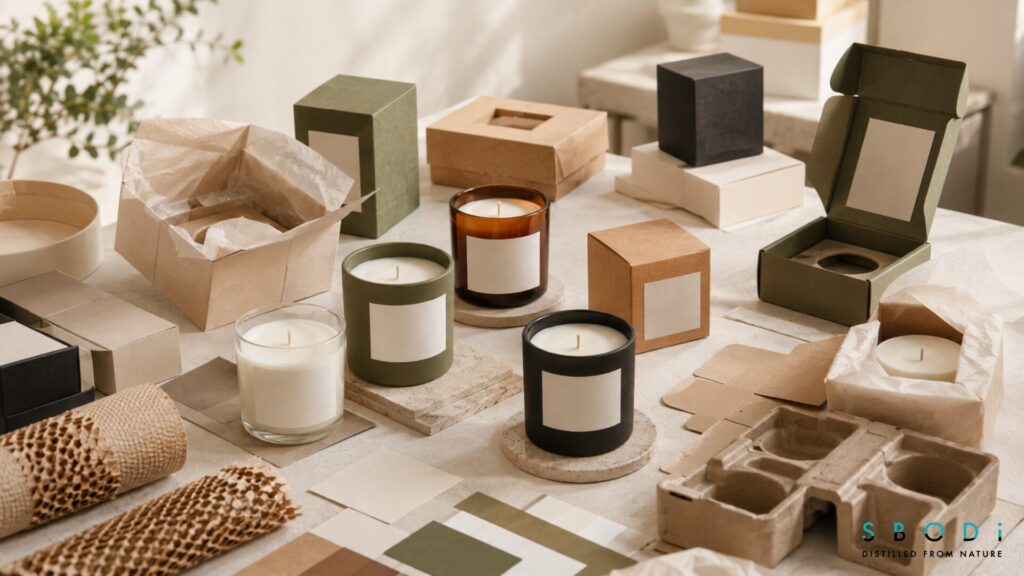
Candle packaging protects the product and communicates brand positioning.
Vessel Label
A candle label may include:
- Brand name
- Fragrance name
- Product size
- Responsible business information
- Country-of-origin information
- Batch details
Safety Label
Candles should display clear instructions, including:
- Burn within sight
- Keep away from combustible materials
- Keep away from children and pets
- Trim the wick as directed
- Use on a stable, heat-resistant surface
Secondary Packaging
Common packaging options include:
- Folding cartons
- Rigid boxes
- Protective inserts
- Sleeves
- Tissue wrapping
- Gift boxes
- Shipping cartons
The complete packaged product should be tested for movement, label damage, broken vessels, and lid displacement during shipping.
How to Choose a Wholesale Candle Supplier
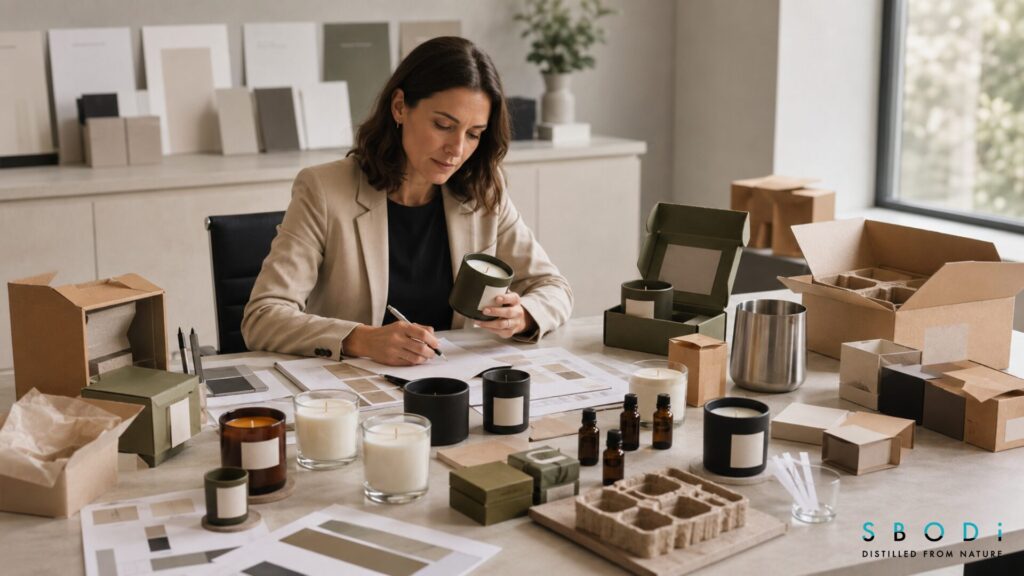
Compare suppliers using written criteria rather than product appearance alone.
Ask:
- Which wax and fragrance options are available?
- How are wicks selected and tested?
- Are vessels designed for candle use?
- What are the minimum orders per fragrance?
- Are labels and cartons included?
- What are the sampling and setup fees?
- How long does production take?
- How are damaged products handled?
- Can the same components be reordered?
- Are product specifications available in writing?
A dependable candle supplier should explain both capabilities and limitations.
Step-by-Step Candle Buying Process
1. Define the Customer
Identify the target audience, retail price, fragrance preferences, and sales channel.
2. Choose a Focused Range
Begin with one vessel style and four to six fragrances.
3. Request Samples
Review fragrance, wax appearance, wick behavior, packaging, and overall commercial quality.
4. Calculate Landed Cost
Include:
- Candle cost
- Labels
- Cartons
- Freight
- Warehousing
- Damage allowance
- Fulfillment preparation
5. Approve Specifications
Confirm the wax, wick, fragrance, vessel, fill weight, label, carton, and case quantity in writing.
6. Place a Controlled Order
Avoid excessive opening inventory until actual sales patterns are known.
Common Private Label Candle Buying Mistakes
Selecting Fragrance Without Burn Testing
A fragrance may smell different once blended into wax and burned.
Comparing Only Unit Price
Low factory pricing may become less competitive after packaging, freight, storage, and breakage are included.
Launching Too Many Fragrances
Large collections increase inventory, photography, marketing, and reorder complexity.
Ignoring Vessel Safety
Decorative glass is not automatically suitable for candle production.
Using Unsafe Decorations
Dried flowers and herbs near the flame can create a fire risk.
Omitting Safety Information
Minimal packaging should still include clear candle-use instructions.
Failing to Plan Reorders
Confirm that vessels, lids, fragrances, labels, and cartons will remain available.
Current Candle Product Trends
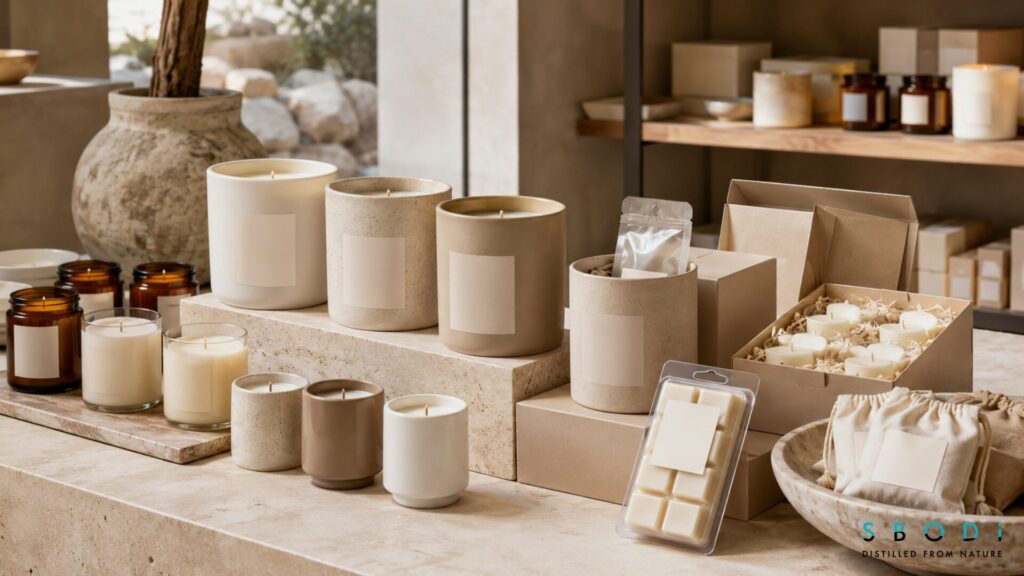
Relevant candle development trends include:
- Neutral amber and matte vessels
- Small fragrance discovery sets
- Coordinated candle and wax melt collections
- Seasonal fragrance releases
- Minimal packaging
- Gift-ready candle sets
- Clear wax and fragrance information
- Increased focus on safety and testing
Brands should select trends that fit their audience rather than changing packaging or fragrances simply because they are popular.
SBODi Candle Resources
SBODi provides educational resources for businesses researching wholesale and private label candles, wax melts, soaps, and other bath and body products.
For broader information about candle formats, waxes, wicks, packaging, testing, and supplier selection, read SBODI’s complete wholesale candles guide. Businesses developing a wider product collection can also explore the private label bath and body products guide.
Before production, buyers should review the CPSC candle business guidance for relevant safety and labeling information. Brands using domestic-origin statements should also consult the FTC’s Made in USA guidance.