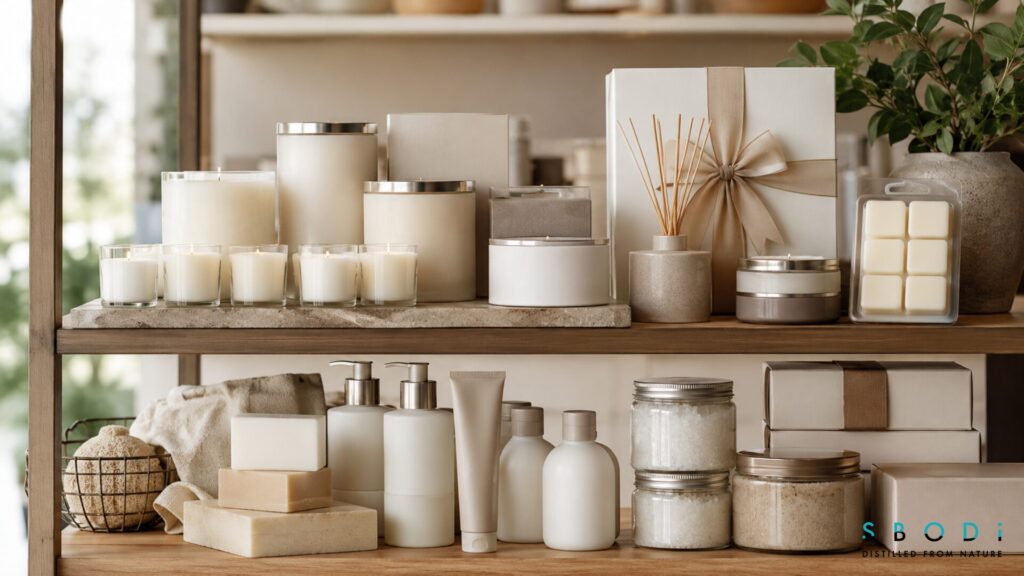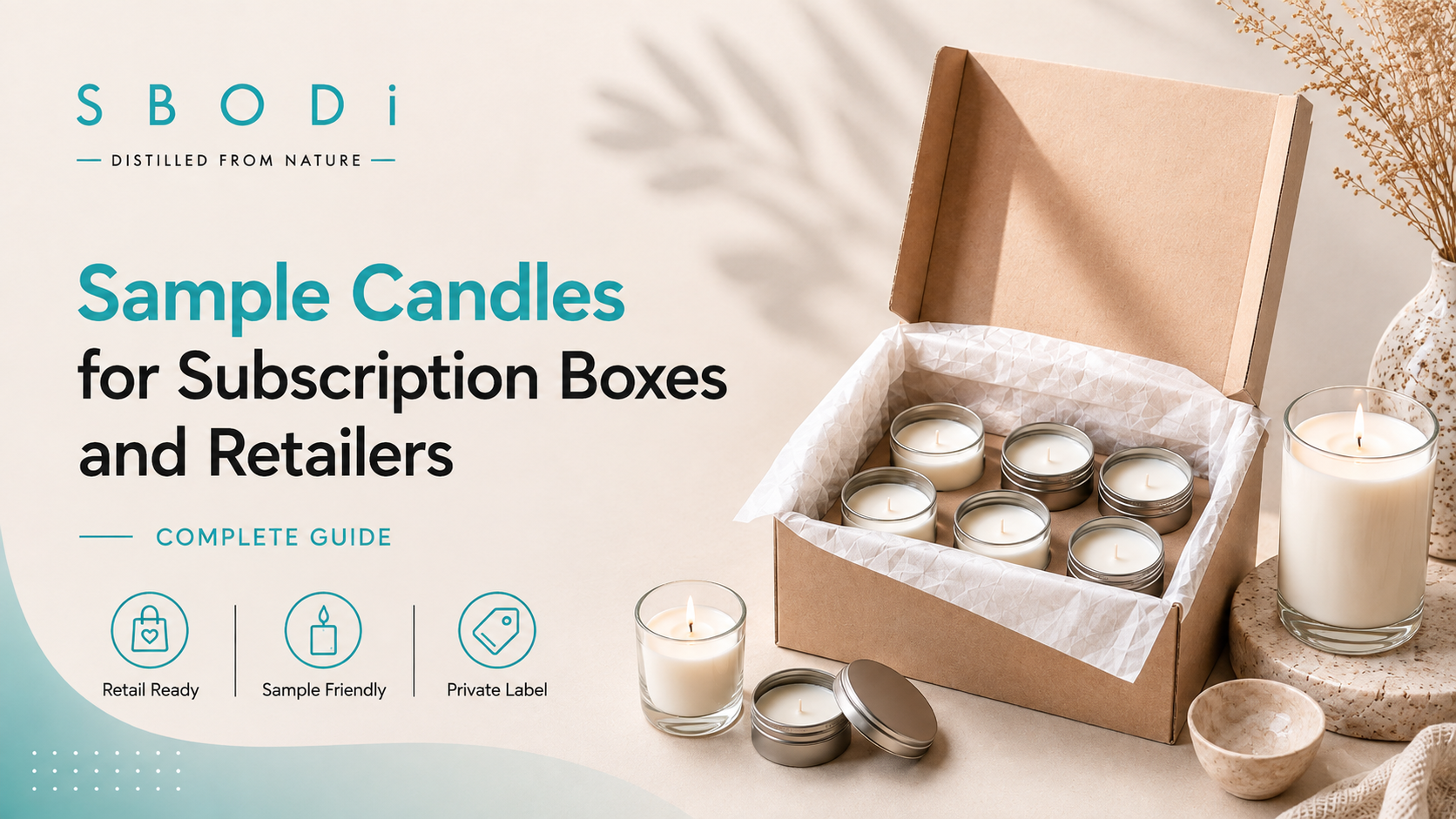
Sample candles give customers a practical way to explore fragrances before purchasing a full-size product. Retailers and subscription-box companies can also use them to test scent demand, create gift collections, introduce seasonal products, and add value without using excessive packaging space.
However, a smaller candle still requires proper testing, labeling, packaging, and supplier evaluation. The sample should represent the wider candle collection while remaining suitable for its intended sales channel.
This guide explains how to choose, test, package, and merchandise candle samples. Buyers planning a wider candle range can also review SBODI’s complete guide to wholesale candles for additional information about sourcing, formats, manufacturing, and private labeling.
- What Are Sample Candles?
- Why Businesses Use Candle Samples
- Common Sample Candle Formats
- Choosing the Right Fragrances
- Evaluating Candle Quality
- Packaging and Labeling
- Subscription-Box Best Practices
- Retail Merchandising Ideas
- Common Buying Mistakes
- Future Trends
- SBODi Candle Resources
- Frequently Asked Questions
- Conclusion
What Are Sample Candles?
Sample candles are small candle formats created for fragrance discovery, product testing, gifting, promotion, or limited personal use.
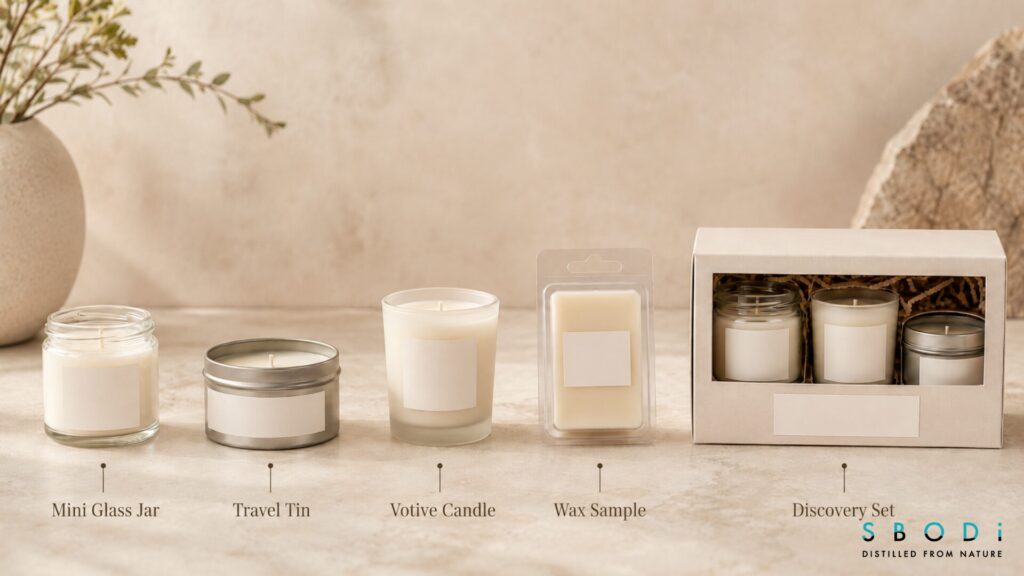
They may be sold individually, included in discovery sets, supplied to wholesale buyers, or added to subscription boxes. Common formats include mini glass jars, tins, votives, wax samples, and miniature private label candles.
A sample candle may use the same fragrance as a full-size product, but its burn performance can differ. Vessel diameter, wick size, wax volume, and melt-pool development all affect how a candle performs.
Candle Samples vs. Wax Melts
Sample candles use a wick and produce the visual experience of a burning candle.
Wax melts release fragrance through an approved warmer. They can be easier to package, but they do not demonstrate wick performance or flame behavior. Businesses interested in both formats may compare candle samples with wholesale wax melts before selecting a discovery range.
Why Businesses Use Candle Samples
Sample candles reduce the commitment required to try an unfamiliar fragrance. They can also help brands collect useful feedback before ordering larger quantities.
Businesses commonly use them to:
- Introduce new fragrances
- Test seasonal demand
- Create lower-priced products
- Build discovery sets
- Add variety to subscription boxes
- Support full-size candle sales
- Compare suppliers and formulations
- Develop private label collections
For retailers, samples can act as impulse purchases or fragrance-discovery tools. For subscription companies, they provide a compact home-fragrance product that can be paired with bath salts, soaps, shower steamers, or other self-care products.
The candle should still support the box theme. A fresh eucalyptus candle may suit a spa collection, while an amber candle may fit an autumn or evening relaxation box.
Common Sample Candle Formats
Mini Glass Jar Candles
Mini glass jars provide a premium appearance and closely resemble full-size retail candles. They work well in luxury gift sets, spa collections, boutique displays, and branded discovery boxes.
Because glass can break, the product needs a secure insert or divider.
Small Candle Tins
Tins are lightweight, compact, and generally easier to protect during shipping. They are suitable for subscription boxes, travel collections, promotional kits, and ecommerce orders.
Buyers should inspect lid fit, wick position, container condition, and heat performance.
Votive Candles
Votive-style samples provide a traditional candle format. Packaging must clearly state whether the candle requires a separate holder before burning.
Fragrance Testing Samples
Some candle fragrance samples are designed mainly for scent evaluation. They allow buyers to compare fragrances before selecting scents for full-size production.
SBODi offers candle fragrance samples for businesses reviewing possible additions to scented candle collections.
Discovery Sets
Discovery sets usually contain three to six coordinated fragrances. They may feature seasonal scents, fragrance families, core products, or customer-selected combinations.
A small, clearly differentiated set is more useful than a large collection containing several similar fragrances.
How to Choose Fragrances
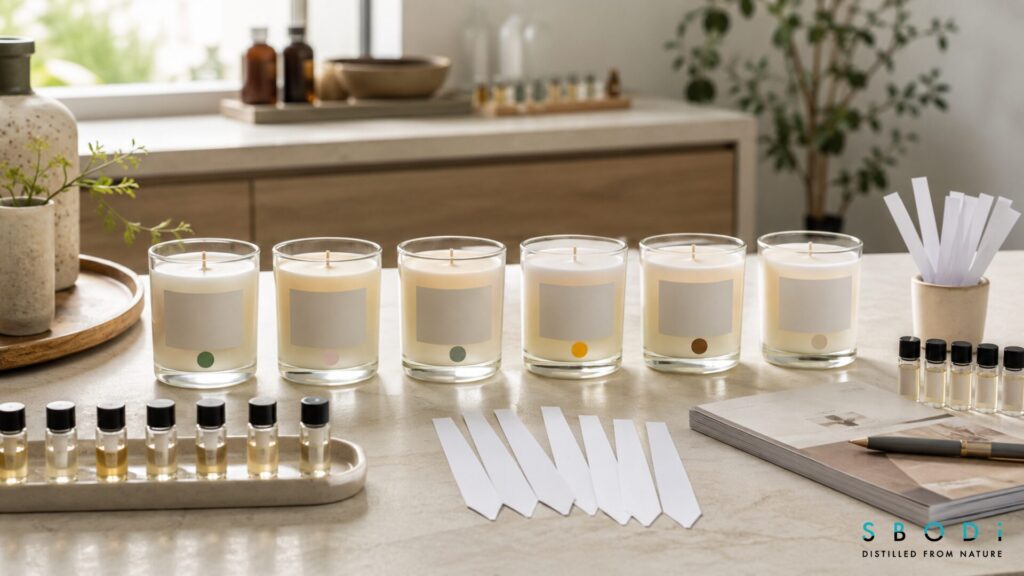
Start by defining the customer and sales channel. A boutique gift set may need different fragrances from a wellness subscription or hotel amenity collection.
A balanced sample assortment may include:
- Fresh or aquatic
- Floral
- Herbal or spa-inspired
- Fruity
- Woody or amber
- Gourmand or seasonal
Avoid selecting fragrances by name alone. Names create expectations, but the finished wax product may smell different from the fragrance description.
When possible, evaluate coded samples before reviewing their marketing names. This creates a more objective comparison.
Businesses should also consider how each fragrance fits the wider product range. A candle may coordinate with bath products without using the exact same scent.
Evaluating Sample Candle Quality
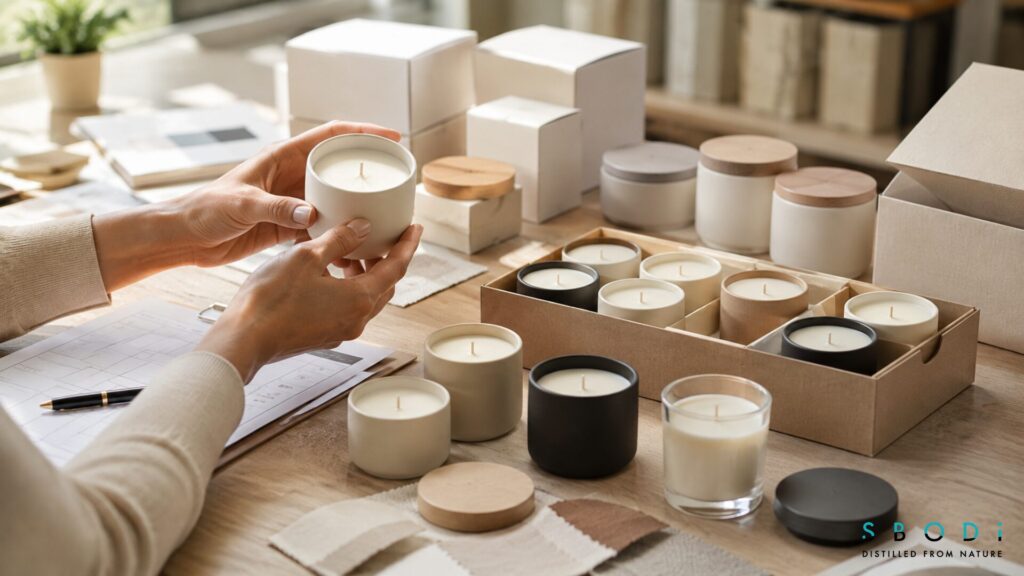
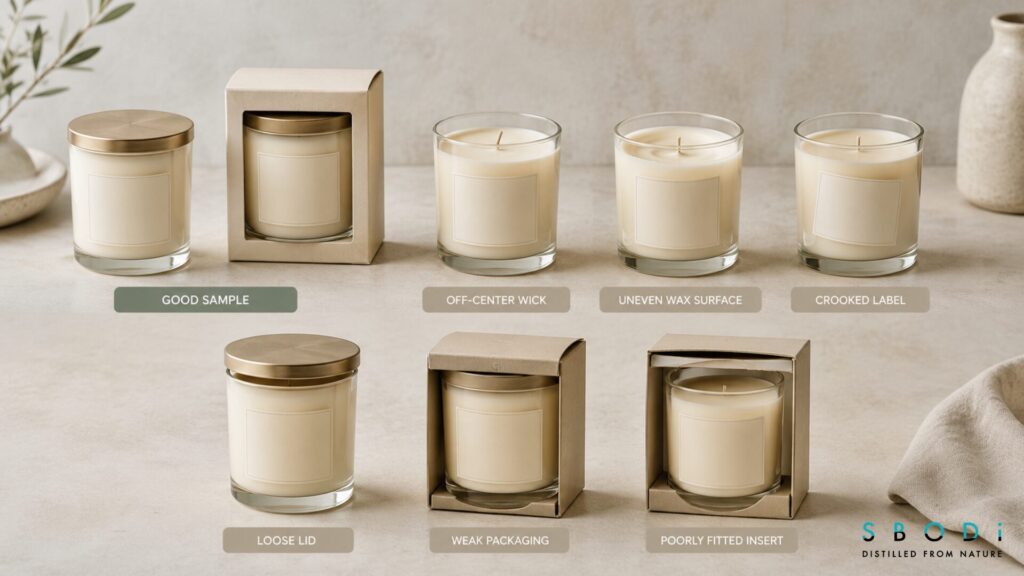
Inspect several units from the same batch rather than relying on one perfect sample.
Review the following:
- Wax surface
- Wick position
- Fill level
- Vessel condition
- Lid fit
- Cold fragrance strength
- Label placement
- Packaging quality
- Product consistency
After the visual review, conduct a controlled burn test according to the supplier’s instructions.
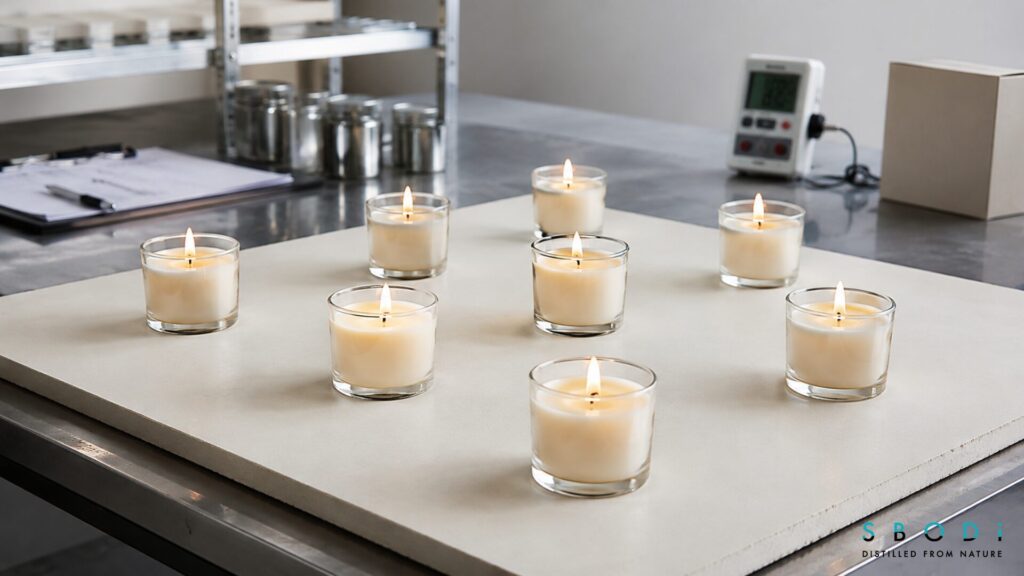
Observe:
- Flame height
- Melt-pool development
- Wick condition
- Soot or smoke
- Vessel temperature
- Hot fragrance strength
- End-of-use behavior
A miniature candle should not automatically use the same wick system as a larger candle. Each wax, fragrance, wick, and vessel combination needs suitable testing.
The National Candle Association’s candle safety standards explain relevant ASTM standards for candle labeling, glass containers, and fire-safety design. The U.S. Consumer Product Safety Commission also provides business guidance for candle manufacturers and sellers.
Packaging and Labeling
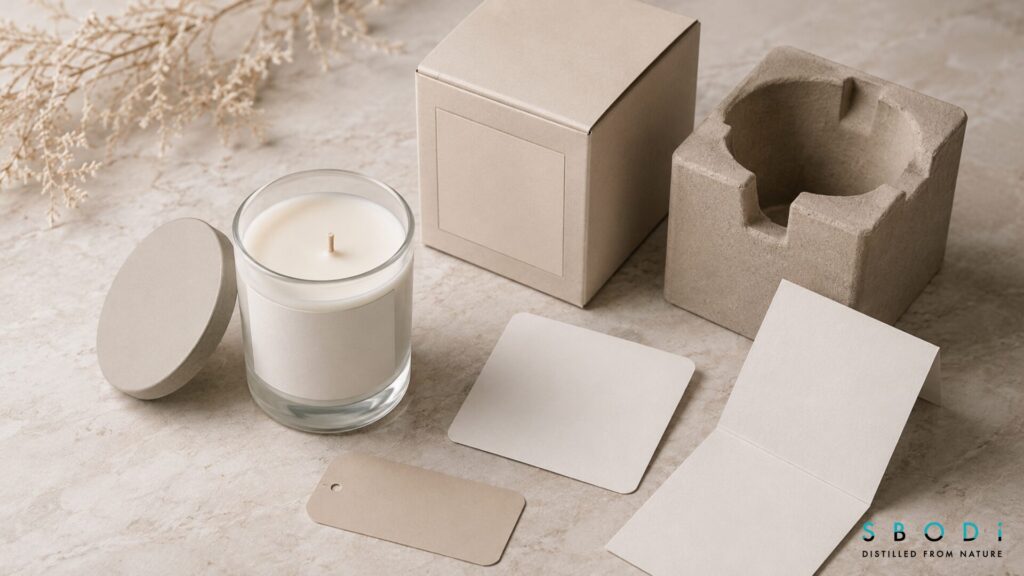
Candle packaging must protect the product while providing clear product and safety information.
A complete package may include:
- Fitted lid
- Bottom label
- Individual carton
- Protective insert
- Shipping divider
- Fragrance name
- Net quantity
- Business information
- Batch code
- Burning instructions
- Safety warning
Subscription-box companies should test the candle inside the complete box. Check whether the container moves, contacts another hard product, loses its lid, damages nearby packaging, or absorbs another product’s fragrance.
The FTC Fair Packaging and Labeling Act provides general requirements concerning product identity, net contents, and responsible business information for covered consumer products.
Candle safety information should remain available after the product is removed from the shipping box. Do not place essential warnings only on disposable outer packaging.
The National Candle Association also explains the main candle warning-label principles, including keeping candles within sight and away from children and combustible materials.
Best Practices for Subscription Boxes
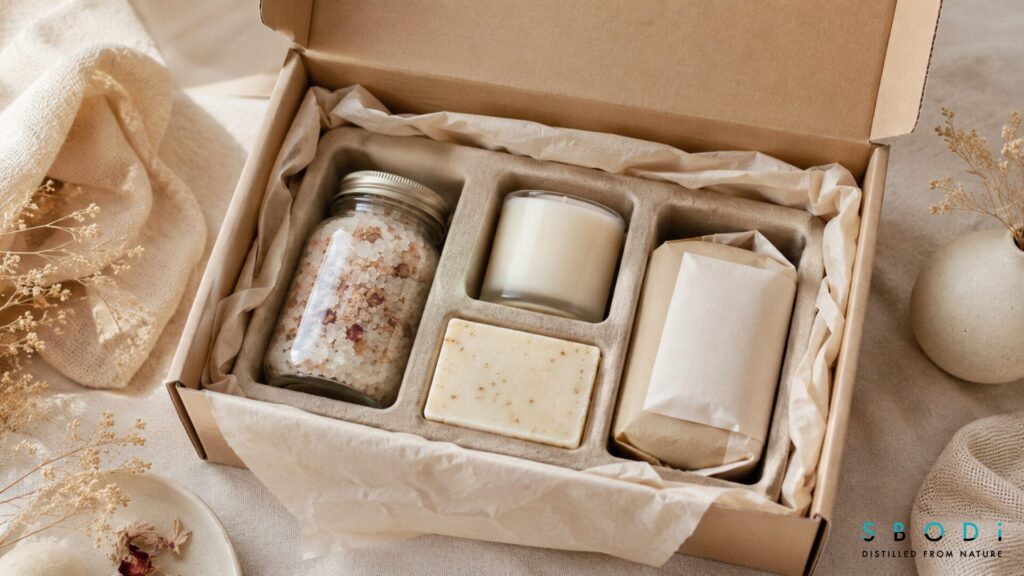
Match the Product to the Theme
Choose a fragrance and vessel that support the box concept. Avoid including a candle only because it fills empty space.
Confirm Finished Dimensions
Measure the candle with its lid, carton, insert, and protective materials. Product dimensions alone do not show how much space the packed item requires.
Standardize the Vessel
Using one container style across several fragrances simplifies inserts, packing, photography, and inventory management.
Limit the Fragrance Selection
One strong fragrance may create a clearer monthly theme. Discovery boxes should include scents that customers can easily distinguish.
Confirm Production Timelines
Coordinate label approval, candle production, packaging, delivery, and box assembly. Late components can disrupt the complete subscription schedule.
Retail Merchandising Ideas
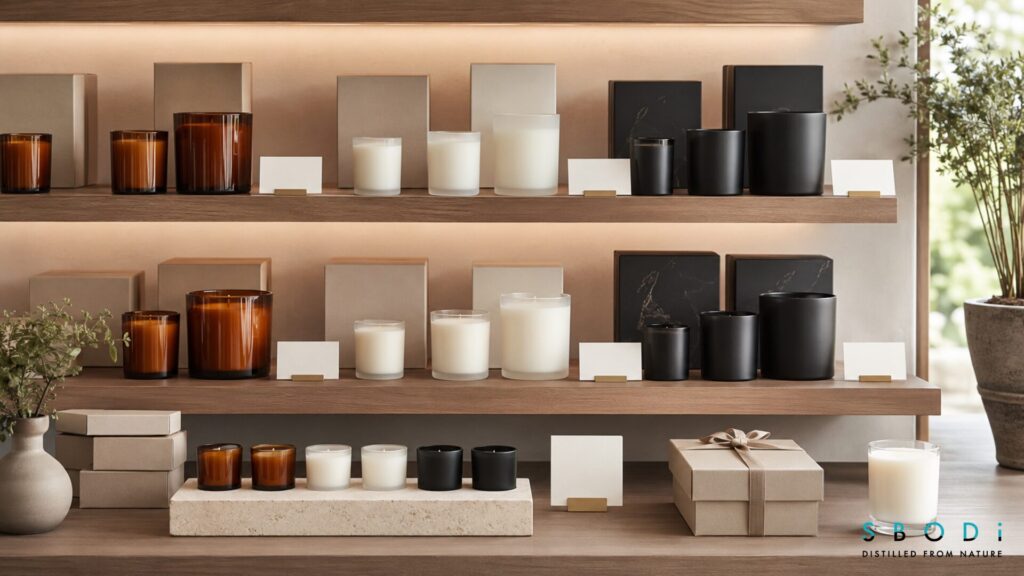
Retailers can place sample candles beside matching full-size products to create a clear fragrance-discovery path.
Useful merchandising options include:
- Checkout displays
- Seasonal gift tables
- Build-your-own gift boxes
- Spa and wellness sections
- Candle discovery trays
- Full-size candle bundles
- Wax melt and candle pairings
Keep display testers separate from inventory intended for sale. Replace damaged, dusty, faded, or contaminated testers promptly.
Retailers building a larger assortment can explore wholesale scented candles alongside sample formats.
Common Buying Mistakes
Ordering Before Testing
Never approve a large order based only on fragrance descriptions or product photographs. Review physical samples and burn performance first.
Choosing Too Many Fragrances
A large launch creates more labels, packaging variations, inventory risks, and slow-moving stock. Begin with a focused selection.
Ignoring Shipping Conditions
A small glass candle can still crack or shift during delivery. Test the complete package under realistic shipping conditions.
Assuming Samples Match Full-Size Performance
The same fragrance may behave differently in another vessel. Test each finished candle format separately.
Omitting Safety Information
Mini candles still require suitable instructions and warning labels when intended for burning.
Overlooking Reorder Capacity
A successful sample may create demand for the full-size product. Confirm that the supplier can reproduce the fragrance, packaging, and quality consistently.
Future Sample Candle Trends
Sample candles are increasingly being used as part of structured product-discovery programs rather than simple promotional gifts.
Developing trends include:
- Build-your-own fragrance sets
- Seasonal candle subscriptions
- Mini private label collections
- Candle and wax melt combinations
- QR-supported product information
- Recyclable protective inserts
- Customer fragrance quizzes
- Cross-category self-care bundles
Brands are also using customer feedback from sample collections to decide which fragrances should move into full-size production.
SBODi Candle Resources
SBODi supplies wholesale and private label products across candle, bath, body, and self-care categories. Businesses can use its resources to compare fragrance samples, full-size candle formats, packaging options, and related product collections.
For further research, review:
- Complete guide to wholesale candles
- Candle fragrance samples
- Wholesale scented candles
- Best wholesale candles in the US
- Private label candles wholesale US guide
Buyers should still compare specifications, minimum orders, testing procedures, packaging, lead times, and reorder capacity before selecting a supplier.
Frequently Asked Questions