Wholesale bath bombs and private label bath bombs are related sourcing options, but they offer different levels of branding, customization, packaging control, and order planning.
Wholesale products are generally finished bath bombs purchased in bulk. Private label products are manufactured by a supplier and presented under the buyer’s brand. The right option depends on the business’s sales channel, budget, minimum order requirements, packaging needs, and long-term product strategy.
This guide helps boutiques, ecommerce retailers, subscription-box companies, spas, gift shops, hotels, and bath and body brands compare both models. Buyers beginning their research can explore available wholesale bath bombs before evaluating individual products and sourcing arrangements.
Table of Contents
- Wholesale vs Private Label Bath Bombs: Quick Answer
- What Are Wholesale Bath Bombs?
- What Are Private Label Bath Bombs?
- Wholesale Bath Bombs vs Private Label Bath Bombs
- Wholesale, White Label, Private Label, and Custom Manufacturing
- Which Model Fits Your Business?
- Ingredients, Labels, and Documentation
- Cosmetic Claims and MoCRA Considerations
- Packaging and Retail Presentation
- MOQ, Pricing, and Lead Time
- How to Evaluate Bath Bomb Samples
- Shelf Life, Storage, and Shipping
- How to Choose a Bath Bomb Supplier
- Questions to Ask Before Ordering
- How SBODi Supports Business Buyers
- Frequently Asked Questions
- Conclusion
Wholesale vs Private Label Bath Bombs: Quick Answer
Wholesale bath bombs are usually established products purchased in larger quantities for resale, gift sets, subscription boxes, or spa retail. The supplier normally controls the formula, fragrance, color, shape, and standard packaging.
Private label bath bombs are produced by a manufacturer but sold under the buyer’s brand. Depending on the supplier, buyers may select labels, packaging, fragrances, colors, shapes, or collection formats.
Wholesale is often suitable for faster product selection and lower setup complexity. Private label may be better when coordinated branding and retail differentiation matter. Neither model is universally better. The decision should consider customization, MOQ, lead time, landed cost, packaging, documentation, and repeat-order requirements.
What Are Wholesale Bath Bombs?
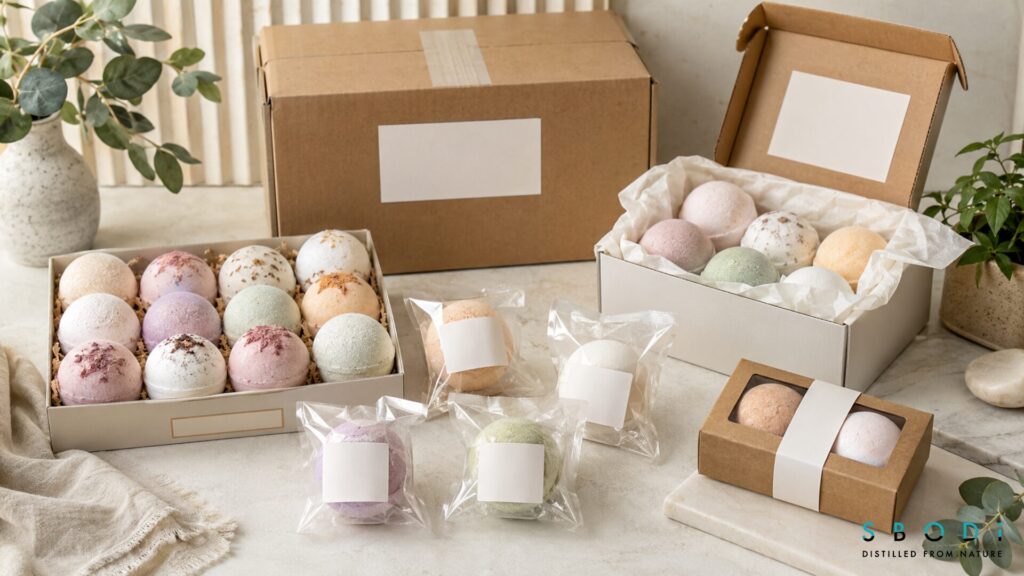
Wholesale purchasing generally means ordering finished bath bombs in bulk at business pricing. Products may arrive individually wrapped, in retail-ready packages, or in bulk cartons for use in gift sets and subscription boxes.
Common wholesale uses include:
- Boutique and gift-shop resale
- Spa retail displays
- Ecommerce bundles
- Subscription boxes
- Seasonal collections
- Gift baskets
- Promotional product sets
Wholesale allows buyers to choose from an established product range without developing labels or packaging from scratch. It can also help businesses test fragrances, styles, and customer demand before making a larger branded commitment.
The main limitation is control. Buyers may have limited influence over the formula, fragrance, shape, color, or package design. Wholesale products still require sample evaluation, label review, shipping tests, and landed-cost analysis.
What Are Private Label Bath Bombs?
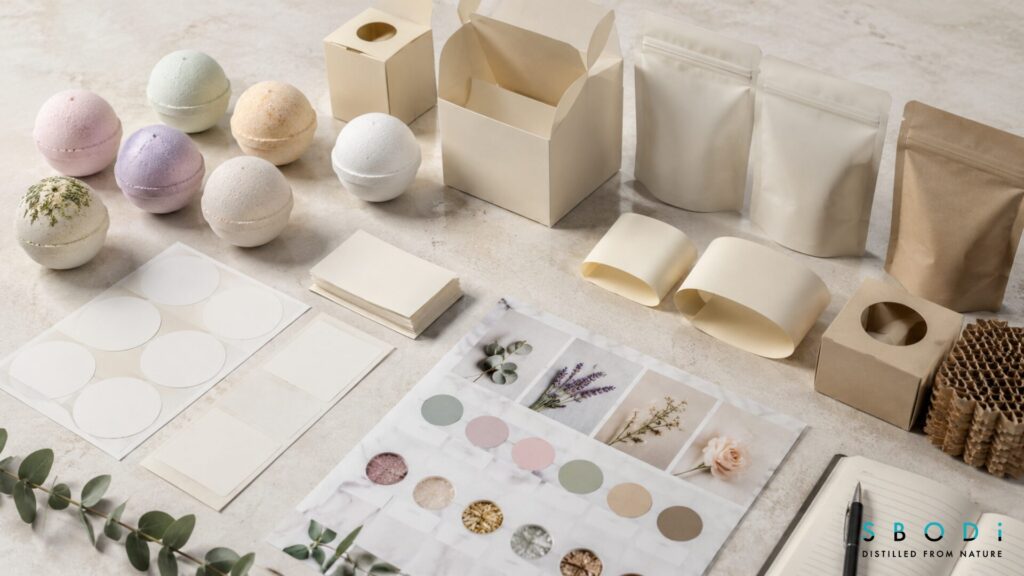
Private label bath bombs are made by a third-party supplier and sold under the buyer’s brand. The manufacturer handles production, while the buyer approves the available branding and packaging options.
Possible choices may include:
- Brand name and logo
- Custom labels
- Boxes, pouches, or sleeves
- Fragrance selection
- Color selection
- Product shape
- Gift-set presentation
Customization varies by manufacturer. Some suppliers apply a custom label to an established product. Others allow changes to fragrance, color, shape, or packaging. A fully custom formula should not be assumed unless it is specifically included in the agreement.
Private labeling can create a more consistent product line, but it usually requires additional planning for artwork, label content, packaging, MOQ, samples, and repeat orders.
Businesses developing a wider branded collection can review SBODI’s guide to private label bath and body products.
Wholesale Bath Bombs vs Private Label Bath Bombs
| Factor | Wholesale | Private Label |
|---|---|---|
| Branding | Supplier branding or standard presentation | Buyer’s approved branding |
| Formula control | Usually limited | Depends on the program |
| Fragrance and color | Existing options | May offer additional choices |
| Packaging | Standard formats | More coordinated options may be available |
| MOQ | Often based on case or product quantity | May apply by product, scent, label, or package |
| Setup work | Lower | Artwork and packaging approval may be required |
| Lead time | May be shorter for available stock | Depends on approvals and production |
| Brand differentiation | Limited | Generally stronger |
| Best use | Testing, resale, gifts, and seasonal stock | Long-term branded collections |
The most important trade-off is simplicity versus control. Wholesale reduces development work but offers fewer branding options. Private label can create stronger visual consistency but requires more decisions, approvals, and inventory planning.
Wholesale, White Label, Private Label, and Custom Manufacturing
Supplier terminology is not always consistent.
Wholesale usually means purchasing an established finished product.
White label commonly means applying a buyer’s branding to a standard product also available to other businesses.
Private label may include custom branding, packaging, fragrance, color, or presentation choices.
Custom manufacturing generally involves more extensive product development, such as a new formula, specification, mold, or package.
Buyers should ask suppliers exactly what each program includes. SBODI’s guide to private label versus white label bath bombs provides a more detailed comparison.
Which Model Fits Your Business?
Choose Wholesale Bath Bombs When
Wholesale may be appropriate when the business wants to:
- Add products quickly
- Test different fragrances
- Build gift or subscription boxes
- Purchase seasonal inventory
- Reduce artwork and packaging work
- Start with smaller quantities where available
This model is useful when bath bombs are part of a curated product range rather than the main focus of the brand.
Choose Private Label Bath Bombs When
Private label may be more suitable when the business wants:
- Its own brand identity
- Coordinated product packaging
- Consistent presentation across a collection
- Greater retail differentiation
- Repeat ordering under approved specifications
- A long-term branded product strategy
Private label does not automatically include exclusive formulas, unlimited customization, or product ownership. Confirm these details before ordering.
Consider a Hybrid Approach
A business can begin with wholesale products, test customer response, compare fragrances, and later move selected products into private label packaging where available.
Wholesale can remain useful for seasonal products and limited releases, while private label products form the permanent branded collection.
Ingredients, Labels, and Documentation
Before ordering, request information relevant to the actual product and package:
- Complete ingredient declaration
- Product identity
- Net quantity
- Fragrance and color information
- Directions
- Warnings where appropriate
- Business information
- Batch or lot identification
- Storage guidance
- Product-specific shelf-life information
- Packaging specifications
The FDA Cosmetics Labeling Guide provides guidance on cosmetic identity, net quantity, ingredient declarations, warnings, and business information.
Avoid assuming that natural ingredients are automatically safer or appropriate for every user. Ingredient suitability depends on the complete formula, intended use, concentration, and supporting documentation.
Cosmetic Claims and MoCRA Considerations
Bath bomb labels, product pages, advertisements, and social content should use claims that match the product’s intended cosmetic purpose.
Avoid unsupported claims that a bath bomb:
- Treats a health condition
- Relieves pain
- Heals skin
- Detoxifies the body
- Prevents disease
- Changes a body function
- Guarantees sleep or relaxation
More appropriate descriptions may include fragranced bath experience, spa-inspired bath ritual, colorful bath presentation, botanical ingredients, or skin-conditioning ingredients when supported by the formula.
The FDA guidance on cosmetic labeling claims explains that claims can affect whether a product is regulated as a cosmetic or drug.
The Modernization of Cosmetics Regulation Act of 2022 also expanded FDA authority over cosmetics. Facility registration, product listing, safety substantiation, adverse-event reporting, and other responsibilities may apply depending on the business and product.
Certain exemptions exist, but they are not universal. Buyers and brand owners should review FDA’s MoCRA overview and determine which responsibilities apply to their role.
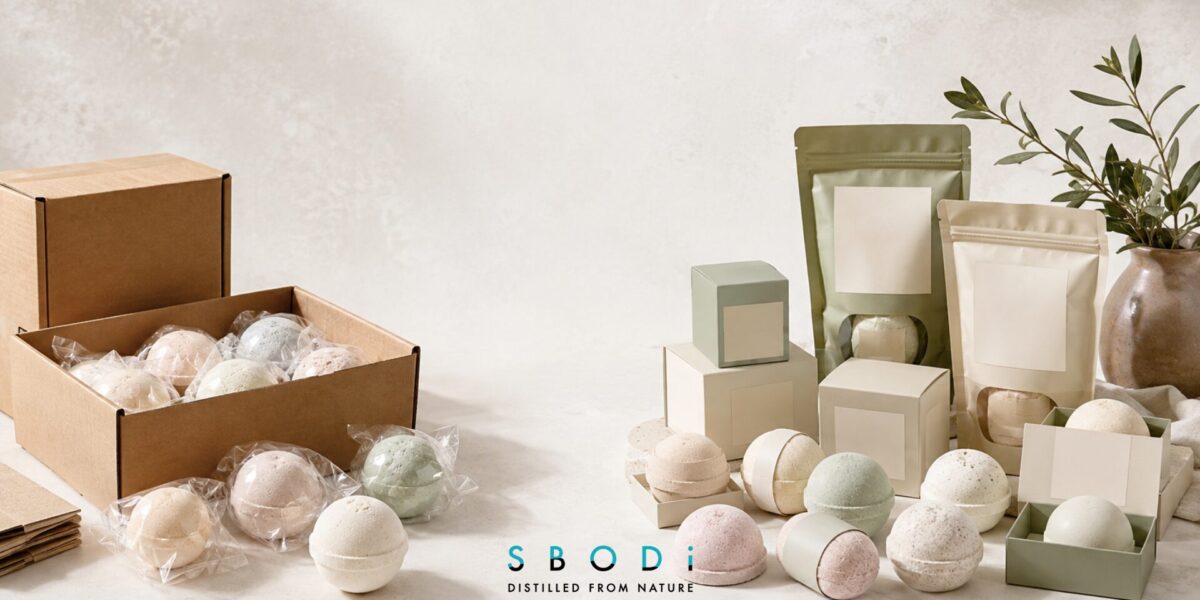
Packaging and Retail Presentation
Bath bomb packaging must protect the product from moisture, impact, crushing, and movement while presenting label information clearly.
Common formats include:
- Individual wrapping
- Pouches
- Sleeves
- Folding cartons
- Gift boxes
- Bulk inner packaging
Packaging needs vary by sales channel. Boutiques may prioritize shelf appearance and barcodes. Ecommerce sellers need stronger shipping protection. Subscription boxes require separation from heavier items. Gift sets need inserts that prevent products from moving.
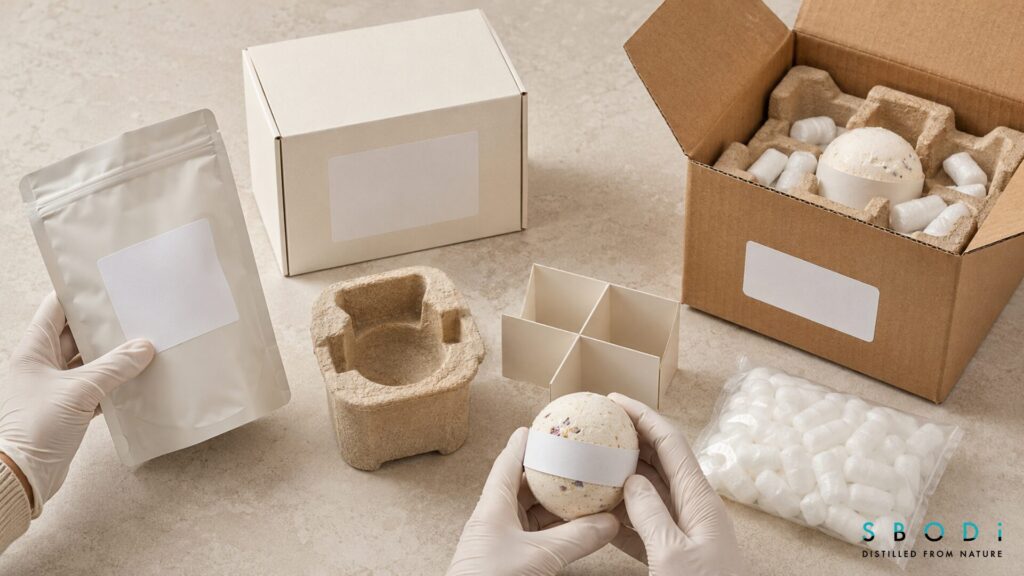
Bath Bomb Packaging Checklist
- Moisture-resistant package
- Secure seal
- Legible and accurate label
- Scannable barcode where required
- Minimal movement inside the package
- Strong outer carton
- Protective insert or cushioning
- Batch traceability
- Appropriate retail presentation
- Tested shipping configuration
Environmental terms such as recyclable, biodegradable, sustainable, compostable, or plastic-free should be specific and supportable. Consult the FTC Green Guides before using broad environmental claims.
MOQ, Pricing, and Lead Time
Minimum order quantities and pricing may depend on:
- Product and batch size
- Number of fragrances
- Color or shape complexity
- Labels and printing
- Packaging format
- Inserts and cartons
- Setup work
- Testing
- Order frequency
- Shipping destination
Private label minimums may apply separately to each scent, product, label version, or packaging format. Review SBODI’s guide to private label minimum order quantities for a deeper explanation.
Do not compare product price alone. Estimated landed cost should include the bath bomb, labels, packaging, freight, storage, fulfillment handling, transaction costs, and expected breakage.
Lead time should also be separated into sample approval, artwork approval, label printing, packaging preparation, production, inspection, and freight.
How to Evaluate Bath Bomb Samples
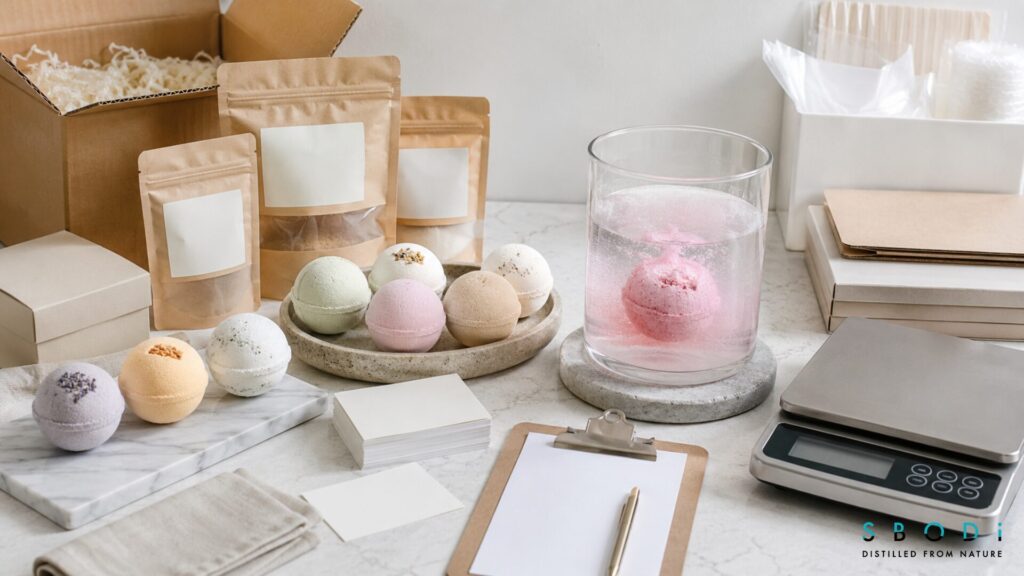
Samples allow buyers to inspect product quality and packaging before committing to a larger order. A wholesale bath bomb sample pack can help businesses compare available formats and fragrances.
Evaluate:
- Surface cracks and crumbling
- Shape and weight consistency
- Dry fragrance strength
- Fragrance during use
- Fizz and dissolution
- Color release
- Residue and tub cleanup
- Packaging seal
- Label condition
- Moisture exposure
- Shipping damage
- Condition after storage
Record results by product, fragrance, batch, and test date. One sample should not be treated as proof that every future batch will perform identically.
Shelf Life, Storage, and Shipping
Bath bomb stability depends on the formula, ingredients, moisture exposure, packaging, temperature, storage, and handling.
There is no universal shelf life for every bath bomb. Buyers should request product-specific guidance from the supplier and review the FDA information on cosmetic shelf life and expiration dating.
Store products in sealed packaging under the recommended conditions. Use organized batch rotation and protect inventory from moisture, heat, crushing, and repeated handling.
For shipping, use suitable individual protection, inner packaging, dividers, cushioning, void fill, and strong outer cartons. Test the final packed product before scaling. Ecommerce parcels, subscription boxes, and gift sets may require different protection from wholesale case shipments.
How to Choose a Bath Bomb Supplier
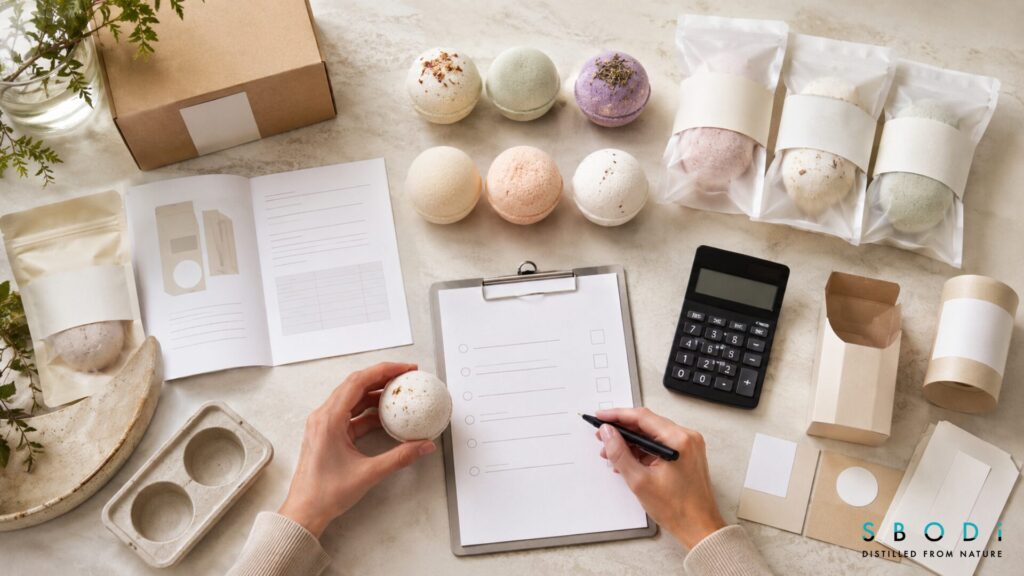
Evaluate suppliers using practical criteria rather than product photos alone.
Review:
- Product samples
- Ingredient transparency
- Available documentation
- Packaging capabilities
- Label support
- MOQ
- Production stages
- Communication
- Batch-consistency procedures
- Shipping protection
- Reorder process
- Customization limitations
- Complaint and damage procedures
Ask who manufactures the product and whether production, packaging, or fulfillment is outsourced.
Businesses comparing supplier types can compare bath bomb companies in the USA. Buyers focused on domestic sourcing and shipping can also consult the wholesale bath bombs USA buying guide.
Questions to Ask Before Ordering
- Who manufactures the bath bombs?
- Which customization options are included?
- Are samples available?
- What is the MOQ for each configuration?
- Which documents are supplied?
- Who prepares and approves the labels?
- Which packaging formats are available?
- How is batch consistency evaluated?
- What are the production stages?
- How are products protected during shipping?
- How are damaged products handled?
- What is required for repeat orders?
How SBODI Supports Business Buyers
At SBODI, businesses can explore wholesale bath bombs, private label product options, sample packs, and related bath products before planning a larger order.
The private label product collection provides access to branded product categories, while the broader bath product collection can help buyers coordinate bath bombs with complementary products.
Product availability, packaging, MOQ, labeling, and customization should be confirmed for each order. Buyers should request samples and a written quotation based on the exact product, package, quantity, and delivery destination.