The global bath and body care market is projected to surpass $230 billion by 2026, driven by a surge in consumer demand for personalized wellness experiences, clean ingredients, and brand-authentic products. Behind this growth is a quiet revolution: thousands of entrepreneurs, spa owners, boutiques, and retailers are bypassing conventional wholesale buying and instead launching their own branded product lines without ever formulating a single ingredient themselves.
Welcome to the world of private label bath and body products.
Whether you’re a salon owner wanting to sell a signature line, an eCommerce entrepreneur building a Shopify store, a subscription box curator hunting for a consistent supply of premium products, or a hotel group seeking custom-branded amenities, private label manufacturing offers a scalable, cost-effective, and brand-defining path forward.
This comprehensive guide walks you through everything you need to know: what private label products are, how the process works, what to look for in a manufacturer, and how to launch a brand that stands out in a crowded market. We’ll also show you how SBODi, based in Downers Grove, Illinois, helps businesses of all sizes bring their bath and body brand vision to life.
- What Are Private Label Bath and Body Products?
- Private Label vs. White Label: Understanding the Difference
- Who Should Consider Private Label Bath and Body Products?
- Key Product Categories in Private Label Bath and Body
- How to Choose the Right Private Label Manufacturer
- Minimum Order Quantities: What to Expect
- Customization Options: Formulas, Packaging, and Branding
- Natural, Organic, and Eco-Friendly Private Label Products
- The Regulatory Landscape for Bath and Body Products in the U.S.
- Cost Structure and Pricing for Private Label Products
- How to Launch Your Private Label Bath and Body Brand
- Why Partner with SBODi for Your Private Label Needs
- Frequently Asked Questions
- Conclusion and Next Steps
What Are Private Label Bath and Body Products?
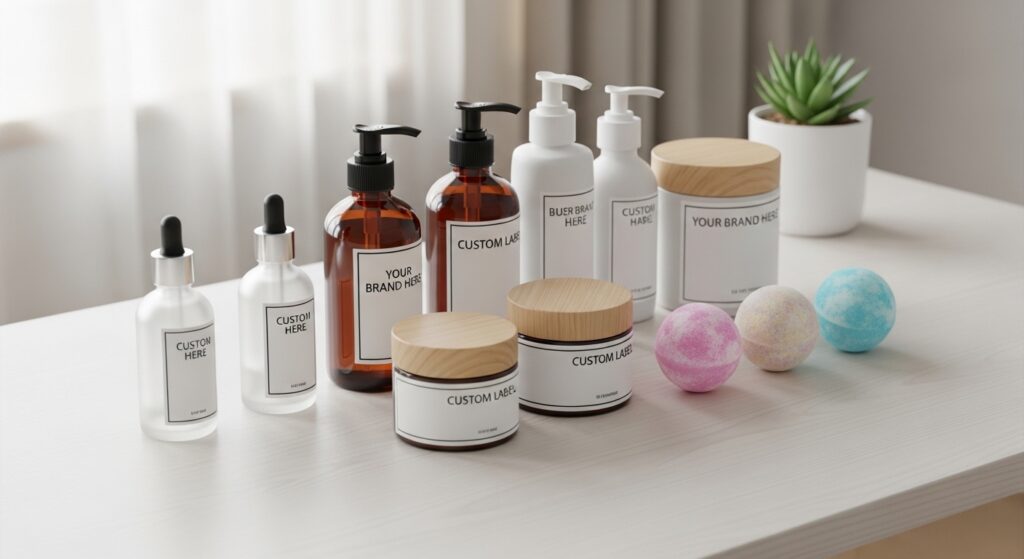
Private label bath and body products are professionally formulated products manufactured by a third-party supplier and sold under your own brand name, logo, and packaging. Instead of spending years and significant capital developing formulas in-house, you partner with an experienced manufacturer who already has established, tested, and often certified formulations, and you customize them to reflect your brand identity.
Think of it this way: the product is made by an expert; the brand is built by you.
In the bath and body category, private label products span an enormous range:
- Body washes and shower gels
- Lotions, creams, and body butters
- Shampoos and conditioners
- Bath salts, bath bombs, and soaking blends
- Hand soaps and sanitizers
- Lip balms and lip scrubs
- Exfoliating scrubs and polishes
- Massage oils and aromatherapy blends
- Hotel amenity collections (shampoo, conditioner, body wash, lotion)
Private label bath and body products are pre-formulated or custom-formulated personal care items manufactured by a third party and branded under a retailer’s or entrepreneur’s own name. They allow businesses to sell professional-grade products without in-house manufacturing.
If you want to know more about What Are Private Label Bath Bomb and Body Products here is a complete guide to wholesale bath bombs.
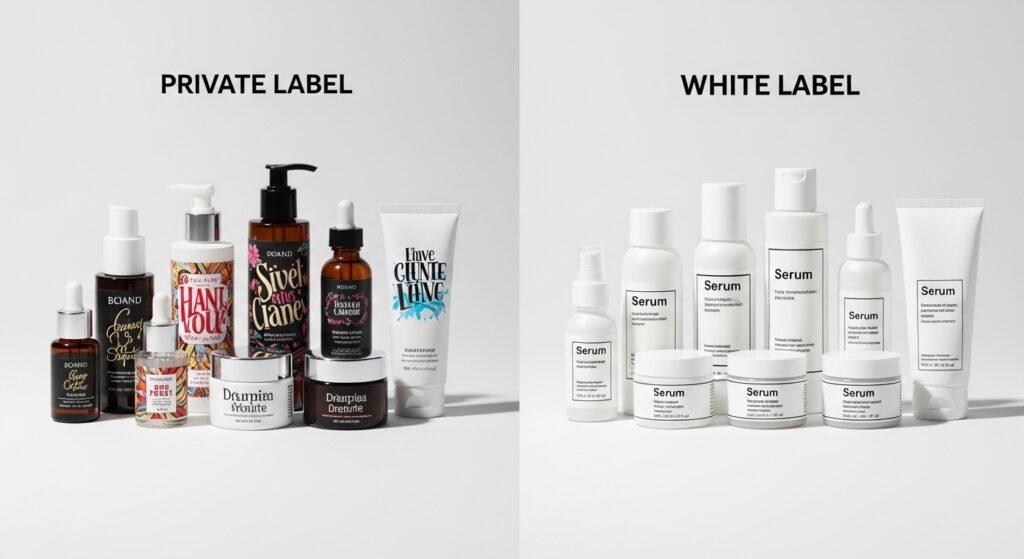
Private Label vs. White Label: Understanding the Difference
One of the most common points of confusion for new brand owners is the distinction between private label and white label products. While the terms are sometimes used interchangeably, they carry meaningful differences—especially when it comes to exclusivity and customization.
| Feature | Private Label | White Label |
|---|---|---|
| Formulation | Custom or semi-custom | Standard, generic |
| Exclusivity | Often exclusive to your brand | Sold to multiple buyers |
| Branding | Your logo, packaging, and brand name | Your logo on a shared formula |
| MOQ (Minimum Order Qty) | Typically higher | Lower |
| Brand Differentiation | High | Low |
| Time to Market | Moderate | Fast |
| Cost | Moderate to higher | Lower |
Private label typically means the manufacturer produces a product specifically for you, often with some level of formula customization, packaging design, or scent selection. White label means the same product, in its exact formulation, is available to any buyer who wants to put their brand on it, think of it as “off-the-shelf branding.”
For businesses serious about building a distinctive, defensible brand in the bath and body space, private label is the superior long-term strategy.
For a deeper exploration, see our article: Private Label vs White Label: Key Differences
Who Should Consider Private Label Bath and Body Products?
Private label isn’t just for large corporations with deep pockets. The modern private label ecosystem has evolved to serve a wide range of business models:
1. Entrepreneurs and Startups
If you’ve dreamed of launching your own skincare or bath brand but lack formulation expertise, private label is your launchpad. You focus on branding, marketing, and customer experience while your manufacturer handles the science.
2. Spa and Salon Owners
Offering a branded product line builds credibility, creates an additional revenue stream, and deepens client loyalty. Clients who love your treatments want to take the experience home.
3. Boutiques and Gift Shops
Curated private label collections give your shop a point of differentiation from big-box competitors. Customers can’t find your exclusive products on Amazon.
4. eCommerce and Shopify Store Owners
The DTC (direct-to-consumer) bath and body segment is exploding. Private label products give online sellers margin control, brand identity, and scalable inventory.
5. Hotels and Resorts
Custom-branded amenity collections—from welcome soaps to in-room lotion sets—elevate the guest experience and reinforce brand prestige.
6. Subscription Box Businesses
Subscription models thrive on exclusivity. A private label product in your box is something subscribers can’t unbox from anyone else.
7. Wholesale Distributors and Bulk Resellers
Distributors who offer a branded line command better margins and deeper retail relationships than those selling national brands at thin spreads.
Key Product Categories in Private Label Bath and Body
Not all private label manufacturers offer the same product range. Here is a breakdown of the most in-demand categories—and what to look for in each:
Body Care Essentials
- Body Wash & Shower Gel: Look for sulfate-free options, customizable fragrance, and viscosity preferences. Natural and organic variants are in extremely high demand.
- Body Lotion & Moisturizer: Key attributes include fast-absorbing formulas, non-greasy finishes, and options for sensitive skin. Ingredients like shea butter, coconut oil, and hyaluronic acid are top sellers.
- Body Butter: Rich, luxurious, and a premium SKU option. Ideal for spa-branded lines and gift sets.
- Body Scrubs: Sugar-based and salt-based scrubs are popular. Exfoliating + moisturizing combos drive higher perceived value.
Hair Care
- Shampoo & Conditioner: Customizable for hair type (curly, color-treated, thinning), ingredient preferences (sulfate-free, keratin-infused), and scent profiles.
- Hair Masks and Treatments: A growing segment in the prestige-at-home wellness market.
Bath Rituals
- Bath Salts & Soaking Blends: Himalayan, Dead Sea, and Epsom salts combined with essential oils are perennial bestsellers in the wellness space.
- Bath Bombs: High visual appeal, giftable, and highly customizable in scent, color, and size.
- Bubble Bath: Nostalgic and comfort-driven—strong in both adult and children’s lines.
Hand & Foot Care
- Hand Soap (Liquid & Bar): Especially relevant post-pandemic, with premium positioning around antibacterial, moisturizing, and luxury fragrance.
- Hand Cream & Cuticle Oil: Natural upsell to hand soap kits.
- Foot Scrubs and Soaks: Popular in spa and self-care collections.
Hotel & Hospitality Amenities
- Travel-size collections (30ml–50ml) for shampoo, conditioner, body wash, and lotion
- Bar soaps with custom embossing
- Full amenity kits for boutique hotels and resorts
How to Choose the Right Private Label Manufacturer
This is arguably the most important decision in your private label journey. The wrong manufacturer can derail your brand before it launches. Here is a structured evaluation framework:
1. Product Quality and Formulation Standards
Request samples before committing. Evaluate texture, scent, skin feel, and packaging integrity. Ask about ingredient sourcing—domestic vs. imported, organic certification status, and allergen controls.
2. Regulatory Compliance
In the United States, cosmetic manufacturers must comply with FDA regulations under the Federal Food, Drug, and Cosmetic Act (FD&C Act). Your manufacturer should follow GMP (Good Manufacturing Practices) and be able to provide certificates of analysis (COAs) for their formulations.
3. Customization Depth
Can they adjust fragrance, color, texture, and active ingredient percentages? Can they accommodate custom formulas? What are their lead times for new SKU development?
4. Minimum Order Quantities (MOQs)
MOQs vary widely—from 12 units per SKU to 1,000+ depending on the manufacturer and product type. Make sure MOQs align with your launch budget and inventory strategy.
5. Packaging and Branding Support
Do they offer in-house label design? Can they source custom bottles, pumps, and packaging inserts? Turnkey service (formula + fill + label + pack) is ideal for new brands.
6. Lead Times and Scalability
Ask about production lead times (typically 4–12 weeks), reorder minimums, and their capacity to scale as your business grows.
7. Ethical and Sustainability Standards
Consumers increasingly demand cruelty-free, vegan, sustainably sourced products. Ask manufacturers about their certifications (Leaping Bunny, USDA Organic, EcoCert) and packaging sustainability options.
See our other article: Benefits of Partnering with a Private Label Manufacturer
Minimum Order Quantities: What to Expect
MOQs are one of the first practical questions every new brand owner asks—and one of the most variable in the industry.
Typical MOQ ranges for private label bath and body:
| Product Type | Low MOQ | Standard MOQ | High MOQ |
|---|---|---|---|
| Bar Soap | 24 units | 100–250 units | 500+ units |
| Body Lotion | 50 units | 200–500 units | 1,000+ units |
| Bath Bombs | 24 units | 100–200 units | 500+ units |
| Shampoo / Conditioner | 50 units | 250–500 units | 1,000+ units |
| Hotel Amenity Kits | 100 sets | 500 sets | 2,000+ sets |
Several factors influence MOQs: the complexity of the formula, packaging type (custom mold vs. stock bottle), fragrance sourcing, and whether the manufacturer is running a dedicated batch vs. a shared production run.
For new entrepreneurs or small businesses, manufacturers that offer low MOQ programs are critical. These allow you to test market demand, build proof of concept, and iterate on formulas before committing to large production runs.
Dive deeper: Minimum Order Quantities in Private Label Skincare
Customization Options: Formulas, Packaging, and Branding
One of the most exciting aspects of private label is the breadth of customization available:
Formula Customization
- Fragrance: Choose from fragrance oil libraries or bring your own signature scent.
- Active Ingredients: Add vitamin C, retinol, CBD, hyaluronic acid, collagen peptides, or botanical extracts.
- Skin Type Targeting: Formulate for sensitive, dry, oily, acne-prone, or mature skin.
- Lifestyle Claims: Vegan, gluten-free, cruelty-free, sulfate-free, paraben-free.
Packaging Customization
- Bottle Shape & Material: PET, HDPE, glass, aluminum
- Closure Type: Pump, flip-top, disc cap, lotion cap
- Label Design: Full wrap, front-and-back, shrink sleeve
- Insert Cards and Gift Packaging: Box sets, tissue wrap, ribbon closure
Brand Identity Integration
- Your logo, color palette, and typography
- Custom scent names and product story copy
- QR codes linking to tutorials, ingredient sourcing stories, or brand video
Natural, Organic, and Eco-Friendly Private Label Products
Consumer preferences have shifted dramatically. According to recent market research, over 65% of U.S. consumers now prefer personal care products with natural or organic ingredients [placeholder citation]. This isn’t a trend—it’s a fundamental repositioning of the beauty market.
Key attributes your natural/organic private label line should reflect:
- Clean ingredient lists: Free from parabens, sulfates, phthalates, synthetic dyes
- Botanical actives: Aloe vera, green tea, chamomile, argan oil, rosehip seed oil
- Certifications: USDA Organic, EcoCert, NSF/ANSI 305, Leaping Bunny
- Sustainable packaging: PCR (Post-Consumer Recycled) plastics, glass, biodegradable materials
- Cruelty-free manufacturing: No animal testing at any stage
Brands that lead with clean, transparent formulations build faster trust—especially with Millennial and Gen Z consumers who research ingredient labels before purchasing.
The Regulatory Landscape for Bath and Body Products in the U.S.
Understanding the regulatory framework protects your brand and your customers:
FDA Oversight
In the United States, cosmetics (which include most bath and body products) are regulated by the FDA under the FD&C Act and the Fair Packaging and Labeling Act (FPLA). Unlike drugs, cosmetics do not require pre-market FDA approval—but they must be safe for use and properly labeled.
Required Label Elements (21 CFR Part 701):
- Product identity (name and function)
- Net quantity of contents
- Name and address of manufacturer, packer, or distributor
- Ingredient declaration (INCI names, in descending order of predominance)
- Any necessary warnings
Cosmeceutical Considerations
If your product makes drug-like claims (e.g., “reduces wrinkles” or “treats eczema”), it may be classified as a drug and subject to different—and stricter—regulatory requirements. Work with your manufacturer and a regulatory consultant to ensure your marketing claims stay within cosmetic territory.
California Proposition 65
If you sell in California, be aware of Prop 65 requirements regarding certain ingredient disclosures.
Cost Structure and Pricing for Private Label Products
Understanding your cost structure is essential for building a profitable brand:
Cost Components:
| Component | Typical % of COGS |
|---|---|
| Raw Materials / Formula | 30–45% |
| Packaging (Bottle, Cap, Label) | 20–35% |
| Filling and Labor | 10–20% |
| Quality Testing | 5–10% |
| Shipping and Logistics | 5–15% |
Pricing Strategy:
Most private label bath and body brands target a wholesale margin of 40–50% and a retail margin of 50–70%. For example, a body lotion costing $4.50 to produce might wholesale at $9.00 and retail at $18–$22.
Premium positioning—achieved through clean ingredients, luxury packaging, and a compelling brand story—allows for higher retail prices and better margins.
How to Launch Your Private Label Bath and Body Brand
A step-by-step path from concept to commerce:
Step 1: Define Your Brand Identity
Nail down your target customer, brand values, aesthetic, and product focus. Are you a luxury spa line? A clean beauty DTC brand? An eco-conscious gift shop staple?
Step 2: Select Your Product Range
Start with 3–6 hero SKUs. Focus on your core customer’s most frequent need rather than building a massive catalog immediately.
Step 3: Find and Vet a Manufacturer
Request samples, review their compliance credentials, and discuss MOQs and lead times. Ask for references from current clients.
Step 4: Develop Your Branding
Work with a graphic designer to create your logo, label designs, and packaging. Ensure your brand identity translates across all touchpoints.
Step 5: Place Your First Production Order
Confirm all specifications in writing: formula, fragrance, fill weight, packaging, label content, and delivery timeline.
Step 6: Build Your Sales Channels
Decide whether you’re selling DTC (Shopify, Amazon, Etsy), wholesale (boutiques, spas), or both. Set up your logistics and fulfillment systems.
Step 7: Launch and Iterate
Start with a soft launch to your existing audience. Collect feedback, refine your products, and scale what’s working.
For a more detailed understanding on how to launch your private label bath and body brand, explore the complete guide below:
Launch Your Private Label Bath Bombs and Body Brand: A Complete Guide to Wholesale Bath Bombs
Why Partner with SBODi for Your Private Label Needs
At SBODi, we’ve built our business around one mission: helping brands like yours bring exceptional bath and body products to market, efficiently, affordably, and beautifully.
Based in Downers Grove, Illinois, SBODi serves a diverse and growing roster of clients across the United States, from first-time beauty entrepreneurs to established spa chains and hospitality groups.
What sets SBODi apart:
- Extensive product catalog across bath, body, hair, and spa categories
- Flexible MOQ programs designed for small-to-medium businesses
- Natural, organic, and eco-friendly formulation options
- Full customization: fragrance, formula, packaging, and labeling
- GMP-compliant manufacturing with quality assurance protocols
- Responsive, knowledgeable support team that guides you from concept to delivery
- Competitive wholesale pricing with transparent cost structures
- Scalable supply chain that grows with your business
Whether you’re looking to launch a signature spa line, a DTC eCommerce brand, or a hotel amenity collection, SBODi has the expertise, products, and partnership mindset to make it happen.
Ready to start building your brand? Contact SBODi today and request your product samples and brand consultation.